Whether you’re layering virtual instruments, composing, or just practicing, selecting the right piano setup can boost workflow and creativity. This guide rounds up five solid options that balance playability, production features, and value for American producers and learners. From beginner bundles with teaching aids to compact MIDI controllers and full-sized digital pianos, you’ll find choices that align with different spaces and goals. Below is a quick summary, followed by in-depth product sections and a practical buying guide.
| Product | Keys | Best For |
|---|---|---|
| Best Choice 61-Key Beginners Complete Electronic Keyboard Set | 61 | Learning with built-in lessons and lighted keys |
| Best Choice 61-Key Electronic Keyboard Portable Set | 61 | Compact practice with interactive teaching modes |
| Akai MPK Mini MK3-25 Key USB MIDI Controller | 25 | Compact production and beat making |
| Best Choice 88-Key Weighted Full Size Digital Piano | 88 | Realistic piano feel for serious practice |
| Best Choice 88-Key Full Size Digital Piano with Set | 88 | All-in-one practice and performance package |
Notes: All links lead to product pages for reference and comparison. Features vary by model, including key count, weight, bundled accessories, and teaching modes. Consider your space, playback needs, and whether you prioritize a true piano touch or a portable production setup.
Best Choice 61-Key Beginners Complete Electronic Keyboard Set
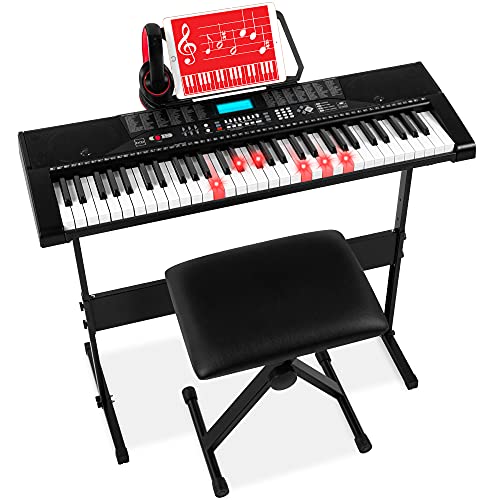
This bundle presents a complete learning-ready keyboard with 61 keys, 255 timbres, 255 rhythms, and 50 demo songs. The LCD screen and light-up keys help beginners follow along, while included teaching modes support progressive skill building. The kit also includes an H-style stand, music stand, padded stool, and note stickers to aid reading music, making it a strong fit for learners who want an all-in-one start to music production and performance.
Key features include three teaching modes—One-Key, Follow, and Ensemble—as well as built-in speaker playback for practice without headphones. The compact design suits small studios or bedrooms, and the included accessories reduce the upfront setup burden for new players or kids exploring music production as a hobby.
Considerations: The keyboard is 61-key and lighter on professional-grade synth features, so its strength lies in teaching, basic composition, and practice rather than advanced sound design. If you plan to integrate with a computer-based DAW, you’ll likely rely on external software or a separate MIDI controller for more robust control.
Best Choice 61-Key Electronic Keyboard Portable Set
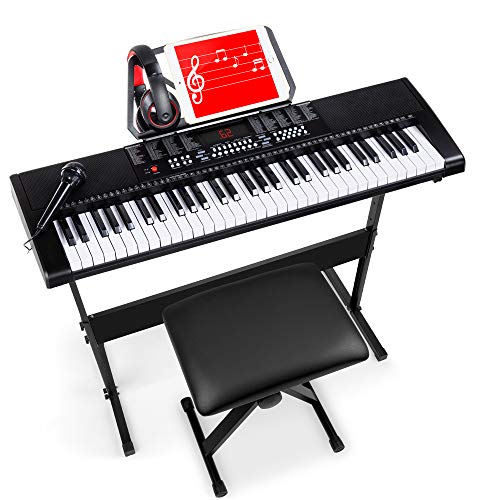
This 61-key portable keyboard emphasizes teaching through three modes (One-Key, Follow, Ensemble) and a broad sonic palette with 255 timbres and 255 rhythms. A bright LED screen aids navigation, while an included stand, music stand, power adapter, and padded stool create a ready-to-practice environment. The set is compact enough for small studios or dorm rooms yet robust enough for casual music production and learning.
Production-ready potential: While primarily a beginner instrument, the 61-key layout is a common entry point for budding producers who want to sketch ideas quickly before expanding to a larger keyboard or computer-based synth setup. The bundled accessories help keep workflow efficient during early sessions.
Considerations: If you’re aiming for more expressive, piano-like feel and advanced sequencing, you may want to pair this with a separate DAW setup or upgrade to a higher-key instrument later, since the keys and tactile response are not fully hammer-weighted.
Akai MPK Mini MK3-25 Key USB MIDI Controller

The MPK Mini MK3 is a compact USB-powered MIDI keyboard designed for music production and beat making. It features 25 velocity-sensitive keys, 8 backlit drum pads, and 8 knobs for expressive control. A four-way thumbstick provides dynamic pitch and modulation control, and the built-in arpeggiator offers adjustable resolution and modes. Native Instruments NKS integration enables seamless control of compatible software packs, enhancing workflow within a compact desk setup.
Production-focused advantages: The MK3 excels in portability and on-the-go sketching. It’s ideal for producers who need a travel-friendly tool to program melodies, drum patterns, and automation within a DAW. The integration with NKS expands hardware-software mapping, reducing setup time for complex sessions.
Considerations: With 25 keys, it’s not a full piano-like keyboard. It’s best used as a control surface and playable MIDI input for software instruments, drum machines, and virtual synths rather than standalone piano practice.
Best Choice 88-Key Weighted Full Size Digital Piano

This full-size digital piano emulates acoustic piano action with 88 weighted keys, delivering a more authentic touch for serious practice. The set includes a U-stand, a three-pedal unit with soft and sustain options, a keyboard cover, and a stool, providing a complete practice environment in a compact footprint. Built for players aiming to develop technique and tone similar to an acoustic piano, this option suits home studios and dedicated practice rooms.
Playability and tone: Weighted keys provide a more realistic response, enabling better dynamic control across genres. The three-sustain pedal setup adds expressive possibilities and supports legato playing and pedal techniques often used in productions and performances. The bundled stand and cover help protect the instrument when not in use and keep the space organized.
Considerations: This is a synthetic piano experience rather than a modular production keyboard. While you can connect to a DAW for recording and sample-based work, the emphasis is on piano fidelity and practice rather than advanced synthesis control.
Best Choice 88-Key Full Size Digital Piano With Set

This all-in-one digital piano package combines an 88-key keyboard with semi-weighted action, a sturdy stand, a sustain pedal, and built-in speakers. The 6 voice settings provide a quick tonal varietyful palette for practice and casual performance, while the included accessories support a comfortable practice workflow and easy setup. It is well-suited for players who want the feel of an acoustic instrument without the space requirements of a grand keyboard array.
Strengths for music production: This option is ideal for musicians who need a reliable, piano-centric device for composing, arranging, and recording ideas into a DAW. The semi-weighted keys strike a balance between accuracy and comfort for longer sessions, and the onboard speakers can serve during quick demos or practice without external amplification.
Buying Guide: Key Purchase Considerations
- Purpose and use case: Beginners focused on music education benefit from teaching modes, light-up keys, and bundled stands. Producers prioritizing DAW workflow may favor MIDI controllers with more knobs, pads, and NKS integration.
- Key action and size: 61-key keyboards are compact and good for early learning or sketching ideas, while 88-key weighted keyboards provide a piano-like feel essential for technique development and expressive playing.
- Connectivity: Look for USB MIDI for computer integration, headphone outputs for silent practice, and pedal inputs for sustain expression. MIDI controllers with arpeggiators and programmable knobs/pads enhance production workflows.
- Included accessories: Bundled stands, stools, and covers improve usability and space management. A keyboard with a built-in speaker can reduce the need for external gear in small studios.
- Portability vs. stability: Compact models travel well but may compromise on tactile feel; full-size digital pianos offer better touch and durability for long-term practice and performance.
- Future-proofing: If you plan to upgrade, consider a MIDI controller with extensive software integration, compatibility with major DAWs, and the possibility to expand with additional controllers or keyboards.
In selecting the best option, align the product’s strengths with your production goals, space constraints, and long-term growth in piano technique or music production. Each item listed here offers distinct advantages for different stages of learning and creative workflow, from classroom-grade teaching bundles to compact production controllers and full-size digital pianos.