Finding the right keyboard for a budding musician combines safety, educational value, and kid-friendly design. This guide spotlights five kid-friendly keyboards that balance portability, learning aids, and engaging features. Each option supports early music exploration, notes, rhythms, and simple playback to build confidence and skill in young players.
| Product | Brand | Key Count | Highlights |
|---|---|---|---|
| RockJam 49 Key Keyboard Piano | RockJam | 49 | Sheet music stand, piano note stickers, Simply Piano lessons |
| BIGFUN 37 Keys Kids Keyboard (Blue) | BIGFUN | 37 | Multifunction, USB power, 8 tones/8 rhythms |
| EKKBHKI 32 Keys Kids Piano | EKKBHKI | 32 | Detachable microphone, recording/playback, 22 demo |
| RockJam 61 Key Keyboard Piano (RJ361) | RockJam | 61 | LED panel, 200 rhythms/tones, lesson features |
| Vangoa VGK611 61 Keys | Vangoa | 61 | Lighted keys, 350 timbres, teaching modes |
RockJam 49 Key Keyboard Piano
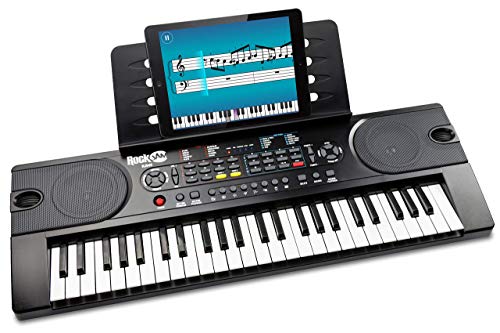
The RockJam 49 Key Keyboard Piano provides a compact, beginner-friendly setup with 49 full-sized keys. It includes a sheet music stand and piano note stickers to help visualize notes, making it suitable for early learners. Simply Piano lessons are included to guide beginners step-by-step, supporting structured practice and progress tracking. The kit is designed for portability and easy setup, ideal for small spaces or classroom use.
BIGFUN 37 Keys Kids Keyboard (Blue)

The BIGFUN 37 Keys Kids Keyboard provides a compact entry point with multiple functions in a kid-friendly design. It offers piano function with additional features like double speakers, ensemble mode, audio jack, keyboard drum, and record playback. USB power compatibility and a DC power option simplify setup for play at home or on the go, supporting short lessons and creative play for ages 3–7.
EKKBHKI 32 Keys Kids Piano
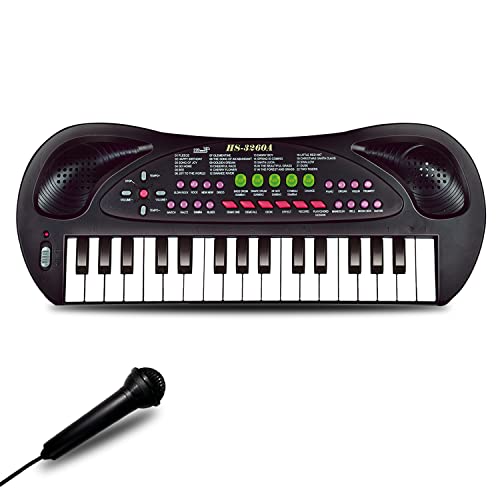
The EKKBHKI 32 Keys Kids Piano combines function and interaction with a detachable microphone for singing-along play. It features recording and playback, multiple tones and rhythms, and 22 demo songs. The keyboard emphasizes early music concepts, motor skills, and musical exploration, encouraging kids to create their own little performances and learn through singing and playing.
RockJam 61 Key Keyboard Piano (RJ361)
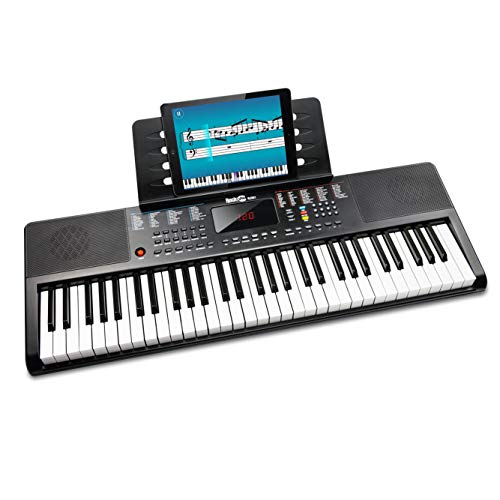
The RockJam 61 Key Keyboard Piano (RJ361) adds a larger playing surface with 61 keys and an extensive library of tones and rhythms (200 each) plus 10 demo songs. It includes a sustain and vibrato feature, record and playback, and piano keynote stickers to help with note visualization. This model is well-suited for kids ready to progress to a fuller keyboard experience while staying within a portable design.
Vangoa VGK611 61 Keys

The Vangoa VGK611 emphasizes beginner-friendly features with lighted keys and teaching modes, helping children learn notes in sequence. It offers a sizable library of timbres and rhythms (up to 350), a large LED display for clarity, and options for recording and playback. This makes it a strong choice for kids who enjoy guided practice and interactive learning experiences.
Buying Guide: Key Considerations for Choosing a Kid-Friendly Keyboard
- Key count and size: Start with 37–49 keys for younger children; 61 keys is better for older kids ready to explore a fuller range.
- Learning aids: Look for note stickers, LED lighted keys, and built-in lessons or demo songs to reinforce early music literacy.
- Sound library and rhythms: A broad set of tones, rhythms, and demo tracks supports variety and keeps practice engaging.
- Playback and recording: Ability to record performances helps kids hear progress and stay motivated.
- Power options and portability: USB power or wall adapters, plus a compact design, support practice anywhere.
- Safety and build quality: Kid-friendly materials, non-slip stands, and appropriate key action are important for safety and durability.
- Accessories: Optional microphones, stands, or stools can expand use but verify compatibility with the device.
- Growth trajectory: Choose a model that scales with your child’s developing skills to avoid frequent replacements.
Across these options, consider your child’s age, interest level, and learning style. If they enjoy guided lessons, models with dedicated teaching features or stickers can accelerate early literacy. If they prefer creative play, keyboards with record/playback, diverse timbres, and percussion options support experimentation. For families seeking portability or uneven practice spaces, lighter 49-key or 37-key models paired with a simple teaching system offer a practical balance.