Movement cards offer ready-made, engaging activities that help students reset, refocus, and regulate emotions during the school day. This guide highlights five classroom-friendly movement card sets designed to support self-regulation, gross motor skills, and social-emotional learning. Each option provides simple, low-prep activities that work in classrooms, therapy rooms, or home-school environments. Below is a quick overview to help teachers and caregivers choose the best fit for their students’ needs.
| Product | Brand | Main Benefit |
|---|---|---|
| Harkla Sensory Activity Cards | Harkla | Therapist-designed brain breaks for focus and regulation |
| Covelico Exercise Cards for Kids | Covelico | Movement-based classroom and gym activities |
| Chair Yoga Poses Cards for Kids | Kids Yoga Stories | Short yoga-based movement for focus and calm |
| Roylco Super Hero Exercise Cards | Roylco | Imaginative, level-based gross-motor challenges |
| Learning Resources Alpha Pose Letter Yoga | Learning Resources | Alphabet-themed movement to build literacy and SEL |
Harkla Sensory Activity Cards

The Harkla Sensory Activity Cards combine 60 therapist-designed brain breaks across 30 double-sided cards. Each card presents two activities—one alerting (orange side) and one calming (blue side)—to address a child’s energy needs in minutes. These cards support focus, transitions, and emotional regulation by providing targeted movement and sensory input. Ideal for classroom routines, sensory breaks, and small-group sessions, the deck is designed for quick implementation without extra prep.
Key features include:
- Two-sided design: one alerting and one calming activity per card
- Supports self-regulation, focus, and smooth transitions
- Compact and versatile for classroom, therapy rooms, or home use
70 Conversation Cards for Mindful Dialogue

Note: This section highlights a movement-oriented choice; however, the following information provides context for movement-based classroom tools. The 70 Conversation Cards are included here for comparison to show how movement-based cards differ from purely social-dialogue aids. The cards are designed to spark meaningful dialogue and are categorized to guide discussions around emotions, inquiry, mindfulness, and expression. They are compact and portable, which makes them easy to integrate into discussion circles and SEL activities.
Covelico Exercise Cards for Kids
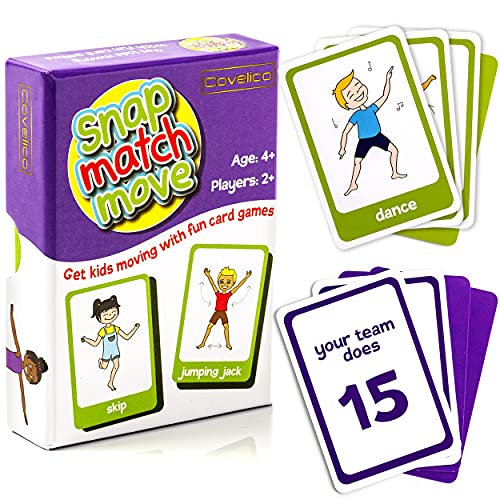
Covelico’s Exercise Cards deliver 20 kid-friendly movements that function as portable recess equipment for elementary classrooms. The deck supports solo play or group activities, with 40 core moves plus eight rep/time cards and four game-idea cards. Activities range from cardio to balance tasks, and can be paired with music to create dynamic warm-ups, PE games, or classroom movement breaks. The cards are designed to build fitness, balance, strength, and gross motor skills while keeping students engaged.
Key features include:
- 20 unique exercises plus game ideas
- Solo or group play options
- Supports fitness, balance, and gross motor development
Chair Yoga Poses Cards for Kids

These chair yoga cards offer 40 engaging poses designed for quick 5-minute movement breaks in classrooms or homeschooling settings. They support focus, emotional regulation, and mindfulness, while serving as a practical tool for transitions and test-taking strategies. The cards are suitable for a broad range of ages and abilities, including adaptations for those with special needs. They are ideal for calm-down corners, SEL activities, and movement-friendly routines during the school day.
Key features include:
- 40 easy chair yoga poses
- Supports focus, regulation, and mindfulness
- Suitable for mixed-age classrooms and adaptations for various abilities
Learning Resources Alpha Pose Letter Yoga

Alpha Pose Letter Yoga blends movement with literacy by introducing yoga poses associated with letters of the alphabet. This hands-on set supports early literacy skills while encouraging physical activity and SEL. The included sun-shaped storage piece helps with organization and clean-up, making it a tidy addition to classroom libraries or therapy spaces. The kit encourages kids to stay active, engaged, and mindful as they learn letters and poses.
Key features include:
- Alphabet-themed yoga poses
- Includes storage for easy cleanup
- Supports SEL alongside movement and literacy
Buying Guide: Movement Cards For The Classroom
When selecting movement cards for classrooms, consider how the set supports cognitive and emotional goals, the setting’s size, and how easily activities integrate into daily routines. The following factors help compare options:
- Movement scope: Choose cards with a balance of alerting and calming activities to support both energy release and self-regulation.
- Age and ability range: Look for decks that offer scalable intensity and inclusive designs for mixed-ability groups.
- Prep and portability: Cards with clear instructions and compact packaging save time during transitions.
- Durability and storage: Reusable cards with sturdy materials and included storage aids classroom longevity.
- Integration with SEL goals: Sets that address emotions, focus, mindfulness, and social interaction align well with SEL curricula.
- Cross-curricular potential: Alphabet or literacy-linked movement cards can support multiple subjects beyond physical education.
Performance perspectives vary by classroom context. For therapy-influenced settings, therapist-designed breaks (like Harkla) may provide targeted regulation, while classroom-grade sets (like Covelico or Roylco) often offer scalable activities suitable for larger groups. Yoga-based decks (Chair Yoga and Alpha Pose) emphasize focused breathing and mindfulness, which can complement academic tasks that demand sustained attention. Consider combining two or more decks to cover a full-week rotation of movement breaks, ensuring students receive both energizing and calming experiences.