Choosing the right motorized ride-on for a young rider means balancing excitement with safety. The following five products represent a range of beginner-friendly dirt bikes and related gear designed for kids and pre-teens. Each option prioritizes manageable power, reliable safety features, and age-appropriate control, helping parents find an entry point into off-road riding without overwhelming new riders.
Summary of Selected Products
| Product | Brand | Key Feature | Refined Use |
|---|---|---|---|
| Razor MX125 Dirt Rocket | Razor | Low‑speed electric dirt bike with 12″ wheels and safety controls | Beginner to intermediate riders, ages 5+ |
| HyperMoto 250W Dirt Bike | HyperMoto | 250W motor, rear wheel suspension, 13 MPH top speed | Off‑road fun with improved grip |
| OKYBABY 24V Electric Dirt Bike | OKYBABY | 24V power, LED lights, Bluetooth, up to 15 MPH | Casual, music‑enhanced riding |
| Gihusrzx 50cc Dirt Bike | gihusrzx | 50cc engine, up to 25 MPH, front/rear discs | Older kids/teens stepping up |
| ELEMARA Electric Dirt Bike | ELEMARA | 24V, 250W, 15 MPH, 12″ tires, raised handlebars | Sturdy, stylish entry to off‑roading |
Razor MX125 Dirt Rocket: Small But Powerful

The Razor MX125 is designed for younger riders who want motocross-inspired styling without overpowering performance. It features a compact frame, a 100‑watt motor, and rear‑wheel drive. The bike is described as suitable for kids aged 5 and up, with a safety profile that includes a hand‑operated rear brake and a controlled acceleration profile. The 12″ spoked wheels with pneumatic tires provide stable handling and grip on smooth outdoor surfaces, making it a practical first dirt bike that can grow with a rider as skills improve.
Key safety and usability notes include a retractable kickstand, a crossbar-reinforced handlebar for extra rigidity, and a high/low speed setting to help transitions from beginner to more confident riders. Expect the bike to offer a modest top speed to help young riders learn throttle control while building confidence on varied terrain.
HyperMoto 24V Electric Dirt Bike: Quick Start Fun

HyperMoto’s 24V electric dirt bike provides a balance of power and control for aspiring riders. With a 250W motor and rear wheel suspension, the bike is designed to handle light off‑road terrain while maintaining a friendly top speed. The model emphasizes traction and stability, aided by knobby 12.6″ tires and a shock-absorbing system that helps riders manage bumps without overwhelming their control. The overall design targets kids who are ready to transition from basic ride-ons to a more authentic dirt bike experience, offering a practical step up in speed and handling without excessive complexity.
OKYBABY 24V Electric Dirt Bike: Features For Fun
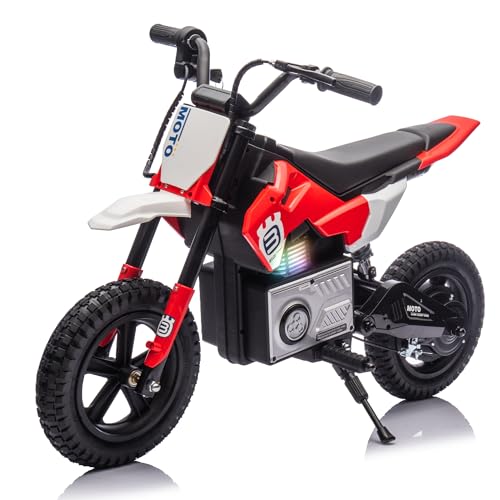
OKYBABY’s 24V ride-on motorcycle is packed with kid‑friendly features designed to keep parents reassured while kids enjoy the ride. A 24V drive system delivers stronger torque for rough surfaces and climbing work, which makes it a solid option for older kids seeking a little more challenge. The model includes music playback and LED lights, enhancing playtime and engagement. ASTM and CPSIA certifications help provide peace of mind around safety and materials. This bike pairs practical performance with entertaining extras for a well-rounded riding experience.
ELEMARA Electric Dirt Bike: Style And Power For Bigger Kids

ELEMARA’s electric dirt bike is a robust option for bigger kids who want a bit more speed and range. With a 24V, 250W motor, riders can reach up to about 15 mph, while a 12″ tire setup provides reliable stability on various terrains. The bike features raised handlebars, a power display, and a twist‑grip throttle paired with a key start for a realistic riding experience. A 150 lb weight capacity helps accommodate a wider range of riders, and the overall construction emphasizes rider comfort through a padded seat and decent suspension for everyday off‑road use.
Buying Guide: Key Considerations For Young Dirt Bikes
When selecting a motor cross option for a child, several dimensions matter beyond top speed. The following considerations help balance safety, learning pace, and enjoyment:
- Age, weight, and skill level: Start with smaller, lighter bikes designed for beginners. Progression should align with improvements in throttle control and balance.
- Power and speed: Look for pedal or throttle limits and low/high speed settings to ease beginners into riding. Avoid overly powerful machines that can be hard to control.
- Safety features: Prioritize models with reliable braking, protected handlebars, and sturdy frames. Helmets, knee and elbow pads, and chest protection should be part of the standard gear.
- Durability and materials: Durable plastics, solid chassis, and proper suspension contribute to rider confidence and longevity under frequent use on uneven surfaces.
- Battery life and charging: For electric models, consider runtime per charge and charging time to minimize downtime between rides.
- Terrain compatibility: If using on dirt trails, knobby tires and adequate ground clearance help with traction. Some bikes are better suited to smooth lawns, sidewalks, or light off‑road.
- Maintenance and support: Look for simple maintenance tasks and accessible parts. A brand with good customer support reduces downtime when parts need replacement.
- Safety training and supervision: Establish riding rules, use designated areas, and supervise young riders during initial sessions until they demonstrate consistent control.
Performance And Safety Comparisons
Choosing the right model depends on the intended use and rider maturity. Electric models like Razor MX125 and OKYBABY offer smooth, predictable acceleration and low maintenance, ideal for first timers. Higher‑torque brushless variants (like the ELEMARA and HyperMoto) provide more challenging experiences for older kids who have developed throttle control. The 50cc dirt bike opens a pathway toward more traditional, petrol‑powered riding, which some families may prefer as their child grows taller and braver, but it demands careful supervision, safety gear, and perhaps license awareness depending on local regulations. Across all options, the emphasis should be on gradual skill development, consistent protective gear, and a safe riding environment.
Additional Considerations
Rider growth is a key factor in selecting equipment. A child who handles a beginner model confidently can transition to a more capable bike after a few months, potentially reducing the total number of purchases required. Brands that provide clear manuals, spare parts, and local service options often offer better long‑term value. Additionally, consider how easily the bike can be stored and transported, especially for families with limited space or frequent outdoor activities. Finally, verify any safety certifications and user reviews to gauge real‑world reliability and maintenance needs before purchase.