Morse code is a classic gateway to electronics, signaling, and communication concepts. This guide highlights five kid-friendly Morse code kits that combine hands-on assembly with clear learning outcomes. Each kit offers practical practice, from decoding messages to building beginner-friendly transmitters. Use this overview to compare features, ease of use, and educational value for aspiring young coders and makers.
| Product | Key Learning Benefit | Ideal For |
|---|---|---|
| EIELE Soldering Practice Kit Morse Code Decoder | Hands-on soldering, learning Morse concepts, LCD feedback | Beginners, classroom teaching |
| United Scientific MCE001 Morse Code Experiment Kit | Telegraph principles, practical wiring and circuits | Science classrooms, home projects |
| DIY Morse Code Bracelet Kit | Learn Morse while crafting jewelry with decoding cards | Creative learners, hands-on crafters |
| Trainer Morse Code Training Kit | DIY components for practice and practice-oriented decoding | Beginners and hobbyists |
| Voice Practice Code Kit Morse (Ymiko) | Voice prompts and CW keying for real-time practice | Auditory learners, beginners |
EIELE Soldering Practice Morse Code Decoder Kit
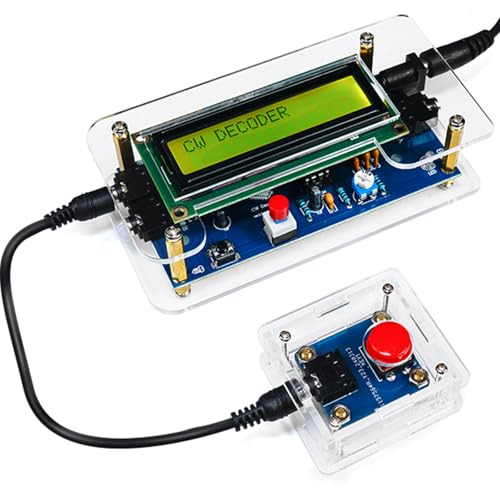
The EIELE Soldering Practice Kit offers a practical Morse code decoder you assemble by hand, making it ideal for learning by doing. The project emphasizes basic Morse principles and real-world decoding tasks, supporting both individual practice and teacher-led demonstrations. A bright LCD display provides feedback and shows up to 16 characters, helping learners see results as they assemble and test the circuit. Suitable for school teaching and beginners who want a tangible soldering experience.
EIELE Soldering Practice Morse Code Decoder Kit (Variant)
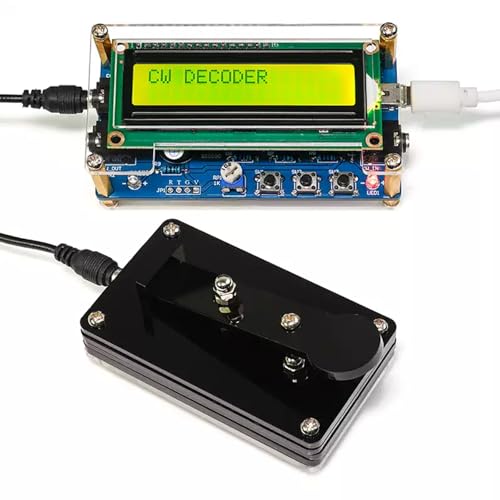
This second EIELE Morse Code Decoder kit mirrors the first in concept, focusing on hands-on soldering and beginner-friendly decoding. It includes the same multi-functional LCD display for real-time feedback, ensuring learners can correlate wiring and component placement with the resulting Morse output. This option reinforces classroom demonstrations or at-home practice for students starting electronic projects.
United Scientific Morse Code Experiment Kit
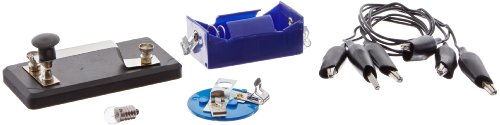
This kit is designed to teach the telegraph’s basic principles through hands-on experiments. It includes a D-cell battery holder, a telegraph key, a lamp with holder, and three connector cords, enabling students to build simple circuits that illustrate Morse signaling. Its compact dimensions make it suitable for classroom desks and beginner science projects, combining traditional education with tactile discovery.
DIY Morse Code Bracelet Kit

This kit blends art with code. It includes 800 beads, 400 black and 400 silver, plus 400 long tube spacer beads, Morse code decoding cards, and 20 yards of colored waxed cord. Learners can craft bracelets while translating Morse signals into letter sequences, giving a tangible, memorable way to study signals and communication. It also serves as a thoughtful gift option for friends and family who enjoy DIY jewelry projects.
Trainer Morse Code Training Kit

Designed as a comprehensive practice partner, this DIY components kit emphasizes training and interpretation of Morse code. It is portable for practice anywhere and aims to build proficiency through hands-on assembly and use of a basic keyer interface. Suitable for both beginners and experienced hobbyists, it provides a flexible approach to learning Morse code through modular parts and straightforward assembly steps.
Ymiko Voice Practice Code Kit Morse

This kit emphasizes auditory training with a built-in buzzer that offers voice prompts during practice. It pairs a simple, sturdy construction with responsive tapping mechanics for precise Morse code generation. The data cable compatibility with many CW transceivers enables real-world practice, making it useful for learners who want a simple, portable device to reinforce Morse timing and accuracy.
ELSKY 335 Electronics Discovery Kit

Beyond Morse, this kit supports 335 circuit projects, including a dedicated Morse Code component. It provides a broad set of circuit parts that explore light, sound, magnetism, and automation. Students gain exposure to circuit design, hands-on testing, and problem solving, fostering a broader STEM mindset while still offering Morse-related learning experiences.
Your Introduction To Morse Code – 2-CD Set

This set provides instructional content for learners who prefer guided listening and practice. It complements hands-on kits by offering structured code instruction and audio practice. Ideal for classroom listening centers or independent study, it supports a well-rounded introduction to Morse code history, timing, and decoding techniques.
Buying Guide
- Learning style: If hands-on assembly and immediate feedback are priorities, prioritize kits with soldering practice, LCD displays, and tactile components. For auditory or visual learners, consider kits with audio prompts or decoding cards.
- Age and skill level: Beginner-friendly kits with clear instructions suit younger students, while more complex projects with multiple components suit older kids and hobbyists.
- Durability and safety: Look for sturdy plastics, non-toxic beads or cords, and safety-conscious designs for classroom use or at-home exploration.
- Expansion potential: Some kits integrate with other STEM topics (circuits, LEDs, basic radio concepts). Choosing modular kits can support progressive learning paths.
- Teacher and parent resources: Kits with lesson ideas, printable guides, or classroom activities help maximize instructional value and ensure structured practice.
- Portability and storage: Portable kits with compact components support practice anywhere and easy cleanup after sessions.
- Cost and value: Consider whether the kit offers multiple activities or just a single project. Higher value often means more varied learning opportunities.
All product references above are provided to illustrate options that blend Morse code learning with hands-on activities. When selecting a kit, align features with your child’s interests—coding games, jewelry-making, or circuit exploration—to sustain engagement and curiosity over time.