For stargazing and outdoor adventures, a high-powered monocular can extend your view without the heft of a telescope. This guide highlights five top options, focusing on magnification, light transmission, and stability with tripods and smartphone adapters. Each pick emphasizes clear images, wide fields of view, and practical accessories for travel-ready use.
| Product | Brand | Magnification / Lens | Key Benefit |
|---|---|---|---|
| KTBDING 80×100 | KTBDING | 80x / 100mm | Long-range observation with phone adapter |
| Tinllaans 16×56 UHD | Tinllaans | 16x / 56mm | Bright, color-rich images; wide view |
| Pankoo 40×60 HD | Pankoo | 40x / 60mm | Compact, strong light transmission |
| ASxmhGo Lights 80×100 | ASxmhGo | 80x / 100mm | Built-in illumination; tripod compatibility |
| Majestik+ 80×100 | Majestik+ | 80x / 100mm | Strong optics; smartphone adapter included |
Note: All products listed are suitable for stargazing, wildlife viewing, and travel. Each entry includes a smartphone adapter and tripod where specified, helping you capture moments with ease.
KTBDING 80×100 High Powered Monocular
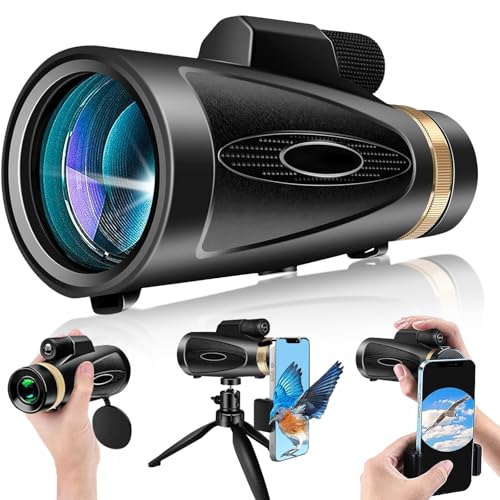
The KTBDING monocular provides 80x magnification with a 100mm objective lens for bright, expansive views. It’s well-suited to bird watching, hunting, hiking, and distant landscape viewing. The Fully Multi-coated Lens and BAK-4 prism reduce light loss, delivering clearer, more vibrant images. A quick-align smartphone adapter and tripod support stable, long-range imaging, making it a practical choice for travelers who want to document observations with a phone. The build balances portability with powerful optics for outdoor use.
Tinllaans 16×56 UHD Monocular

The Tinllaans monocular combines 16x magnification with a 56mm objective for a broad field of view up to 263 feet at 1000 yards. The combination of Bak-4 prism and FMC coating minimizes light loss, producing bright, accurate color representation in varied lighting. An included adjustable tripod and phone holder enables steady shots and hands-free viewing. Its 8-degree apparent field of view helps with scanning skies and landscapes, making it versatile for stargazing and birding alike.
Pankoo 40×60 HD Monocular

The Pankoo 40×60 HD monocular features a 40x magnification and a 60mm objective lens, delivering bright, detailed images with a wide field of view. It uses premium FMC coatings and a BAK-4 prism to enhance light transmission and reduce reflections. The device is designed for adults who enjoy hiking, wildlife viewing, and travel, offering a stable, compact option for voyagers who want reliable performance without heavy gear. Its general rugged design makes it suitable for outdoor activities in varied conditions.
ASxmhGo Monocular With Lights

This ASxmhGo monocular includes built-in lighting for low-light conditions, making it a practical choice for stargazing during moonless nights or shaded observing spots. It offers 80x magnification with a large 100mm objective, and a smartphone holder with a tripod for stable imaging. The device is designed for hunting, bird watching, and nature exploration, with a focus on ease of use and portability. The included accessories help extend viewing distance and image capture in dim environments.
Majestik+ 80×100 HD Monocular

The Majestik+ 80×100 monocular emphasizes high-power magnification with a broad 100mm objective, delivering a bright, wide-angle view essential for distant scenery and wildlife. The fully multi-coated lens and BAK-4 prism maximize light transmission for crisp, vibrant images, while compatibility with smartphone adapters enables easy photo documentation. Its compact form and included tripod support make it a convenient option for travelers who prioritize both image quality and portability.
Buying Guide
- Magnification and objective size: Higher magnification (e.g., 80x) reveals distant details but tends to reduce light transmission and require steadier mounting. A larger objective (e.g., 100mm) collects more light for brighter images, especially under twilight or deep space viewing.
- Optics coatings and prism: Fully Multi-Coated (FMC) lenses and Bak-4 prisms reduce light loss and chromatic aberration, improving brightness and color fidelity across conditions.
- Stability: Tripod compatibility is crucial for high magnification to minimize shake. Look for models that include a stable tripod or offer easy smartphone mounting for long sessions.
- Phone compatibility: Smartphone adapters extend utility, enabling easy capture of crisper photos and videos of stars, birds, or distant landscapes.
- Portability vs. performance: Larger objective lenses deliver brighter views but add bulk. Choose based on how you plan to travel and how long you’ll observe without support.
- Low-light performance: For stargazing, a monocular with good transmission and coatings will fare better in faint skies. Some models include built-in illumination for close-range viewing in dark conditions.
- Durability and weather sealing: Outdoor use benefits from rugged construction and resistance to dust, humidity, and rain; check product specs for weather resistance.
- Accessories: A carrying case, neck strap, and clamshell lens caps can extend the device’s lifespan and ease of transport.
- Warranty and support: A solid warranty can provide confidence for frequent travelers and photographers who rely on their gear in remote locations.
When selecting a monocular for stargazing, prioritize a balance between magnification, image brightness, and stability. The five options above offer a range of features—from built-in lighting and smartphone adapters to high-quality optics—that suit different observing styles and travel needs. Compare magnification, objective size, and included accessories to find the best fit for your outdoor adventures and night-sky explorations.