Finding the right light panel can boost hands-on learning, creativity, and calm focus for children. The following five selected products offer bright, safe surfaces ideal for art, tracing, early math, and sensory play. Each item features adjustable brightness, durable construction, and kid-friendly designs to support classroom and at-home activities.
Chosen Products Overview
| Product | Brand | Key Benefit | Unique Feature |
|---|---|---|---|
| PreTrans Kids Light Box – 16″ | PreTrans | Translucent display for observation and learning | 10 brightness levels with 3 color temperatures |
| Odoorgames Round LED Light Panel | Odoorgames | Large surface for collaborative activities | Three adjustable brightness settings |
| Kanayu Adjustable Brightness LED Panel – 18″ | Kanayu | Versatile for letters, numbers, colors | 6 pattern blocks + letters and numbers |
| Crayola Ultimate Light Board | Crayola | Tracing, drawing, and art projects | Removable tracing panel and 3 light effects |
| Blueweenly LED Light Panel | Blueweenly | Color exploration and early math concepts | 3 brightness settings and abundant combinations |
PreTrans Kids Light Box – 16″ Overview
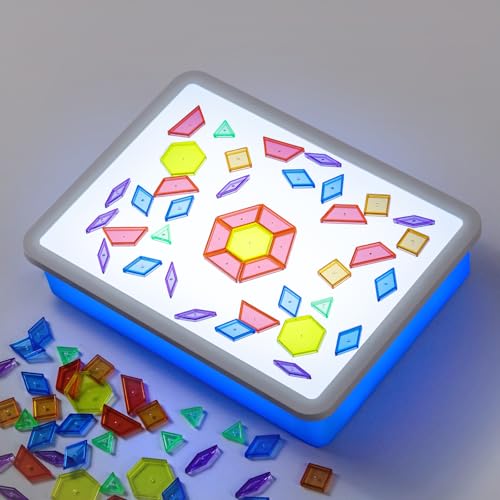
The PreTrans light box is designed to showcase translucent toys and materials, encouraging observation of colors, shapes, and lines. It is an ideal center for art and learning activities, integrating science and crafts. With 30 evenly distributed LEDs, the unit offers 10 brightness levels and three color temperatures to balance visibility and eye comfort. An acrylic panel ensures uniform lighting while protecting young eyes. This panel supports diverse activities, including stenciling, sketching, scrapbooking, and even light-based demonstrations in classroom or home settings.
Blueweenly LED Light Panel – 3 Brightness Settings

The Blueweenly light panel provides a versatile surface for color exploration, pattern matching, and early numeracy activities. Sized to fit desks or small tables, it includes three brightness settings to tailor light intensity for different tasks. The panel supports hundreds of combinations with a variety of shapes, making it suitable for color mixing and shadow experiments. Its durable construction makes it a solid long-term choice for ongoing sensory play and learning projects.
Odoorgames Round LED Light Panel – Creative Classroom Use

Odoorgames offers a 19.6-inch round light panel with a 17.2-inch illuminated area. The round geometry invites collaborative exploration, color mixing, and color-based sorting. Three brightness levels allow teachers and parents to adapt lighting for group activities or individual tracing and art projects. The translucent surface aids in understanding color properties and light diffusion, making it a strong option for classrooms and home learning spaces that emphasize group engagement.
Kanayu Adjustable Brightness LED Light Panel – 18″

Kanayu’s 18-inch LED light panel combines brightness control with a broad selection of pattern blocks and letters. It includes six different shape patterns and colors, plus educational letters (A-Z) and numbers (0-9) to support counting, spelling, and literacy activities. The three brightness settings enable children to explore light, color mixing, and shadows while fostering fine motor skills through hands-on assembly and arrangement of blocks.
Crayola Ultimate Light Board – Tracing And Art

The Crayola Ultimate Light Board is designed for drawing, tracing, and projecting light-based art. It includes a removable tracing panel and three lighting effects to enhance creativity. The kit ships with six gel markers designed for washable use, and a built-in kickstand for easy viewing. This board supports tracing practice, decorative art projects, and light-assisted design tasks, making it a practical addition to art corners, classrooms, and kids’ study areas.
Buying Guide: Key Purchase Considerations
When selecting the best light panel for kids, consider these dimensions to ensure safe, age-appropriate use and enduring value:
- Brightening options: Look for brightness levels and color temperatures that suit different activities (art, tracing, color mixing, or sensory play). A panel with multiple brightness settings enables easier transitions between tasks and reduces glare.
- Surface size and shape: A larger surface supports more collaborators and bigger art projects, while round or compact panels fit smaller desks or shared spaces. Ensure the surface is translucent and evenly lit to avoid hotspots.
- Durability and materials: Choose panels with sturdy frames and impact-resistant surfaces. Acrylic or tempered glass panels are common; ensure edges are smooth and safe for children.
- Educational value: Panels that include blocks, letters, numbers, or pattern sets can support early literacy, numeracy, and fine motor skills in addition to color and light exploration.
- Compatibility and expandability: Some systems offer modular blocks or additional accessories. Consider whether you want a standalone panel or a system that can grow with your child’s learning.
- Maintenance: Check for easy cleaning, non-toxic materials, and simple battery or power options. Removable tracing panels or washable markers add convenience for classroom use.
- Safety standards: Ensure materials are child-safe and conform to applicable safety guidelines, especially for younger children who may put objects in their mouths.
- Price and longevity: Evaluate whether the panel’s features justify the cost. Longer-lasting designs with multi-use capabilities often provide better value over time.
- Portability and storage: If space is limited, look for slim, lightweight panels or foldable designs that are easy to store when not in use.
In summary, a light panel that balances brightness, durability, and educational content can support a broad range of activities, from early geometry and color experiments to tracing and pure creative play. The items listed here represent a mix of classroom-ready and home-friendly options with varying focal points so families can choose based on their child’s interests and developmental stage.