Parents and caregivers can support early speech development with interactive, kid-friendly tools. The following five products are selected for their focus on vocabulary building, pronunciation practice, and engaging play. Each item uses sound, visuals, and hands-on activity to encourage talking, listening, and language concepts in children aged 1–6.
| Product | Key Benefit | Target Age | Core Feature |
|---|---|---|---|
| Airbition Talking Flash Cards | Montessori-style vocabulary building | 1–4 years | 224 words with sounds and repeat button |
| LeapFrog Learning Friends 100 Words Book | Alphabet and category exploration with sound effects | 0–4 years | 100+ words with interactive pages |
| QuTZ Talking Flash Cards | Phonics, reading readiness, and multiple themes | 3–6 years | 166 cards, 800+ words, 700+ interactive games |
| Toyze Montessori Sensory Toys | Sorting, color matching, and speech skills | 2–6 years | 58-piece learning set with mystery box |
| ZONSTVYS Talking Flash Cards | Vocabulary expansion with a writing tablet | 1–6 years | 510 sight words across 14 subjects |
These selections emphasize practical language practice, variety in activities, and accessibility for home use. Each item supports different ways children learn—through listening, repeating, reading, or writing—helping to address diverse speech delay needs.
Airbition Talking Flash Cards For Toddlers
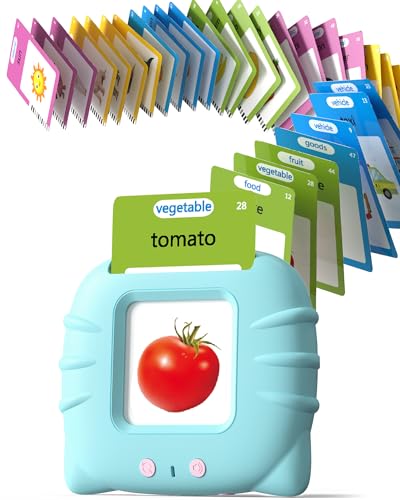
This toddler language learning device includes 224 colorful illustrations with accompanying sounds. It covers animals, vehicles, foods, fruits, and vegetables to help expand vocabulary and cognitive skills. The format supports speech therapy goals by pairing sound with image in a Montessori-like approach. Operation is simple: switch on, insert a card, and listen to content in a standard American accent. A repeat function and five-volume control enhance usability for young children.
How it supports speech delay: The audio-visual pairing reinforces word production, and the repeat feature allows repeated practice in a low-pressure setting. The device is designed for easy handling by toddlers and offers a familiar, engaging way to practice pronunciation and word recall at home or in therapy sessions.
LeapFrog Learning Friends 100 Words Book
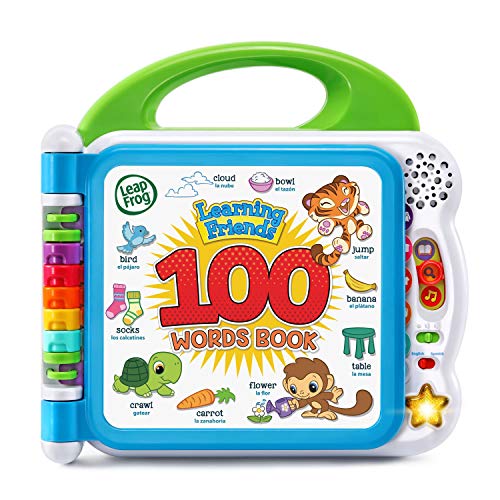
The LeapFrog Learning Friends book introduces the alphabet and more than 100 words through interactive pages. Characters Turtle, Tiger, and Monkey guide exploration across everyday categories like pets, foods, colors, and activities. Users can touch words to hear pronunciation, sounds, and fun facts, with light-up star button triggering theme songs. This setup supports vocabulary expansion and auditory discrimination in an approachable format for preschoolers.
How it helps speech delay: The tabletop book format provides tactile cues and immediate audio feedback, reinforcing word-pair associations and category vocabulary. The guided narrative can aid in sentence formation, while the interactive sounds encourage verbal responses and communicative intent during shared reading.
QuTZ Talking Flash Cards

QuTZ offers 166 tap-to-read cards across 29 themes, delivering 800+ words and numerous facts. Content spans letters, sounds, phonics, math, and more, helping early readers develop literacy foundations. The package includes 60 phonics flash cards and 20 game pages, with professional American voice audio. A wide range of games and activities—such as memory challenges and role-playing—keeps engagement high for preschoolers and early graders.
How it supports speech delay: This kit combines phonics instruction with interactive play, encouraging children to produce target sounds, expand phonemic awareness, and practice sentence structure in varied contexts. The inclusion of explicit phonics lessons helps children connect sounds to letters, a key skill for early reading and speech clarity.
Montessori Sensory Toys For 2-6 Year Olds

This 58-piece Montessori kit combines 48 miniatures, eight challenge cards, and a treasure box for sorting, counting, and color matching. It supports fine motor skills and foundational math concepts while offering opportunities for descriptive language and storytelling during play. The two play modes adapt to younger or older children, broadening speech therapy applications beyond single-word prompts to richer language interactions.
How it helps speech delay: The varied pieces and sorted categories prompt children to label items, describe attributes, and explain choices. The treasure box and sorting activities naturally invite verbal exchanges, turn-taking, and cooperative communication with peers or therapists.
ZONSTVYS Talking Flash Cards

The ZONSTVYS system combines a 7-inch LCD writing tablet with a talking flash cards set. It offers 510 sight words across 14 subjects, helping children build vocabulary and literacy alongside handwriting practice. Standard American pronunciation accompanies each card, with authentic animal and vehicle sounds to reinforce word meaning. The tablet design minimizes glare and blue light exposure for safer long sessions.
How it helps speech delay: The combination of spoken words and a writable surface allows for repeated articulation and practice spelling or writing words as prompts. The tool supports multi-sensory learning, which is beneficial for children who respond better to visual, auditory, and tactile cues during speech therapy or home practice.
Buying Guide: Key Purchase Considerations
Choosing the right speech-support tools involves evaluating how a product aligns with a child’s needs, routines, and learning style. Consider the following factors to compare options effectively.
- Age appropriateness and goals: Some tools emphasize vocabulary growth, others focus on phonemic awareness, reading readiness, or a combination. Pick items that match the child’s current stage and therapy goals.
- Input and feedback modes: Look for products that offer clear audio pronunciation, immediate feedback, and opportunities for repetition. Multi-sensory cues (sound, visual images, and touch) tend to support retention.
- Ease of use and durability: Devices should be simple to operate for the child and robust enough to withstand frequent handling. Consider weight, button layout, and screen glare or blue light exposure.
- Therapeutic alignment: If the child attends speech therapy, ensure the tool complements professional strategies. Some products provide structured phonics or articulation prompts that align with common therapy approaches.
- Content variety: A mix of themes, categories, and activities can prevent fatigue and maintain motivation. The best options offer numerous words, sounds, and interactive modes.
- Customization and portability: Portable devices and those with adjustable volume or repeat features support practice in different environments, including travel or therapy sessions away from home.
In practice, combining a vocabulary-focused option (like the Airbition or LeapFrog products) with phonics-centered tools (such as QuTZ) can create a balanced program. Include tactile or writing components (ZONSTVYS tablet) to reinforce learning across modalities. Finally, pairing a sensory kit (Toyze) with speech-focused activities encourages broader language use in everyday play, which can deepen progress over time.