When parents seek effective early learning tools, baby flash cards stand out for building vocabulary, color and shape recognition, and foundational literacy skills. The following hand-picked selection prioritizes clarity, durability, bilingual options, and engaging visuals. Each product offers varied approaches—from high-contrast visuals to interactive talking cards—so caregivers can choose based on developmental goals, language exposure, and preferred play styles.
Summary of chosen products
| Product | Brand | Key Feature |
|---|---|---|
| LearnWorx 101 Baby Flash Cards | learnworx | 101 first words, large visuals, name-objects, counting games |
| Airbition Bilingual Talking Flash Cards | Airbition | Spanish & English, 512 words, dual-language playback |
| Jollybaby Reusable Soft Flash Cards | Jollybaby | Washable, double-sided, sensory themes |
| beiens High Contrast Flashcards | beiens | 80 cards, high-contrast visuals for quick recognition |
| First Words Flash Cards | Scholastic | Classic starter vocabulary set |
The following sections highlight five top options, organized to help caregivers compare features, durability, and learning impact. Each section provides a concise product overview, visual assets, and the specific learning benefits reflected in the listed features.
LearnWorx 101 Baby Flash Cards for Toddlers

The LearnWorx set features 101 flashcards designed for toddlers aged 1 to 3. The pack covers a broad range of everyday objects, including animals, food, household items, and outdoor scenes. These large cards are sized for little hands and crafted to support early speech development. Each card includes a prompt for interactive play, turning learning into short, repeatable activities that reinforce word association and pronunciation. An added advantage is the inclusion of simple games and counting prompts printed on the reverse side, encouraging cognitive practice without screens.
Key benefits include: broad vocabulary exposure, visually engaging illustrations, and a structure that supports early speech therapy goals. The design emphasizes bright colors and clear imagery to aid visual development while minimizing distractions. The product’s award-winning status reflects its consumer-friendly approach and practical classroom-ready features. This set is well-suited for home use, preschools, or therapy-support settings looking for a comprehensive first-words toolkit.
Airbition Bilingual Spanish and English Talking Flash Cards

This bilingual set supports simultaneous English and Spanish exposure, making it a strong choice for households seeking dual-language development. The reader offers a clear American-accented voice with both language tracks, and a repeat function to reinforce memory and pronunciation. The content spans core categories—numbers, shapes, colors, animals, transportation—and aims to boost cognitive skills through labeled visuals and audial cues. The flexible language modes help caregivers tailor sessions to a child’s current language proficiency, while maintaining engagement through interactive playback.
Designed for toddlers ages 2 and up, Airbition emphasizes cultural appreciation and linguistic flexibility. This tool can complement language routines at home, in early education, or in speech-therapy contexts, providing a multisensory approach that combines sound, image, and concept recognition.
Jollybaby Reusable Soft Flash Cards

Jollybaby offers reusable soft flash cards designed for babies aged 0 to 18 months and beyond. The cards are washable, tear-resistant, and suitable for rough handling, which is ideal for early exploration with toddlers who like to mouf or tug at items. The set features three sensory themes—fruits, vegetables, and numbers—on durable, double-sided cards. Each card pairs numbers with corresponding fruits or vegetables, reinforcing counting and word recognition through tactile and visual engagement. The washable design helps caregivers maintain cleanliness and reuse, reducing waste and expanding learning opportunities over time.
These soft cards align with sensory development goals and can promote parent-child interaction during play sessions. The high tactile element supports early memory and recognition while avoiding screen-time distractions. The combination of visual cues and durable construction makes this set a practical choice for daily learning routines, travel, and quiet time at home.
beiens High Contrast Baby Flashcards
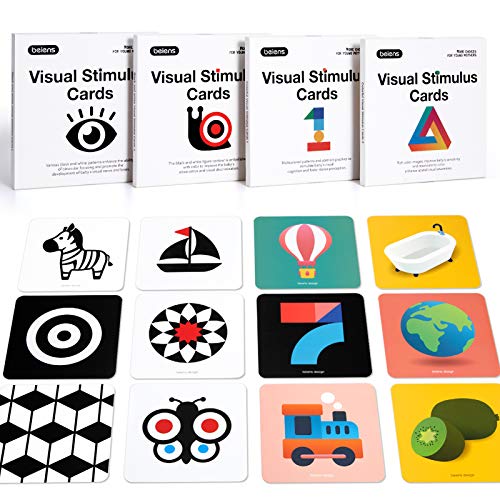
Beiens high-contrast flashcards are designed to stimulate early visual development in babies from birth to about 36 months. The pack includes 80 cards across 160 pages, featuring stark black-and-white patterns alongside colorful visuals to capture a baby’s attention and promote rapid recognition. The high-contrast design aligns with research suggesting that newborns and young infants respond best to bold, simple shapes. The cards cover a range of topics—shapes, geometric figures, and basic concepts—providing a foundation for quick visual processing and memory formation.
Parents can use these cards to introduce introductory concepts, enhance focus during brief study sessions, and support future literacy steps by establishing strong visual pathways. The tactile experience is minimal, making these cards a good fit for quick drills, travel, and structured play breaks throughout the day.
First Words Flash Cards

Scholastic’s First Words Flash Cards are a classic starter set designed to build a foundational vocabulary for early readers. While not labeled with an extensive feature list here, this product is widely recognized for dependable, age-appropriate content that supports vocabulary recognition and word association. The design typically emphasizes large, legible text and paired illustrations to help children learn common nouns and simple verbs. This makes it a reliable option for caregivers seeking a straightforward language-building resource suitable for home or classroom use.
As a traditional choice, these cards can complement more interactive or bilingual tools by providing a simple, consistent core vocabulary set. They pair well with storytelling, daily routines, and guided practice, helping to establish familiarity with basic words before exploring more complex language concepts.
Buying Guide: Key Purchase Considerations And Comparisons
- Learning goals: If the aim is bilingual development, prioritize languages-overlaid tools like Airbition’s bilingual set or any resource that clearly labels two languages. For pure vocabulary growth, larger sets such as LearnWorx or Scholastic First Words are strong options.
- Durability and safety: For babies who chew or tug at cards, consider washable, soft, or tear-resistant designs (e.g., Jollybaby). For infants, high-contrast boards can be more stimulating and easier to handle under supervision.
- Visual and sensory features: High-contrast cards help early vision development, while tactile or texture-inclusive sets support sensory learning and memory through touch, texture, and color.
- Age appropriateness: Check recommended age ranges to ensure the cards align with a child’s current developmental stage. Starter sets often cover 0–3 years and up, with more advanced words introduced later.
- Language variety and repetition: Tools that offer repeated exposure and varied prompts (questions, counting, or simple games) tend to reinforce retention more effectively than static flash cards.
- Portability and usage context: Consider travel-friendly options (compact sets, rings, or clip-on formats) for on-the-go practice, as well as cards designed for parent-child interaction during routines like mealtime or bedtime.
- Supplementary features: Some products provide printed games on the reverse side or built-in audio playback. Decide whether you prefer manual prompts or voice-assisted learning to fit your routine.