Choosing the right learning toy helps toddlers build early literacy, numeracy, and fine motor skills through interactive play. The following five educational laptop-style toys are designed for ages 1–3, featuring light-up keys, built-in games, and bilingual or multi-sensory activities. This guide highlights what each offers, so caregivers can compare options quickly and pick a device that supports exploration, pretend play, and independent learning.
A quick snapshot of selected products:
| Product | Brand | Key Features |
|---|---|---|
| Learning Toy Pink Laptop | GMAOPHY | 2-in-1 design, 120+ learning themes, 4 modes |
| Learning Toy Green Laptop | GMAOPHY | 2-in-1 design, 8 function keys, pretend play |
| Interactive Laptop For Toddlers | Laradola | LCD interaction, bilingual (English/Spanish) basics |
| ZEENKIND Spanish English Toy Laptop | ZeenKind | 6 play modes, bilingual learning |
| 6-in-1 Kids Phone Toy | Boxiki kids | Multiple learning functions, sturdy build |
GMAOPHY Pink 2-in-1 Learning Laptop
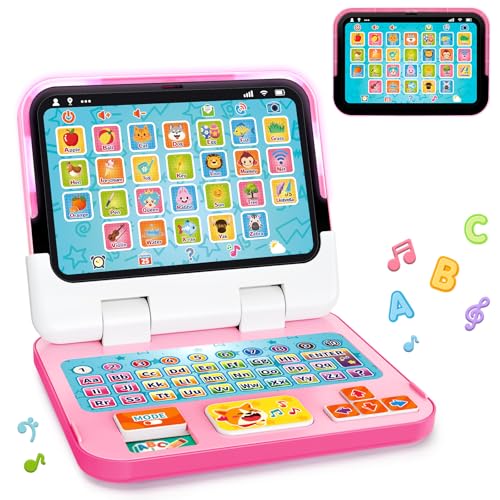
Features include a detachable base that converts the unit from a tablet-like device to a desktop-style laptop, enabling different play setups. The toy offers lights, sounds, music, and 120+ learning themes, introducing early concepts such as letters, words, numbers, and colors. It aims to develop cognition, vocabulary, listening, and pronunciation skills, suitable for toddlers aged 1–3. Four interactive modes—Learning, Spelling, Quiz, and Music—provide a blend of cognitive and fine-motor activities, including social pretend scenarios like making calls or “sending emails.”
The design supports screen-time-like learning in a controlled toy environment, encouraging confidence and independence as children practice basic literacy and recognition skills during imaginative play.
GMAOPHY Green 2-in-1 Learning Laptop

This green variant mirrors the pink model with a detachable base for flexible play. It also includes 120+ learning themes, 4 modes (Learning, Spelling, Quiz, Music), and eight function keys that simulate real-life scenes to support vocabulary acquisition, color and number recognition, and early communication. It’s designed to help toddlers 1–3 develop fine motor skills and social interaction through pretend activities, while the bilingual awareness is not a primary feature in this model but the interactive play remains engaging and educational.
Laradola Interactive Laptop For Toddlers

Designed for ages 2–4, this bilingual laptop uses an LCD screen to create engaging visual feedback. It introduces shapes, numbers, colors, and basic words in English and Spanish, making it a suitable tool for early bilingual exposure. Portable and lightweight, it supports on-the-go learning and at-home play. The device combines educational content with interactive games that build memory and problem-solving skills, while encouraging children to practice vocabulary in a familiar pretend-play setting.
ZEENKIND Spanish English Toy Laptop

This bilingual learning toy focuses on English and Spanish through words, alphabet, numbers, math, spelling, and quizzes. The six play modes encourage memory development, reading readiness, and basic math skills. Light-up keys provide immediate visual feedback to reinforce learning. The toy supports pretend play and interactive exploration, helping toddlers become comfortable with two languages while expanding vocabulary and early literacy concepts.
ZEENKIND Spanish & English Small Talking Laptop

Equipped with English and Spanish audio, this small laptop offers six play modes for words, alphabet, numbers, and math—including addition and subtraction—with spelling, quizzes, and reading. It targets bilingual development and memory enhancement through interactive games and problem-solving activities. The pretend-play aspect supports social and communication skills, making it a versatile option for early language learners aged 2–4 years.
Boxiki Kids 6-in-1 Learning Phone Toy

This 6-in-1 educational device blends a pretend phone with a tablet-like learning toy. It’s designed to promote faster toddler learning through a suite of games that focus on letters, words, spelling, numbers, and general knowledge. The device emphasizes durability and everyday reliability, suitable for active toddlers who need a robust toy for daily use. The learning functions are built to encourage language development, memory, and critical thinking through interactive play.
Buying Guide: Key Purchase Considerations
- Age appropriateness: Look for toys explicitly designed for 1–3 year olds to ensure small, safe components and simple interfaces.
- Learning goals: Decide whether you want language development (bilingual features), early math concepts, color/shape recognition, or pretend-play scenarios.
- Durability and safety: Prioritize sturdy bodies, non-toxic materials, and rounded edges for rough toddler handling.
- Interactivity vs. screen time: These toys simulate screen learning without traditional screens; consider how much interactive play you want versus passive listening.
- Portability: For families on the go, choose lightweight, compact designs with simple battery operation or USB charging options.
- Language options: Bilingual models can boost bilingual exposure early; evaluate whether you want English-only or English-Spanish content.
- Replay value: Look for toys with multiple modes and enough variety to keep toddlers engaged over months of use.
- Maintenance: Prefer easy-to-clean plastics and straightforward button layouts to minimize caregiver effort.
The selections emphasize safe, educational play with interactive features that can support early literacy, number sense, and social pretend-play skills. While some models lean bilingual, others focus on reinforcing memory and recognition through multi-mode activities. When choosing, align the toy’s activities with a child’s current interests and development stage to maximize learning outcomes.