Discover top-rated kid play kitchens that spark pretend play, teach practical skills, and fit into busy family spaces. This guide highlights durable, safe, and engaging options for toddlers through early elementary ages, with features like lights, sounds, adjustable heights, and realistic accents. Whether you want wooden craftsmanship or sturdy plastic sets, these picks offer interactive elements to keep little chefs busy for hours.
Summary Table Of Selected Products
| Product | Brand | Key Features |
|---|---|---|
| Step2 Fun with Friends Kitchen | Step2 | Lights & sounds, 25 accessories, compact footprint |
| Tiny Land Wooden Kitchen | Tiny Land | Real lights & sounds, adjustable height, safety compliant |
| 42 Items 87 Pcs Cutting Kitchen Set | JASNKKONT | Large accessory set, pretend cutting, durable storage basket |
| Step2 Best Chefs Kitchen | Step2 | Interactive features, multiple storage options |
| Best Choice Kids Cottage Kitchen | Best Choice Products | Scalloped edges, microwave/oven, ample open storage |
Step2 Fun With Friends Kitchen Playset
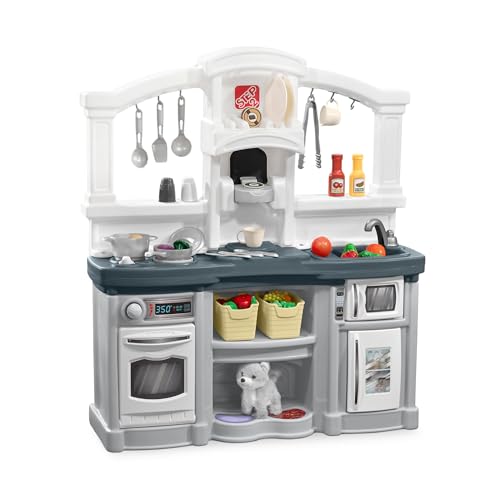
The Step2 Fun With Friends Kitchen Playset provides a social, interactive cooking space for toddlers and preschoolers. With lights and sizzling sounds on the burner, kids can engage in imaginative meals while knobs click for tactile feedback. The set includes a built-in pod coffee maker, sink, and faucet, plus opening fridge and oven doors to encourage hands-on learning. Its compact footprint (40.88″ H x 35.75″ W x 12.5″ D) and 24.25 lbs weight help it fit snugly in living rooms or playrooms, making cleanup and relocation simpler for parents.
Age suitability starts at around 2 years and up, aligning with early pretend play milestones. The durable plastic construction is designed for busy households, and the inclusion of numerous interactive features supports shared play experiences between siblings or peers. Battery-operated lights and sounds add realism without complex assembly. If you’re seeking a vivid, action-oriented kitchen that still fits a typical home, this Step2 model stands out for its combination of realism and portability.
Tiny Land Play Kitchen With Real Lights
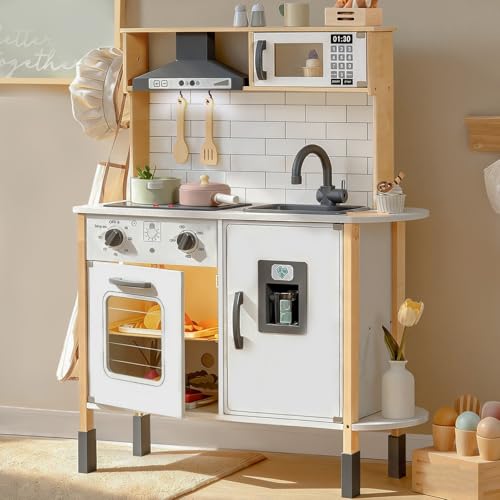
Tiny Land’s wooden play kitchen emphasizes realism paired with safety and adjustable height. The unit features light-up stove elements and an interactive range hood to mirror real kitchen sights and sounds. A removable sink with a faucet adds practicality to pretend cooking, while the wooden construction aligns with a warmer, homey aesthetic. The product accommodates children aged 3–8 through three height settings, allowing growth as kids gain confidence in their pretend culinary skills. Its compact footprint supports smaller play spaces without compromising the feel of a full kitchen.
Safety is a core feature: high-quality wood, non-toxic finishes, BPA-free materials, and smooth edges reduce worry for parents while enabling kids to explore freely. This emphasis on safety standards (ASTM F963 and EU EN71) ensures a sturdy, worry-free play environment. The design blends well in family rooms or shared spaces, offering a calm, inviting backdrop for imaginative play that can evolve as a child grows.
JASNKKONT 42 Items Cutting Kitchen Set

This comprehensive set from JASNKKONT brings a robust pretend kitchen experience with 42 items and a total of 87 pieces when assembled. The assortment includes colorful pretend food, utensils, and tools designed to resemble real kitchen activities. A durable storage basket helps keep accessories organized, making it easy to transport the set for classroom or home play. The realistic food items—crab, egg, pizza, and more—offer varied pretend play opportunities and opportunities to teach naming, classification, and sequencing during play sessions.
Suitable for growing imaginations, the set encourages kids to practice cutting, peeling, and “prepping” foods in a safe, non-mentional way. It’s ideal for gift-giving, classroom use, or family playdates where multiple children want to join the kitchen action. The bright colors and sizable accessory collection provide a vibrant, engaging play environment that can adapt to different play themes over time.
Step2 Best Chefs Kitchen Playset

The Step2 Best Chefs Kitchen Playset emphasizes an open design with social play in mind. Its dimensions (approximately 35.8” H x 34.4” W x 11.5” D) offer a generous cooking area while still fitting in modest play spaces. Interactive features include a working oven and refrigerator doors, a pass-through kitchen window, and a pretend stove burner with lights and sounds. The setup fosters cooperative pretend play, encouraging kids to take on different roles such as chef, server, or host.
Storage is practical, with multiple accessory hooks and shelves along with a recycling bin to keep the 25 included kitchen accessories organized. The assortment supports imaginative meals, role-play scenarios, and basic kitchen logistics—helpful for early social and language development as children narrate cooking actions and recipes. The sturdy plastic construction ensures durability during active play, while the integrated features promote sustained engagement without excessive mess.
Best Choice Products Cottage Kitchen Playset

The Best Choice Products cottage kitchen offers a charming design with scalloped edges and a kid-friendly layout. It includes a pretend microwave, oven, and a functional play kitchen with an emphasis on open storage, making it easy to access play necessities. The set includes five accessories, such as cooking utensils and a Dutch oven, to complete the pretend chef experience. The cottage aesthetic adds warmth to a playroom while maintaining clear functionality for younger children learning to imitate adult tasks.
Durability and safety are central, with smooth edges and kid-safe materials. The layout supports independent play as well as shared play between siblings, helping kids practice turn-taking and collaborative storytelling as they “cook” meals and manage utensils. The open shelving design also encourages organization and cleanup routines during pretend play sessions.
Buying Guide: Key Purchase Considerations And Comparisons
- Age range and safety: Most sets target toddlers to early elementary ages. Look for non-toxic finishes, smooth edges, and compliance with safety standards (ASTM F963, EN71) when selecting wooden or plastic sets.
- Size and space: Consider the footprint and height. Taller play kitchens may require more vertical space, while compact designs suit smaller rooms. Adjustable-height options help as children grow.
- Interactivity: Lights, sounds, moving doors, and interactive burners can enrich pretend play. However, simpler cable-free designs may appeal to parents who prefer quieter playtime.
- Storage and organization: Built-in shelves, hooks, and baskets assist with keeping accessories tidy and accessible during playtime. A dedicated storage solution also simplifies cleanup.
- Materials and durability: Wooden kitchens are sturdy and durable, often with a warmer aesthetic, while plastic sets are lighter and easier to move. Consider cleaning ease and long-term wear when choosing.
- Number of accessories: Some sets include 5–25 items; others provide dozens of pieces. More accessories support varied pretend play but require more space for storage.
- Storage and mobility: Wheels or light-weight frames enable easy repositioning for play areas that frequently change. For shared living spaces, think about how the kitchen integrates with other furniture.
- Educational value: Look for features that encourage practical life skills, sequencing, color and shape recognition, and imaginative storytelling to maximize play outcomes.
Multiple perspectives help parents choose a kitchen that best fits their child’s interests. For social play, models with open designs and accessible storage encourage cooperative cooking. For younger kids, smaller sets with fewer accessories reduce overwhelm and facilitate easier cleanup. Families valuing realism may prefer wooden sets with lights and sounds, while those prioritizing portability may lean toward compact plastic kitchens. Balancing durability, space, safety, and kid engagement is key to selecting the right kitchen for growing imaginations.