Kids thrive when learning is hands-on and engaging. The following interactive dice sets combine movement, problem-solving, and quick-thinking to support math, literacy, fitness, and critical thinking. Below are five carefully chosen options that balance educational value with entertaining play, suitable for classrooms, families, and independent learning.
| Product | Brand | Key Focus |
|---|---|---|
| Interactive Reading Comprehension Cubes Set | BETTERLINE | Reading comprehension, discussion prompts, differentiated levels |
| Pizza Party Dice Game | University Games | Quick-thinking dice game for small groups |
| Premkid Exercise Dice | Premkid | Large foam dice, multiple movements for active play |
| ThinkFun Math Dice Junior | ThinkFun | Early math skills, mental agility |
| Fun Fitness Dice for Kids | BETTERLINE | Fitness and movement, exercise variety |
Interactive Reading Comprehension Cubes Set

The BETTERLINE Reading Comprehension Cubes offer a four-level learning path with 24 diverse questions, designed to tailor instruction to a child’s reading proficiency. Four distinct cube levels enable teachers and parents to customize activities, fostering individual progress while maintaining engaging discussions. Each roll invites interpretation and discussion, making reading sessions interactive and enjoyable. The product supports classroom settings and home learning by providing a flexible, scalable approach to reading comprehension and critical thinking.
Pizza Party Dice Game

University Games’ Pizza Party Dice Game turns play into a fast-paced, interactive experience for kids and families. Players roll dice and assemble a virtual pizza by completing slices. The simple mechanics support turn-taking, counting, and strategic thinking as players work to finish their pizza first. While designed for two players, additional copies enable more participants, making it adaptable for family game nights and classroom activity rotations alike.
Premkid Exercise Dice
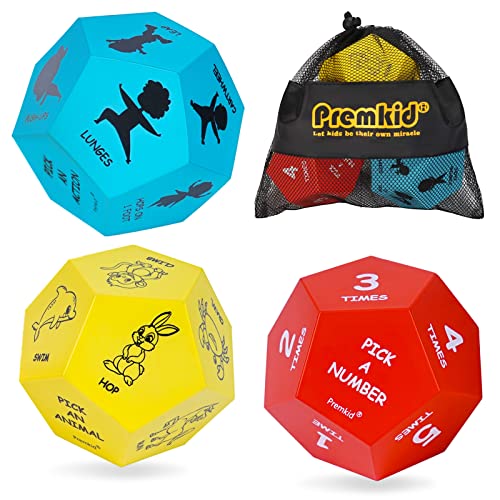
Premkid’s Large Foam Exercise Dice set emphasizes safety, durability, and indoor/outdoor versatility. The foam dice feature bright colors and a soft, elastic surface, reducing risk during active play. A 22-move system plus a 3-option choice game adds variety, enabling families and classrooms to mix movements with rolled outcomes. The product supports physical development, coordination, and cognitive engagement as children follow patterns to imitate movements, count repetitions, and create interactive routines.
ThinkFun Math Dice Junior

ThinkFun Math Dice Junior targets foundational math skills for children aged six and up. This dice game is designed to boost mental agility and early math proficiency through engaging, fast-paced rounds. ThinkFun’s reputation for brain-teasing puzzles adds a layer of credibility and consistency, with a focus on cognitive development and mathematical thinking that can be integrated into school curricula or home learning routines.
Fun Fitness Dice for Kids

BETTERLINE’s Fun Fitness Dice for Kids combine three action dice sets—yoga, fitness, and other exercises—with a number dice to guide repetitions. The design encourages movement, coordination, and motor skill development while keeping activities engaging and imaginative. The character-driven dice prompts help sustain motivation, whether used in group PE, classroom warm-ups, or family fitness routines at home.
Buying Guide
Key purchase considerations help align dice-based activities with learning goals and the age range of players.
- Learning objectives: Identify whether the primary goal is literacy, math, physical fitness, or a blend of skills. Choose dice sets that explicitly support those outcomes.
- Age appropriateness: Check age recommendations and difficulty levels. Family games should be accessible to younger children, while classroom sets may include multi-level options.
- Durability and safety: Look for foam or wooden dice with smooth edges for younger children. For active play, consider foam materials that resist damage and are easy to clean.
- Movement vs. thinking balance: Some sets emphasize quick action, others encourage critical thinking or descriptive responses. Balance your selection accordingly.
- Group suitability: If using in classrooms, ensure the set supports multiple players and easy rotation. For home use, consider portability and storage flexibility.
- Question and activity variety: A diverse question bank or movement options reduces repetition and sustains engagement over time.
- Compatibility with existing curricula: Some products align with reading comprehension, math fundamentals, or fitness standards, which can ease lesson planning.
- Maintenance: Consider cleaning ease, replacement parts, and whether the kit includes instruction guides for educators or parents.
When selecting, compare how each product complements your intended activities—whether prioritizing literacy discussions, rapid math fluency, or active movement. Consider mixing a light, fast-paced option with a more structured learning tool to maintain variety and motivation across sessions.