Discover top hand held consoles that blend classic arcade charm with modern performance. This guide highlights five standout models, each chosen for portability, game libraries, display quality, and open-software options. Whether chasing retro favorites or modern indie titles, these devices offer varied approaches to handheld gaming, from premium Xbox-integrated hardware to open-source Linux systems and Android platforms.
| Product | Brand | Display | Storage | Key Strength |
|---|---|---|---|---|
| ASUS ROG Xbox Ally | ASUS | 7” 1080p touchscreen | 512GB SSD | Xbox experience on the go |
| YEQOO R36MAX Retro | YEQOO | 4.0” IPS | 64GB (plus microSD support) | Vast retro library, plug-and-play |
| DVJQSN R36MAX Retro (128GB) | DVJQSN | 4.0” IPS | 128GB | Built-in 22,000+ games |
| EraVortx XF40H | EraVortx | 4.0” IPS, 4K HD look | 128GB (model variant) | Open source Linux with 20,000+ classics |
| Retroid Pocket 5 | Retroid | 5.5” 1080p | 8/128GB variants | Android gaming with Adreno GPU |
The following sections spotlight each device’s core attributes, with a focus on what makes it a compelling choice for fans of handheld gaming. All product details are drawn from the listed features and specifications to aid objective comparisons.
ASUS ROG Xbox Ally

The ASUS ROG Xbox Ally merges ROG design with a full Windows 11 environment, allowing access to the Xbox experience and a broad range of PC game libraries. It supports Xbox Game Bar, and can run titles from Game Pass, Steam, Epic Games, and Windows games on the go. The device is built to boot directly into the Xbox experience and provides seamless cross-platform progress, leveraging Xbox Play Anywhere to resume play between PC and console ecosystems. This model emphasizes a premium handheld that targets Xbox enthusiasts looking for integrated software and hardware synergy.
YEQOO R36MAX Retro Handheld
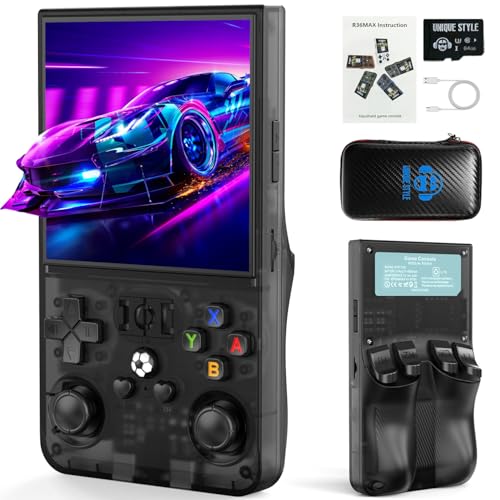
The YEQOO R36MAX Retro Handheld pairs a compact 4.0-inch IPS display with a Linux-based system and RK3326 CPU, delivering smooth emulation for thousands of classic titles and even some 3D retro games. It ships with a large pre-loaded library and a 64GB card, enabling immediate gameplay without internet access. Ergonomic controls and a curved back support extended play sessions. It is designed for retro enthusiasts seeking a portable yet robust emulator experience.
DVJQSN R36MAX Retro (128GB)
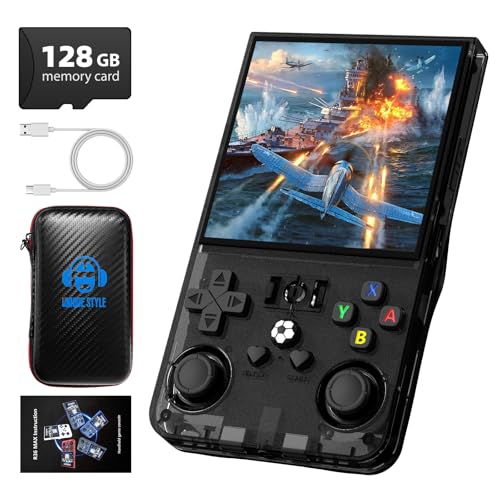
This variant of the R36MAX offers a 128GB storage option with an RK3326 64-bit quad-core processor and a Linux OS. It supports a large built-in library of over 22,000 classic games, with a 4.0-inch 720×720 display and a 4000mAh battery for extended playtime. The device emphasizes a balance between portability and a rich, offline-ready game catalog across emulation platforms.
EraVortx XF40H Handheld

The XF40H from EraVortx emphasizes an all-in-one retro gaming experience with a 4.0-inch IPS display and a robust Linux-based system supporting 20,000+ retro titles and modern indie games. It features multi-device compatibility, a high-fidelity audio setup, and Wi-Fi for online play, with optional wired controllers for couch co-op experiences. The device targets fans who want a compact system with open software flexibility and expansive classic libraries.
Retroid Pocket 5

The Retroid Pocket 5 runs on Android, powered by a Snapdragon-like performance tier with Adreno 650 GPU, and offers a 5.5-inch 1080p touchscreen for Android-based gaming. It emphasizes a strong app ecosystem, including access to Android games and emulators, plus features like Wi-Fi 6 and Bluetooth 5.1 for modern connectivity. This device suits players who want flexible software options and a larger display in a portable form factor.
DVJQSN R36MAX Blue 64GB

Another DVJQSN variant in a blue finish provides a 64GB lower-storage option with the same 4.0-inch IPS screen and RK3326 quad-core processor. It supports a large catalog of emulated titles, with up to 8 hours of play thanks to a 4000mAh battery. This model targets budget-conscious shoppers who still want a capable retro-focused handheld.
Buying Guide
Key purchase considerations help compare handhelds across display quality, processing power, software flexibility, and game libraries. These factors can be weighed to align with personal priorities such as retro focus, modern emulation, or console-like ecosystems.
- Display and ergonomics: Look for screen size, panel type, and viewing angles. A 4.0-inch IPS screen offers sharp visuals and comfortable grip, while larger screens improve immersion for modern titles.
- Processor and emulation: RK3326-based devices excel at retro emulation, while Android-powered handhelds can run modern games and emulators alike. Consider whether you want dedicated emulation performance or broad game support.
- Storage and expandability: Built-in storage matters for preloaded libraries, but microSD expansion greatly increases the available game catalog, especially for retro emulation.
- Software ecosystem: Open-source Linux-based handhelds provide flexibility and a treasure trove of emulators, whereas Windows or Android options offer broader compatibility with mainstream games and apps.
- Battery life: Higher-capacity batteries extend playtime, particularly for retro titles that can be less demanding, but real-world usage varies with brightness and processing load.
- Library scope: Some devices ship with thousands of built-in games; others rely on downloads or external libraries. Consider if preloaded content or easy online access is important.
- Connectivity: Wi-Fi, Bluetooth, and multiplayer options influence online capabilities and accessories compatibility, especially for online emulation or Android gaming.
- Portability vs. performance: Premium hardware (like Xbox-integrated options) emphasizes console-like experiences, while compact retro devices prioritize portability and long battery life.
In evaluating choices, users should align their selection with preferred gaming eras, flexibility for future game libraries, and willingness to engage with either streamlined ecosystems or open-source platforms. Each listed model offers a distinct trade-off between nostalgia and modern gaming ability, helping buyers tailor a handheld suited to their play style.