Fly tying relies on precise materials, especially Hackle feathers that give flies their lifelike movement and buoyancy. This guide highlights five high-quality options that suit beginners and seasoned tiers alike. Each product is evaluated for feather quality, length, variety, and suitability for common patterns. Use this overview to compare options and choose the best hackle for your next tying session.
| Product | Brand | Notable Features |
|---|---|---|
| Premium Fly Tying Materials Kit – Comprehensive Variety Pack for Fly Fishing | Muskoka Lifestyle Products | UV dyed marabou, hackle, peacock feathers; bulk synthetic rabbit hair dubbing |
| 5”-9.5” Feathers Fly Tying Materials (50pcs/Pack) | Single tear | Natural 5–9.5 inch feathers; scratch-edge effect |
| Happy Feather 100PCS Saddle Hackle Rooster Feathers | Happy Feather | 6–7 inch natural pheasant neck feathers; large pack |
| Tigofly 30 pcs Natural White Black Barred Grizzly Rooster Hackles | Tigofly | Natural white barred pattern; 5–6 inch length; 30 pieces |
| Hareline Cul De Canard (CDC) Feathers | Hareline Dubbin | Buoyant CDC feathers; 15 pieces; easy to apply |
Note: The selections above cover a range of hackle types, from traditional rooster hackles to CDC feathers, with options suitable for dry, wet, and streamer patterns. All choices emphasize quality and consistency to help you achieve durable, lifelike wings and palmer hackles in fly tying.
Premium Fly Tying Materials Kit

The Premium Fly Tying Materials Kit provides a comprehensive assortment for versatile fly patterns. It includes UV-dyed marabou, varied hackle options, peacock feathers, and new bulk synthetic rabbit hair dubbing. Materials are selected for quality and usefulness across trout and general freshwater flies, making it suitable for both beginners and experienced tiers seeking a broad toolkit.
5”-9.5” Feathers Fly Tying Materials

These natural feathers measure 5 to 9.5 inches, giving you flexibility for a variety of wing and tail applications. The pack’s edge-scratching technique is recommended to reveal feather texture, helping you select barbs with the right stiffness and lift for your patterns. Ideal for stonefly nymphs and streamer wings where longer hackles are advantageous.
Happy Feather Saddle Hackle Rooster Feathers

This pack centers on natural rooster saddle feathers, around 6–7 inches in length, with a pack totaling 100 pieces. The abundance of feathers supports tying multiple flies with consistent color and patterning. As natural feathers vary slightly in length, you gain authentic variation that can improve the overall look of your wings and palmer hacks.
Tigofly Natural White Black Barred Grizzly Rooster Hackles
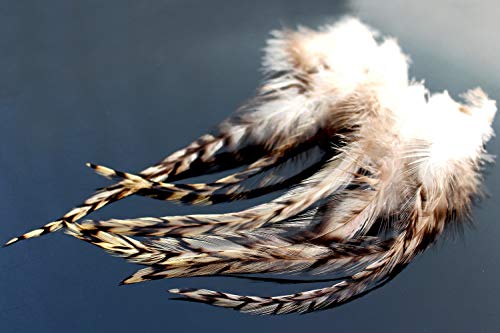
These natural white barfed grizzly rooster hackles offer a classic look for streamer wings and palmer hackles. The 5–6 inch length is well-suited for mid-sized patterns, and the 30-piece quantity supports multiple patterns with consistent color and texture. They provide reliable stiffness and framing for durable flies.
Hareline Cul De Canard (CDC) Feathers

CDC feathers from Hareline Dubbin are noted for buoyancy and ease of use in dry fly wings. The package includes 15 feathers, enabling multiple wing builds. CDC is valued for its subtle color range and natural texture, making it a dependable choice for delicate and buoyant dry flies as well as wings for emerging patterns.
Buying Guide
- Feather type and pattern: Rooster hackles provide stiffness and durability, while CDC feathers offer buoyancy and delicate wing textures. Consider your target species and preferred fly styles when choosing.
- Length and quantity: Longer hackles (5–9 inches or more) suit larger patterns and streamer wings, while shorter options work well for dry flies and small nymphs. Stock counts should align with your tying volume.
- Color and pattern variety: Natural, barred, and dyed options expand the palette for imitators of aquatic insects and prey species. A varied kit helps you craft a wider range of flies.
- Ease of use: Some packs emphasize user-friendly features (e.g., easier application, buoyancy). Beginners may value ready-to-use feathers alongside premium options for experimentation.
- Materials integration: Many kits pair hackles with complementary materials like marabou, dubbing, and peacock feathers. A cohesive kit can simplify pattern-building and consistency across flies.
- Durability vs. realism: Heavier hackles yield robust wings for windy days, while finer CDC feathers provide more delicate, realistic wings for trout dries and emergers. Weigh trade-offs based on fishing conditions.
- Source and quality control: Look for feathers with minimal damage, uniform barbule structure, and consistent lengths. Reputable brands typically offer reliable quality across batches.
- Maintenance and storage: Proper storage prevents feather brittleness or moisture damage. Dry, cool, and sealed storage keeps colors vivid and prevents mold.