Finding the right first guitar for a 6-year-old can be challenging. The ideal instrument should be appropriately sized, durable, and engaging enough to sustain early interest. This guide highlights five popular options that balance kid-friendly design with playable sound. Each pick is designed to foster confidence, rhythm, and a basic understanding of chords and melodies while keeping safety and long-term enjoyment in mind.
The following summary table lists the chosen products, focusing on size, age suitability, and notable features. It helps parents compare at a glance before exploring detailed sections on each guitar.
| Product | Brand | Size/Target | Key Features |
|---|---|---|---|
| Kids Toddler Baby Childrens Electric Toy Guitar (Blue) | Jakeloo | Toddler/3-8 years | Built-in 8 demos, lights, infrared sensing |
| Raimy Kids Guitar Ukulele 21in (Yellow) | Raimy | Age 3-7+ | Authentic sound, durable, kid-friendly size |
| Raimy Kids Guitar Ukulele 21in (Mahogany) | Raimy | Age 3-7+ | Authentic sound, kid-friendly, durable |
| Loog Mini Acoustic Kids Guitar (3-strings) | Loog | Ages 3+ | 3-string design, learning app and lessons |
| Jakeloo Pink Electric Toy Guitar | Jakeloo | Toddler/3-8 years | Built-in 8 demos, lights, infrared sensing |
Jakeloo Blue Electric Toy Guitar For Little Musicians
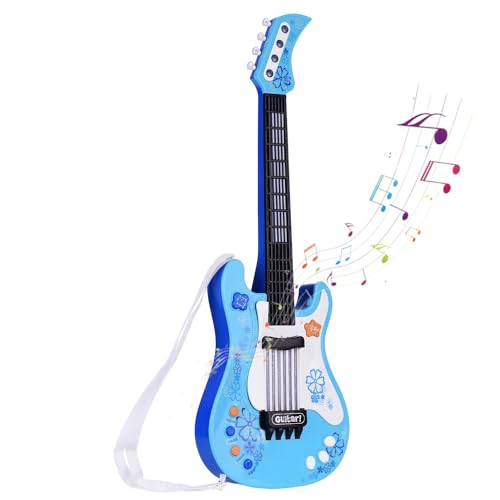
The Jakeloo blue toy guitar is built for very young players with a no-string design and safe ABS materials. It features 3 instrument sounds, 8 keys, 4 flash lights, and 6 color tubes. An infrared sensor tracks finger rhythm, with lights that follow the action. Designed to spark curiosity, this model encourages exploration of basic tones and rhythm, without the risk of sharp strings or heavy equipment. It’s well suited for introducing musical concepts to beginners who are still developing fine motor skills.
Durability is a priority, as the toy is described as wear-resistant and drop-resistant. The electric design keeps kids engaged through interactive demos and simple rhythm cues. While it remains a toy, the instrument is intended to spark early musical development and creative play, making it a practical first purchase for homes, classrooms, or daycare settings where durability matters.
Raimy 21-Inch Yellow Kid Ukulele Guitar

The Raimy 21-inch ukulele-style guitar is sized for children with smaller hands, supporting proper technique from the start. Its dimensions are tailored to ease learning while still offering a resonant, authentic sound. The materials are described as safe, durable, and child-friendly, helping parents feel confident about long-term use. The instrument aims to provide a realistic playing experience rather than a mere toy, which can encourage steady practice and a genuine interest in music.
The design emphasizes reliability and ease of use, making it a practical choice for young beginners. The sound quality is highlighted as authentic, offering a tone closer to real guitars than typical toy instruments. This balance between kid-focused ergonomics and credible musical output helps cultivate listening skills, pitch recognition, and a sense of progression as the child learns simple melodies and chords.
Raimy 21-Inch Mahogany Ukulele Guitar

The mahogany version by Raimy shares the same kid-friendly 21-inch scale and durable construction noted in the yellow model. The emphasis on safe, reliable materials remains a key selling point, ensuring youngsters can explore strumming with lighter tension and comfortable finger positions. The mahogany tone aims to offer a richer, warmer sound that still remains accessible for beginners.
As with the yellow model, the emphasis is on an authentic sound that can drive early musical appreciation. The instrument’s design supports correct posture and technique while reducing the risk of frustration that can come with oversized instruments. Parents seeking a more mature-sounding instrument for a child’s growing interest may find this version appealing without sacrificing playability.
Loog Mini Acoustic 3-String Kids Guitar

The Loog Mini is a three-string guitar designed specifically for beginners ages 3 and up. The three-string approach simplifies learning, allowing rapid progress through chords and melodies. A dedicated learning app and lessons are included, providing guided practice and structured progression that keeps a young student engaged. Educator-approved strategies highlighted by Loog aim to build confidence and a foundation for future guitar playing.
The instrument is noted for being genuinely playable, not just a toy. The three-string format lowers the barrier to entry, making it easier for small hands to form chords, strum, and hear a recognizable musical output. The Loog Mini is especially suitable for children who respond well to digital learning tools and a clear, incremental curriculum that reinforces daily practice habits.
Jakeloo Pink Electric Toy Guitar For Little Musicians

This pink version mirrors the blue Jakeloo model with the same kid-friendly construction and interactive features. It includes 3 instrument sounds, 8 keys, 4 flash lights, and 6 colorful tubes that respond to the child’s rhythm. The infrared sensing and light-following effects add an engaging visual component that complements music-making. It is well suited for classrooms, playrooms, or family practice sessions where a visually stimulating instrument can sustain interest.
Like the blue version, safety and durability are central to the design. The no-string design reduces risk, while the ABS material ensures resilience against drops and daily use. For families seeking a cheerful, approachable entry point to music, this pink model provides a positive, low-pressure route into early musical exploration.
Buying Guide: Key Purchase Considerations
- Size and ergonomics: Children’s guitars should be appropriately scaled to a 6-year-old’s height and finger reach. Look for 21-inch ukulele-style designs, or kid-specific toy guitars with a shorter scale length and lighter strings to reduce fatigue.
- Durability and materials: Opt for impact-resistant plastics or lightweight woods, non-toxic finishes, and robust hardware. Toys that survive drops and active play are more likely to maintain consistent practice without frequent replacements.
- Sound quality vs. play value: For true musical development, prioritize instruments that produce a recognizable, pleasant tone rather than purely toy-like sounds. Some models offer authentic chord progressions and simple melodies to encourage progression.
- Learning aids: Some brands include apps, lessons, or guided curricula. If you value structured learning, Loog’s 3-string design with a companion app can help, while other options rely on built-in demos for quick, engaging play.
- Safety and simplicity: Avoid models with sharp edges, heavy hardware, or complex assembly. No-string designs or child-safe materials prevent common hazards for younger children.
- Future growth: Consider whether the instrument can adapt as the child grows. A slightly larger instrument or one with easy transition to standard guitar concepts can extend its usefulness.
When choosing among these options, consider your child’s temperament, whether they prefer interactive visuals, or if they respond better to a more traditional musical experience. A mix of immediate playability and potential for longer-term skill-building tends to deliver the best long-term satisfaction for both child and family.