Choosing the right guitar-inspired toy helps nurture early musical interests while ensuring safety and ease of use for small hands. The following five products are designed for children around age five, combining engaging lights, adjustable straps, and kid-friendly materials. This guide highlights features, durability, and learning potential to help parents pick a toy that supports budding rhythm, coordination, and creativity.
Product Summary
- Jakeloo Kids Toddler Electric Toy Guitar (Blue) — Built-in demos, animal sounds, infrared sensing, no-string design.
- TWFRIC Kids Guitar 2 in 1 (Red) — Combines guitar and piano modes, infrared lights, multiple songs and rhythms.
- Raimy Kids Guitar Ukulele (Yellow) — 21-inch size tailored to small hands, authentic sound within a kid-friendly form.
- Cozybuy 4 in 1 Toddler Guitar And Piano (Multi) — 8 notes, multiple songs, colorful projection, sensor lights.
- Drmukie Kids Guitar Toy (Pink) — 2-in-1 guitar and piano modes, infrared lights, strap for portability.
Jakeloo Kids Toddler Electric Toy Guitar — Blue
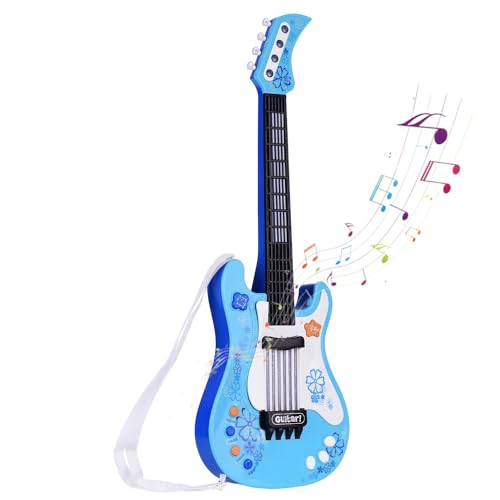
The Jakeloo guitar toy is designed for younger players with a no-string design and durable ABS construction. It features built-in demos, animal sounds, and multiple tones and rhythms to expose children to a variety of musical textures. The infrared sensing and lights encourage interaction with the instrument, helping children associate actions with sounds. Its size and safety considerations make it suitable for five-year-olds taking initial steps into music.
TWFRIC Kids Guitar 2 in 1 Musical Instrument (Red)

This 2-in-1 instrument blends guitar and piano experiences with eight songs for each mode, plus additional rhythms and animal sounds. A central crystal column and interactive lights add a dynamic visual element that responds to touch. Adjustable straps and infrared sensing enable kids to engage in pretend performances while exploring rhythm, melody, and timing, making it a versatile option for a five-year-old curious about multiple musical styles.
Raimy Kids Guitar Ukulele (Yellow)

The Raimy 21-inch model is sized for small hands, promoting proper technique and comfort from the start. It emphasizes safety and durability with child-friendly materials while delivering a sound that feels authentic rather than toy-like. This balance makes it suitable for five-year-olds who want to imitate real guitar playing while enjoying a manageable instrument size and friendly color.
Cozybuy 4 in 1 Toddlers Guitar And Piano (Multi)

This 4-in-1 instrument offers a broad musical palette for young players: guitar, piano, drum, and multiple sounds plus a light-up star projection. Eight notes and four famous songs, along with lullabies and animal sounds, create varied sonic experiences. Sensor lights react to touch, enhancing visual feedback and helping children associate actions with outcomes, which supports cognitive and fine-motor development during play.
Drmukie Kids Guitar Toy — 2-in-1 (Pink)

The Drmukie toy combines guitar and piano modes in a portable unit with infrared sensing and light-up accents. It’s designed for little hands and supports interactive learning through touch-responsive lights and varied sounds. The strap adds portability for children who want to move around while making music, which can be especially appealing for five-year-olds exploring musical expression.
Buying Guide: Key Purchase Considerations For Guitars For 5-Year-Olds
- Safety and materials — Look for no-string designs or padded strings, non-toxic plastics, rounded edges, and durable construction suitable for rough handling. ABS plastics and hypoallergenic paints are common in child-focused toys.
- Size and ergonomics — Choose instruments sized for small hands; 21-inch or similar scale models often fit a typical 5-year-old. Lightweight builds reduce fatigue during practice and play.
- Versatility and play modes — Multiple instrument sounds (guitar, piano, drums) and built-in songs can sustain interest. Infrared sensing and lights add interactivity that promotes engagement and coordination.
- Learning potential — Consider toys that encourage rhythm, melody, and sequence memory. Some models offer introductory songs and rhythms that build early music literacy without being overwhelming.
- Portability and age appropriateness — Adjustable straps and handheld designs help children move the instrument around, supporting active play and pretend performance.
- Durability and maintenance — Toys with sturdy construction and easy-clean surfaces withstand daily use. Look for washable fabrics and simple battery compartments for longer play sessions.
- Value for money — Compare features like the number of sounds, included songs, and interactive elements against price. A model with growing features can serve as a longer-term learning tool.
Additional Purchase Considerations
- Parent-child engagement — Some instruments are designed for shared activity, encouraging collaborative music-making and turn-taking.
- Expansion potential — If a child shows continued interest, you might later upgrade to a full-size instrument or a more advanced toy that builds on early skills.
- Aesthetics and appeal — Color options and design themes can influence a child’s motivation to pick up the instrument and practice.
- Storage and cleanup — Consider where the toy will live in your home and whether its design includes easy disassembly for storage after play.