Finding a gas-powered dirt bike suitable for an 8-year-old involves balancing power, safety, and ease of use. The bikes below are selected for beginner-friendly starting systems, manageable top speeds, and reliable brakes. This guide compares models from FRP and other brands that frequently appear in popular child-friendly dirt bike markets, focusing on 40cc to 99cc engines with protective features and simple maintenance. Use this overview to narrow choices before clicking through to purchase.
| Product | Engine | Top Speed | Weight Capacity | Notes |
|---|---|---|---|---|
| FRP FX40-Ogemaw Red 40CC | 40CC 4-Stroke | 20 MPH | 132 lbs | One-pull start; front & rear disc brakes; no oil mixing |
| FRP FX40-Ogemaw Black 40CC | 40CC 4-Stroke | 20 MPH | 132 lbs | Beginner-friendly; same safety and maintenance features as red variant |
| FRP GMB100 Mini Dirt Bike 99CC Green | 99CC 4-Stroke | Up to 28 MPH | 220 lbs | Headlight, neck gaiter; no oil mixing; easy start |
| FRP Mini Dirt Bike GMB100 Black | 99CC 4-Stroke | Up to 28 MPH | 220 lbs | Headlight, neck gaiter; simple pull-start ignition |
| OYOWINGO 40cc Blue Dirt Bike | 40CC 4-Stroke | Up to 25 MPH | 300 lbs | 1.2 kW engine; suitable for kids 5-10; 850 mm wheelbase |
FRP FX40-Ogemaw Red 40CC Dirt Bike

The FRP FX40-Ogemaw Red is designed for beginner riders with a simple one-pull starting system and a capped top speed of 20 MPH. Its 40CC 4-stroke engine eliminates oil mixing, using regular unleaded gasoline instead. The bike incorporates responsive front fork and rear mono shock absorbers to smooth rough terrain and a front and rear disc brake setup for reliable stopping power, helping young riders learn control in a safe manner.
FRP FX40-Ogemaw Black 40CC Dirt Bike
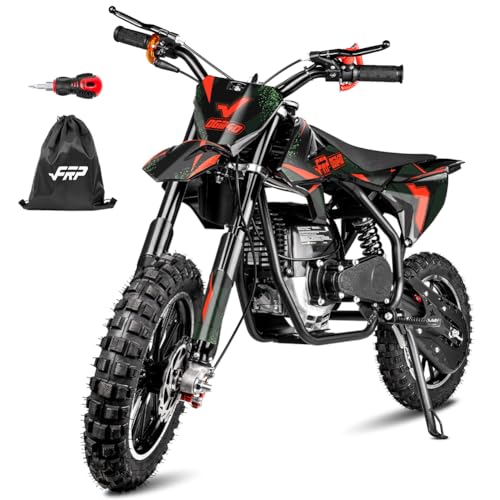
This Black variant mirrors the Red model in power and safety features. It maintains a beginner-friendly design with an easy pull-start, 20 MPH top speed, and no oil mixing requirement. Its protective braking system and cushioned suspensions make it a practical option for first-time riders learning balance, throttle control, and safe braking techniques on light off-road trails.
FRP GMB100 Mini Dirt Bike 99CC Green

The GMB100 expands playtime with a 99CC 4-stroke engine and an easy-start pull system. It includes practical safety features like LED headlights and a neck gaiter for dust protection, plus a 28 MPH-capable top end with a weight capacity up to 220 pounds. It’s built to accommodate older or taller riders who are still learning to gain confident control of a gas-powered dirt bike.
FRP Mini Dirt Bike GMB100 Black

The Black variant of the GMB100 offers the same 99CC engine and cargo-friendly design with LED lighting and protective accessories. It emphasizes straightforward operation with no oil mixing required and a maximum recommended rider weight of 220 pounds. This model aims to deliver a balanced blend of power and safety for kids advancing beyond basic throttle control while maintaining approachable handling.
OYOWINGO 40cc Blue Dirt Bike

The OYOWINGO blue dirt bike is a lighter option designed for children aged roughly 5–10. It features a 40CC 4-stroke engine with a maximum speed around 25 MPH and a sturdy wheelbase of 850 mm. The design supports a rider height with a comfortable seat height and up to 300 pounds in weight capacity, making it suitable for learning on gentle off-road surfaces such as dirt trails and grassy courses.
Oryxearth 105cc Off-Road Dirt Bike

The Oryxearth 105cc model offers more power and a fully automatic chain transmission, suitable for older kids and teens who require more robust performance. It features a 3.5HP 105CC 4-stroke engine with an automatic transmission and a 28 MPH top speed. Its sturdy construction and weight support up to 185 pounds provide a balance of speed with safety for riders transitioning from smaller engines.
Buying Guide: Key Purchase Considerations
Engine size and rider age are primary considerations. For 8-year-olds, 40cc to 99cc engines provide a manageable balance of power and control. Look for a no-oil-mixing 4-stroke engine to simplify maintenance and reduce mistakes that can lead to running issues.
Top speed and acceleration control are critical for safety. Choose models with limited top speeds (around 20–28 MPH) and reliable braking systems (front and rear disc brakes or strong mechanical brakes) to help new riders learn to brake confidently on varied terrain.
Weight capacity matters for safety and longevity. Ensure the selected bike comfortably supports the rider’s weight, plus a small margin for growth. Many models list capacities from 132 to 220 pounds, which is typically suitable for late elementary and early teen riders.
Starting system and ease of maintenance influence user experience. One-pull or easy-start mechanisms reduce strain during ignition, especially on chilly days. A design that requires minimal or no oil mixing saves time and reduces mistakes during fueling.
Safety features and protection add-on options, such as headlight kits and protective gear, extend riding opportunities to different conditions. A neck gaiter and protective padding can improve comfort and protection during off-road use.
Maintenance accessibility is a practical factor. Choose bikes that use common fuel types and straightforward maintenance schedules. Access to replacement parts and support from the brand can reduce downtime when parts wear out or require adjustments.
Size and ergonomics should fit the rider. Check wheelbase and seat height to ensure the rider can reach the ground with both feet. Adjustable handlebars or seating positions can help newer riders grow into the bike.
Usage scenarios matter. For beginners, start on flat, open terrain before attempting uneven trails. Consider bikes with stable suspensions and predictable throttle response to cultivate confidence and technique without overexertion.