Choosing the right foam floor tiles or puzzle mats helps protect floors, reduce noise, and create a comfortable workout or play area. This guide reviews five top foam block options that are widely used in home gyms, play rooms, and studios. Each product brings a different balance of thickness, density, and design to suit various needs—from kids’ play surfaces to light workouts and exercise rooms.
| Product | Material | Tile Size | Area Covered | Use Case |
|---|---|---|---|---|
| ProsourceFit Puzzle Mat Grey | EVA Foam | 24″ x 24″ | 48 sq ft | Home gym, general floor padding |
| ProSource Kids Puzzle Floor Mat | Foam | 12″ x 12″ | 16 sq ft | Kids play area |
| BalanceFrom 36-Pack | Foam | 12″ x 12″ | 36 sq ft | Playroom, light workouts |
| Stalwart Interlocking Mats | Non-toxic EVA Foam | Various (8-piece set) | Indoor gym or play area | Multi-use flooring |
| ProsourceFit Wood Grain Puzzle | Foam | 24″ x 24″ | 24 sq ft | Indoor room flooring, play area |
ProsourceFit Puzzle Exercise Mat Grey 24×24

The ProsourceFit puzzle mat uses high-density EVA foam to provide cushioning and support for home gyms or play areas. The tiles interlock to form a flat, even surface and protect floors or carpet underneath. The mat is water-resistant and easy to clean, aiding maintenance in indoor spaces such as garages, exercise rooms, or kids’ play zones. While color and texture can vary by batch, the material is designed to be a durable, non-skid flooring option with minimal impact on noise and vibration. Best results are achieved on flat, hard surfaces.
ProSource Foam Puzzle Floor Mat for Kids Cream

Designed for children, this ProSource foam puzzle set features interlocking tiles that are simple to assemble and disassemble for storage. The high-density foam provides a soft, protective surface for play areas or early learning spaces. Border pieces help create clean edges and a neat layout, and the tiles can be arranged to cover 16 square feet or more, depending on configuration. The surface is easy to clean, making it a practical choice for nurseries, playrooms, or family rooms used for active play.
BalanceFrom 36-Pack Interlocking Tiles
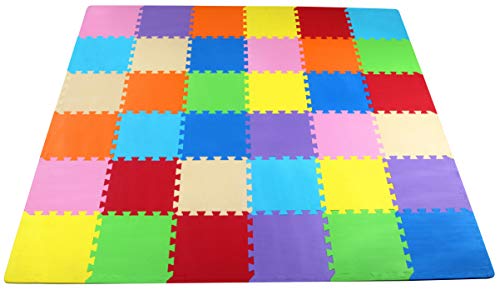
This 36-piece set offers a complete play mat solution with border edges for a polished look. Each 12×12-inch tile is 0.4 inches thick, providing cushioning and grip to reduce slips during play or light workouts. The modular design allows flexible layouts—build a large seamless area or divide the space into several zones to suit a child’s play needs or a dedicated workout corner. It’s a versatile option for homes with mixed use spaces.
Stalwart Interlocking 8-Piece Mats
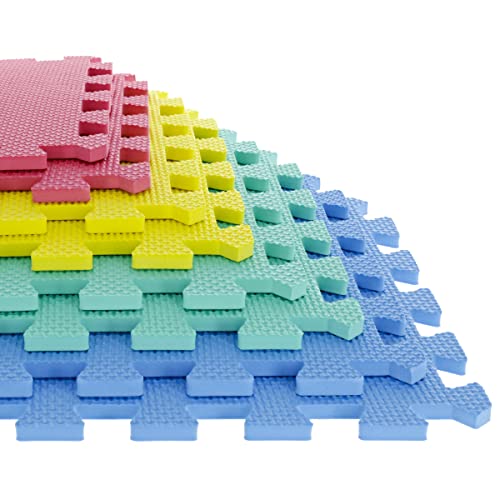
The Stalwart set provides a multipurpose foam padding solution for home gyms, playrooms, or workshops. The puzzle-style interlocking tiles create a soft, non-slip surface that reduces impact on floors and joints. The non-toxic EVA foam is suitable for indoor use and can be arranged for various layouts, whether you want a dedicated workout space or a cushioned play area. The tiles are designed for easy maintenance and quick assembly, with compact storage when not in use.
ProsourceFit Wood Grain Puzzle Mat

This wood grain-themed puzzle mat combines a polished look with practical padding. The 1/2-inch thick EVA foam tiles interlock to form a sturdy, cushioned surface across 24 square feet. The faux wood aesthetic makes it a stylish addition to living spaces, home gyms, or play rooms, providing a cohesive floor appearance while offering comfortable underfoot support for light workouts and everyday activities.
Buying Guide: Key Purchase Considerations And Comparisons
- Thickness and density: A thickness of 1/2 inch to 0.4 inches is common. Thicker mats offer more cushioning for joints during workouts, while thinner options save space and may suffice for light activity or kids’ play.
- Size and coverage: Tiles commonly come in 12×12 inches or 24×24 inches. Calculate total area to cover your space and consider edge pieces or borders to create clean boundaries.
- Interlocking design: Puzzle-style mats provide secure seams and easy expansion. Ensure the edges align well to prevent gaps that could trip or trap dirt.
- Surface feel and grip: Look for non-slip textures and water resistance. A good surface reduces slips and dampens noise from equipment or foot traffic.
- Material safety: Most mats use EVA foam and are marketed as non-toxic. Verify no phthalates and check cleaning instructions to maintain hygiene in play areas and gyms.
- Durability and care: Foam tiles may show color variation over time. Choose mats with reputable brands and check washing guidance—hand wipe or gentle cleaning is typically recommended.
- Aesthetic and space fit: Wood grain or solid color options can match room décor. Consider whether you want a neutral base for a gym or a bright, playful surface for a playroom.
- Portability and storage: Interlocking tiles are easy to disassemble and stack. If you frequently reconfigure spaces, select tiles that are lightweight and simple to store.
- Maintenance and cleaning: Opt for moisture-resistant surfaces that are easy to wipe down after workouts or spills. Look for tiles that dry quickly to prevent mold or odor.
- Cost and value: Compare sets with borders and end pieces. A larger, well-constructed set may offer better value for long-term use in multi-purpose spaces.
In sum, the best foam floor blocks balance cushioning, safety, and aesthetics with the specific needs of your space. For active play areas, prioritize edge pieces and a soft, low-odor foam. For home gyms, seek higher-density foam with good grip and ease of cleaning. Consider how the tiles will be used together with equipment, furniture, and traffic patterns to choose the most suitable configuration.