Finding age-appropriate flashcards can support early language development, visual recognition, and fine motor skills for one-year-olds. This guide highlights five highly suitable options, each designed to engage toddlers with bright imagery, simple words, and interactive elements. Explore quick overviews, image blocks, and practical considerations to choose flashcards that fit your child’s learning pace and attention span.
Summary of Selected Products
- Scholastic First Words Flash Cards — Brand: Scholastic — Features: SC-714844
- LearnWorx 101 Baby Flash Cards for Toddlers 1-3 — Brand: learnworx — Features: 101 Flashcards; games & counting
- BenBen Flash Cards for Toddlers 1-3 — Brand: BenBen — Features: 84 double-sided, rip-proof; 8 topics
- 100 First Words Flash Cards — Brand: THE BAMBINO TREE — Features: 104 words; 9 themes; interactive mini-games
- Airbition Talking Flash Cards for Toddlers — Brand: Airbition — Features: 224 words; talking reader
Scholastic First Words Flash Cards

Scholastic’s First Words Flash Cards present a straightforward set aimed at early vocabulary building. Cards feature simple, everyday terms that are familiar to toddlers, with sturdy construction suitable for active play. The design emphasizes quick recognition and basic word association, helping children begin connecting objects with spoken language.
Key features: Durable card stock; simple word-image pairings; compact size for little hands; easy-to-use flashcard format ideal for short, engaging sessions. This set works well for independent exploration or guided sessions with a caregiver.
LearnWorx 101 Baby Flash Cards for Toddlers

LearnWorx offers a 101-card set geared toward early word recognition and interactive learning. Cards span animals, objects, foods, and everyday actions. The package includes simple games on the reverse side to reinforce memory, color recognition, and basic counting, supporting language development without screens.
Key features: 101 large, color-illustrated cards; engaging games on reverse sides; age-appropriate vocabulary across categories; designed for beginner language learners and preschool prep.
My First Touch and Feel Language Picture Cards
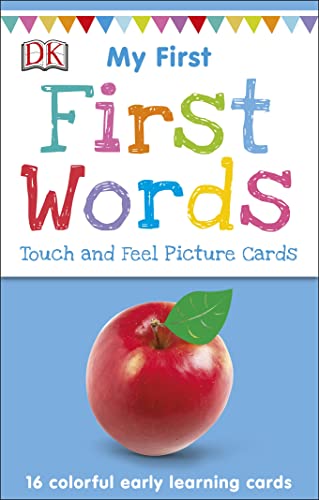
DK’s My First Touch and Feel Language Picture Cards introduce language through tactile experiences. The set focuses on essential first words with a sensory component, supporting multisensory learning for toddlers. Although labeled as a picture card set, the touch-and-feel elements encourage exploration and vocabulary association in a concrete way.
Key features: English-language picture cards; touch-and-feel textures to stimulate exploration; compact format suitable for travel; supplemental for early language exposure and interactive play.
BenBen Flash Cards for Toddlers 1-3

BenBen’s set emphasizes durability and variety. The 84 double-sided cards cover eight topics, including letters, numbers, colors, and animals. Cards are described as rip-proof and waterproof, designed for rough toddler handling. Real-image visuals promote recognition while supporting vocabulary growth in everyday contexts.
Key features: 84 double-sided cards; eight topic areas; durable, waterproof material; real images for authentic learning; suitable for repeated use in early learning activities.
100 First Words Flash Cards — High Contrast
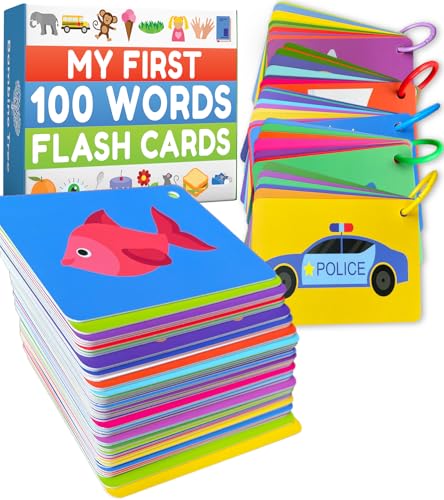
THE BAMBINO TREE presents a high-contrast set designed to maximize visual attention for toddlers. With 104 words across nine everyday themes, these cards emphasize early vocabulary breadth. The package also includes interactive mini-games to boost engagement and memory through practical tasks and play scenarios.
Key features: High-contrast visuals; nine theme categories; 104 words; interactive mini-games; age-appropriate for early language development.
Airbition Talking Flash Cards
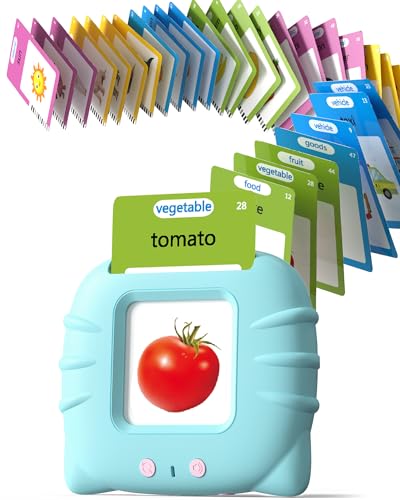
Airbition’s talking flash cards add an auditory dimension with a reader that vocalizes content in a standard American accent. With 224 illustrated words across diverse categories, this set supports language exposure, pronunciation practice, and auditory discrimination. A repeat button and volume control enhance usability for very young learners and caregivers.
Key features: 224 illustrated words; built-in talking reader; repeat function; volume control; broad vocabulary across everyday topics; kid-friendly interface for early language practice.
Buying Guide: Key Purchase Considerations
- Age-appropriateness: Look for large, sturdy cards with simple words suitable for one-year-olds. Some sets are better for early toddlers, while others span up to preschool age.
- Durability: For active toddlers, rip-proof and waterproof materials reduce wear and tear and extend usability during rough handling and messes.
- Visual design: High-contrast images and bright colors can better capture attention and aid visual recognition in young children.
- Interactivity: On-card games, flip sides, or talking features can boost engagement, memory retention, and pronunciation practice.
- Realistic imagery: Realistic photos or carefully illustrated pictures help children form accurate word associations with objects they encounter daily.
- Portability: Compact sets are easier to carry for travel and quick learning sessions away from home.
- Academic support: Combining sets with guided activities (naming objects, color identification, counting) reinforces learning and aligns with early language milestones.
- Motor development: Consider cards with sturdy edges and large print to facilitate grasping and manipulation by small hands.
- Accessibility: For families seeking screen-free learning, non-digital card sets provide hands-on interaction and caregiver-led activities.
When choosing, consider your child’s attention span and routine. A mix of high-contrast, real-image, and interactive cards can address different learning moments—indoor quiet play, walking routines, and travel time. Always supervise to ensure safe handling and maximize vocabulary-building opportunities.