Fidget aprons offer a practical way to channel restlessness into meaningful activity for seniors dealing with dementia or memory-related anxiety. This article highlights five top options, focusing on comfort, durability, and a variety of tactile activities. Each item blends everyday wear with engaging fidget elements designed to soothe nerves and support cognitive engagement. Read on to discover how these aprons can fit into daily routines at home or in care settings, and compare their key strengths side by side before making a choice.
| Product | Brand | Key Benefit |
|---|---|---|
| Shyyween Fidget Apron (Dark Blue) | Shyyween | Calming anxiety relief with diverse sensory activities |
| ODOXIA Fidget Apron | ODOXIA | Relaxation support with multi-condition suitability |
| Fidget Apron (JFHNMLW) | JFHNMLW | 11 sensory items for calm, portable use |
| Dementia Gadgets RAOVCUS | RAOVCUS | Daily skills practice and cognitive engagement |
| SHFGYG Fidget Apron | SHFGYG | 14 activities for focused, discreet therapy |
Shyyween Fidget Apron Dark Blue

The Shyyween Fidget Apron combines a soft denim-and-felt build with multiple tactile activities designed for seniors facing memory-related anxiety. The design emphasizes anxiety relief through calming textures and a range of hands-on games, promoting sensory engagement and relaxation. This apron supports meaningful interaction for those with Alzheimer’s, dementia, autism, and related conditions. Its durable material aims to endure daily wear, while remaining comfortable for extended use in activities like cooking, dressing, or light chores.
ODOXIA Fidget Apron For Elderly

The ODOXIA Fidget Apron focuses on relaxation through a versatile set of sensory activities designed for seniors with dementia or Alzheimer’s. It supports various conditions and is suitable for nursing homes, making it easy to share and store. The included activities aim to keep restless hands engaged, reducing anxiety and providing a sense of safety through structured interaction. The apron’s construction balances comfort with long-term wearability for daily therapy use.
Fidget Apron For Elderly By JFHNMLW

JFHNMLW’s Fidget Apron provides a thoughtful design that mirrors familiar daily wear while integrating 11 stimulating sensory items. The product targets anxiety relief and aims to help patients regain a sense of calm through engaging textures and activities. Its design focuses on being easy to wear at any time, with emphasis on maintaining finger dexterity and joint mobility, essential for daily living tasks and cognitive engagement.
Shyyween Fidget Apron (Green)
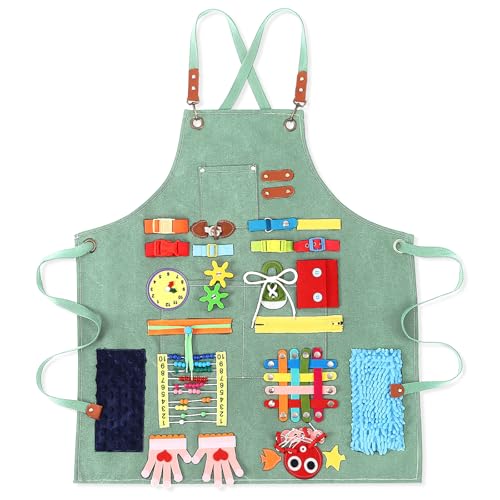
The green variant of Shyyween’s fidget apron emphasizes anxiety relief through a tactile, activity-rich design. Similar to the dark blue version, it uses denim and felt for durable, comfortable wear. The apron’s diverse activities suit a range of cognitive abilities and can be used across care settings, helping seniors stay engaged and calm during routine tasks and transitions.
Dementia Gadgets RAOVCUS Fidget Blanket

RAOVCUS offers a dementia-oriented fidget blanket designed to simulate daily activities and promote self-care skills. The product aims to reduce stress by keeping hands busy with sensory-rich tasks and cognitive games, such as time-telling exercises. It is positioned as a practical gift for dementia patients and a useful addition to nursing homes for residents who benefit from structured, repetitive activities that support cognitive function and emotional well-being.
SHFGYG Fidget Apron For Adults With Dementia

SHFGYG’s Fidget Apron is designed with 14 activities tailored to calm restless energy in dementia patients. The apron’s daily-wear design supports discreet therapy, promoting finger dexterity and cognitive engagement without disrupting daily routines. Its portability makes it suitable for home care, caregiver facilities, and travel, helping caregivers provide consistent, gentle stimulation in various environments.
Buying Guide: Key Purchase Considerations
When selecting a fidget apron for dementia, consider fit, comfort, and the range of activities. Look for durable materials (denim, felt or soft cotton) that withstand frequent washing. A waist-length, apron-style design helps with ease of wear and accessibility, while fabric choices should feel gentle on sensitive skin. The variety and arrangement of sensory items matter: multiple textures, fasteners, zippers, buttons, and visual stimuli can sustain attention and support motor skills. If sharing among residents, opt for machine-washable, easy-to-clean options with simple fasteners and color-coded activities to reduce confusion.
Care settings vary, so assess whether you need portability for transport, or a more stationary model suitable for a nursing home. For home use, consider whether you want a discreet protective layer that doubles as a conversational focus or a more bold design that naturally integrates into daily routines. Durability is crucial for frequent use, so read care instructions and ensure the item can endure repeated washings without losing texture or shape.
From a cognitive perspective, select aprons with activities aligned to the user’s abilities and goals. Some devices emphasize sensory therapy (tactile feedback, textures, and manual tasks), while others emphasize daily living skills (zipping, buckling, buttoning). A multi-sensory approach can benefit a broad range of needs, from anxiety reduction to memory recall tasks. Finally, consider the care environment: nursing homes may benefit from shared options, while home caregivers may prioritize personalization and ease of use.
In summary, the five highlighted fidget aprons offer various blends of comfort, durability, and engaging activities. For best results, choose based on the individual’s comfort with textures, the practicality of cleaning, and how well the activities align with daily routines and cognitive goals.