Discover engaging engineering toys that turn curiosity into real-world skills. The following selections cover bridges, robotics, solar power, and mechanical arcade play, offering hands-on projects that teach force, motion, energy, and problem-solving. Each kit emphasizes learning by building, with clear instructions and reusable components to support progressive exploration for budding engineers.
style=”display:none;”>Summary Table of Selected Products
| Product | Brand | Key Learning | Pieces/Duration |
|---|---|---|---|
| Structural Engineering: Bridges & Skyscrapers | Thames & Kosmos | Force, load, compression, tension | 285+ pieces; 20 models |
| DIY Robotic Mechanical Hand | Smartivity | Mechanical design, movement, engineering basics | All parts included; lifetime replacement |
| UNO R3 Smart Robot Car Kit | ELEGOO | Programming, electronics, robotics | 24 modules; Android/iOS control |
| 12-in-1 Solar Robot Kit | Sillbird | Renewable energy, solar power, motion | 190 pieces; solar powered |
| DIY Pinball Machine | Smartivity | Mechanics, arcade play, problem solving | Lifetime replacement parts |
Thames & Kosmos Structural Engineering: Bridges & Skyscrapers

This kit provides a comprehensive exploration of structural forces through 20 different models, including bridges and skyscrapers. With more than 285 interchangeable pieces, learners experiment with load-bearing concepts, tension, compression, and other fundamental engineering principles. The accompanying 36-page illustrated manual guides construction, testing, and experimentation, making it ideal for classroom or home STEM programs.
Smartivity DIY Robotic Mechanical Hand

Kids assemble a mechanical hand and learn how gears, levers, and linkages translate into motion. The step-by-step manual supports a screen-free, hands-on build experience that builds confidence, creativity, and critical thinking. It’s designed for ages 8–14, with parts and instructions that facilitate independent play or guided projects, plus a commitment to replacement parts if needed for ongoing play.
ELEGOO UNO R3 Smart Robot Car Kit V4

Designed as an entry point into robotics, this UNO R3 kit combines programming, electronics assembly, and mobility. The package includes 24 module parts, such as obstacle avoidance and line tracing modules, plus remote control compatibility with Android and iOS devices. Its standardized interfaces and clear assembly steps help beginners grasp essential STEM concepts while enabling progressively more complex projects over time.
Sillbird 12-in-1 Solar Robot Kit
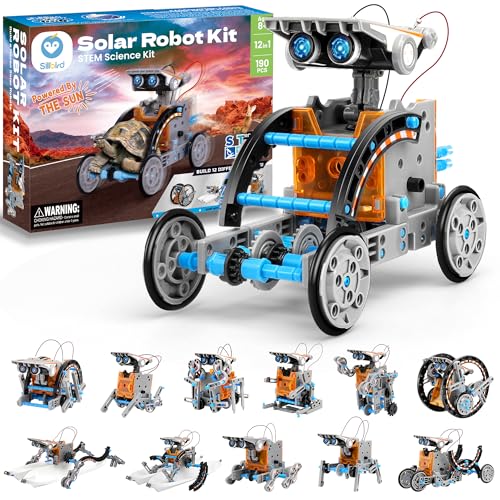
Solar power adds an environmental dimension to engineering play. This kit challenges children to build up to 12 different robots powered by sunlight or indoor lighting. The 190-piece set encourages exploration of renewable energy, motion, and mechanism design, making it a strong option for outdoor STEM activities and rainy-day experiments alike.
Smartivity Pinball Machine

This DIY pinball machine delivers arcade-style mechanical play while teaching mechanical engineering concepts. With a guided build and replacement parts, kids can enjoy hours of screen-free entertainment while learning through experimentation with levers, springs, and ramps. It’s suitable for ages 8–14 and supports collaborative or independent play.
Buying Guide: Key Purchase Considerations For Young Engineers
- Age appropriateness and skill progression: Look for kits labeled for a specific age range or skill level, with clear guidance on how projects become more complex as learners grow.
- STEM focus and learning outcomes: Choose kits that emphasize core subjects—science, technology, engineering, and math—along with hands-on experimentation to reinforce concepts like force, energy, motion, and problem solving.
- Component quality and reusability: Durable pieces and modular components extend play value. Check whether parts are easy to assemble and disassemble for multiple builds.
- Safety and materials: Non-toxic materials, age-appropriate small parts, and clear safety instructions help ensure a positive, safe learning experience.
- Instructions and support: Step-by-step manuals, visual guides, and the availability of replacement parts reduce frustration and encourage independent learning or guided collaboration.
- Engagement and replay value: Projects that can be rebuilt into new models or combined with other kits offer longer-term value and ongoing curiosity.
- Programming and electronics exposure: For older children, consider kits that introduce basic coding, sensor integration, or robotics control to broaden skills beyond mechanical building.
- Outdoor vs. indoor use: Some kits rely on solar power or wind-driven mechanisms and are ideal for outdoor exploration, while others favor indoor, table-top setups.
- Budget and longevity: While prices vary, prioritize kits with lasting parts, comprehensive manuals, and opportunities for expansion to maximize return on investment.
Overall, the best engineering toys for boys combine clear instruction with hands-on experimentation, enabling kids to explore core concepts through fun, repeatable projects. The selections above offer a range of learning styles—from building and testing models to programming and solar-powered robotics—supporting early curiosity and long-term STEM development.