Finding engaging, age-appropriate engineering kits helps tweens explore physics, structures, and robotics through practical building fun. The selected kits below emphasize gears, forces, and real-world problem solving, offering clear, step-by-step instructions and durable components. Each option supports curious learners as they experiment, build confidence, and develop critical thinking skills while avoiding screens.
| Product | Focus Area | Notable Feature |
|---|---|---|
| Thames & Kosmos Structural Engineering: Bridges & Skyscrapers | Structural Engineering | 20 models + 285 pieces |
| Thames & Kosmos Mechanical Engineering: Machines & Vehicles | Mechanics & Vehicles | 20 models + durable building system |
| Smartivity DIY Robotic Mechanical Hand | Robotics & Mechanics | Parents Choice Award winner |
| Tinkering Labs Robotics Engineering Kit | Robotics & Electronics | 50+ parts, 10 projects |
| Thames & Kosmos Architectural Engineering | Architecture & Structures | 26 models, gold award |
Thames & Kosmos Structural Engineering: Bridges & Skyscrapers

The Structural Engineering kit introduces tweens to forces, loads, compression, and tension through 20 hands-on models. With over 285 interchangeable pieces, learners build bridges, towers, and skyscrapers, then test stability and load-bearing behavior. The included 36-page illustrated manual guides assemblies and experiments, offering a rich introduction to practical engineering concepts. Durable pieces encourage repeated building and reconfiguration to explore real-world structures.
Thames & Kosmos Mechanical Engineering: Machines & Vehicles

This kit focuses on the science of machines and motion with 20 different mechanical models and 22 supplemental experiments. A robust reusable building system lets learners reconfigure components into new machines, such as cranes, windmills, and ATVs, while the 36-page guide explains physics concepts like gears, momentum, and energy transfer. The kit emphasizes hands-on problem solving and long-term tinkering, making it a strong choice for curious tweens.
ANNISOKA Robot Arm Kits Robotics for Kids

This robotics kit introduces motors, PCB microcontroller boards, and wiring to build a functional robotic arm. It provides a hands-on way to understand electronic circuits and mechanical control, combining 3D puzzle elements with electrical engineering concepts. Suitable for ages roughly 8–14 and older, the kit also motivates continued exploration of robotics and automation. Batteries are required but not included, enabling learners to practice power management and safe handling.
Tinkering Labs Robotics Engineering Kit
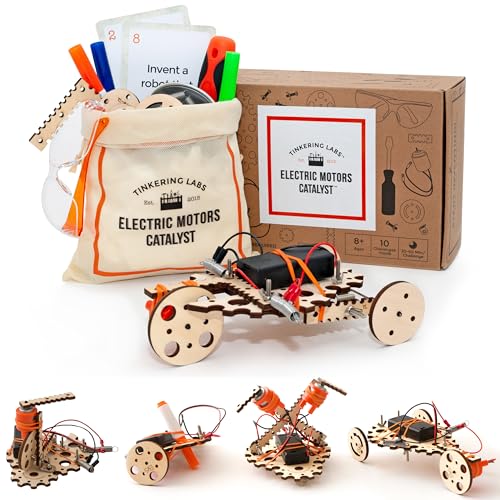
Designed for kids aged 8–12, this kit offers 50+ parts and 10 STEM projects, promoting hands-on exploration of electronics and robotics. The emphasis is on independent experimentation, encouraging problem solving, creativity, and critical thinking. The content supports screen-free learning and provides a platform for future projects, ensuring ongoing engagement as skills grow. Replacement parts are available, reducing downtime during play and learning.
Thames & Kosmos Architectural Engineering

The Architectural Engineering kit invites learners to play architect and engineer as they build over 26 models of structures and structural elements. The expanded set introduces flexible building pieces that mimic steel frames and are compatible with other Thames & Kosmos kits. This project-based approach reinforces understanding of arches, trusses, domes, and real-world construction techniques, while the 14.6-inch scale models provide a tangible sense of proportion and stability.
Buying Guide: Key Purchase Considerations
- Age and skill level: Choose kits designed for tweens (roughly ages 9–14), ensuring the instructions are clear and the projects offer a sensible challenge without becoming frustrating.
- Learning goals: Look for a balance of theory and hands-on building—structures, mechanics, robotics, or architecture—to keep interest across multiple STEM domains.
- Component quality and durability: Reusable building systems and sturdy pieces enable longer-term use and multiple project iterations.
- Project variety and progression: Kits with multiple models or projects and an accompanying experiment guide help learners grow from basic to more advanced concepts.
- Hardware and electronics: If a kit uses motors, sensors, or microcontrollers, ensure compatibility with common components, clear wiring diagrams, and safety considerations.
- Safety and supervision: Check for small parts potential choking hazards and whether adult supervision is recommended for certain assemblies.
- Future expansion: Consider kits that interoperate with other sets or offer additional projects to extend learning beyond the initial build.
- Value and replacement parts: Durable, well-documented kits with availability of spare parts minimize downtime and maximize learning time.
- Price vs. content: Compare the number of models, the depth of experiments, and the educational value to determine overall value.
- Storage and organization: Look for kits with organized trays or bins to keep parts accessible and reduce setup time.