Discover engaging, kid-friendly toys designed to boost early literacy, math, and cognitive development. The following selections emphasize clean design, hands-on play, and safe materials, helping toddlers explore letters, numbers, shapes, and the natural world. Each item is chosen for practicality, durability, and learning value, making them strong picks for curious learners ages 2 to 5.
| Product | Brand | Top Benefit |
|---|---|---|
| BEESTECH Alphabet ABC Learning Educational Toys | Beestech | Letter matching and word building |
| Talking Flash Cards | Kuovei | Auditory learning without screens |
| GeoSafari Jr. Kidnoculars | Educational Insights | Kid-friendly exploration tool |
| Magnetic Wooden Fishing Game | NASHRIO | Color, letter, and number recognition |
| MUONE Montessori Busy Book | MUONE | Color sorting and fine motor practice |
BEESTECH Alphabet ABC Learning Educational Toys
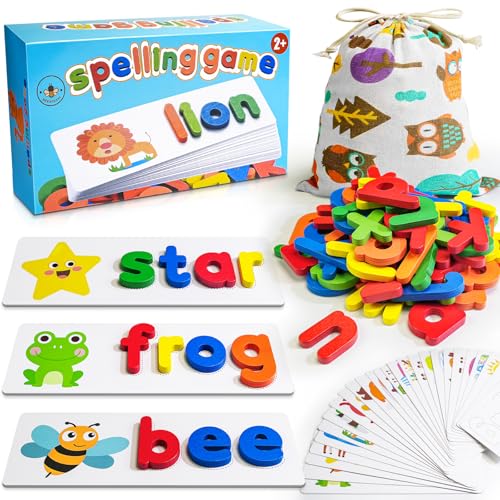
These wooden letters pair with flash cards to form a practical early literacy activity for toddlers aged 2 to 5. Children place the correct wooden letters on top of corresponding cards, reinforcing letter recognition and word formation in a hands-on format. The letters are sturdy and polished with no sharp edges, ensuring safe play. A beautiful storage bag keeps all pieces organized for easy cleanup and portability.
Talking Flash Cards

Kuovei’s talking flash cards are designed to expand vocabulary and listening skills across themes like animals, food, transport, and shapes. The card reader pronounces each word when a card is inserted, and a cycle function repeats familiar terms without reinsertion. The no-screen design helps curb screen time while supporting auditory learning and language development for ages 1–5.
GeoSafari Jr. Kidnoculars

Educational Insights GeoSafari Jr. Kidnoculars offer kid-sized, focus-free binoculars with oversized eyepieces for easy viewing. Designed to withstand kids’ use, these binoculars encourage close-up exploration of nature and science topics, aligning with early science curricula and encouraging curiosity about the world around them.
Magnetic Wooden Fishing Game
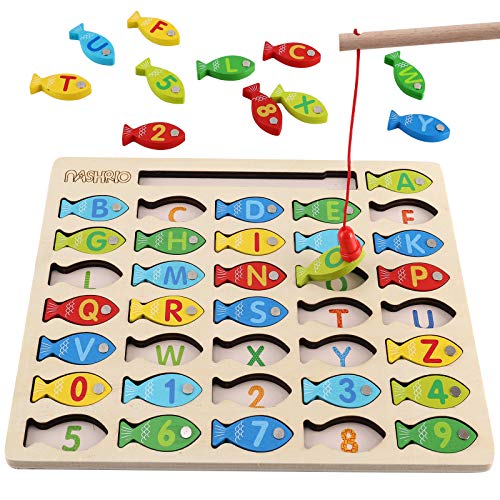
This wooden fishing game blends counting, color recognition, and early literacy. Toddlers use a magnetic rod to catch fish pieces that bear letters and numbers, promoting fine motor control and hand-eye coordination. The natural wood with non-toxic finishes provides a safe, eco-friendly learning tool for 3–5 year olds and up, ideal for classroom and home use.
Oomloid Counting Animals

Oomloid Counting Animals introduces early math with 36 multi-colored animals, color-sorting bowls, and tweezers. Suitable for ages 3–5, this Montessori-inspired set supports sorting, counting, and color matching while encouraging hands-on learning, concentration, and fine motor skill development.
MUONE Montessori Busy Book Color Sorting

The MUONE busy book provides color sorting activities with 12 colors and 48 sticker pieces. The hook-and-loop system enables repeated matching to build vocabulary, fine motor skills, and cognitive development. The Montessori-inspired format supports independent play and collaborative learning for children ages 2–5.
Electronic Alphabet Wall Chart

This interactive poster combines ABCs and numbers with engaging audio and songs. The wall chart features a touch-activated design for ambient learning, a set of learning cards for counting and matching, and portable portability for travel or room display. It supports early literacy through multisensory cues while reducing screen dependence.
Teriph LCD Writing Tablet

The Teriph LCD writing tablet offers a mess-free creative outlet for drawing and writing. The pressure-sensitive screen allows repeated drawing with no ink or paper waste, while the erase button makes clearing effortless. A child-friendly, eye-protective design supports early writing, spelling, and basic math activities in a portable format.
Buying Guide: Key Purchase Considerations
- Age and developmental fit: Choose toys aligned with the child’s age (2–5) and emerging skills—letter recognition, counting, fine motor control, and vocabulary growth.
- Learning style: Balance tactile, auditory, and visual learning. For screen-free options, look for flash cards, wooden puzzles, and Montessori-inspired activities.
- Safety and materials: Prioritize sturdy wood, non-toxic finishes, rounded edges, and durable fabrics. Avoid small parts for younger toddlers.
- Durability and maintenance: Consider easy cleaning, long-lasting hardware, and simple storage solutions to encourage ongoing use.
- Multi-skill value: Select toys that combine cognitive, language, math, and motor development to maximize learning impact.
- Portability and storage: Look for compact sets with organizers or bags for on-the-go learning and tidy supervision.
- Parental involvement: Some options encourage shared play to support vocabulary building and guided exploration.
- Accessibility: Favor inclusive designs and features that support different learning needs, such as multimodal prompts and clear imagery.
All selections emphasize practical, educational play that aligns with early childhood learning goals. They provide a range of sensory experiences, from tactile puzzles and word-building to interactive counting and exploration, helping toddlers build foundational literacy and numeracy skills in engaging, safe formats.