Educational flashcards are a versatile tool for building foundational skills in early childhood and elementary years. This guide highlights five top-rated options that cover math facts, alphabet and language, cognitive development, and vocabulary, all designed to engage young learners. Each product below includes a brief overview, standout features, and why it can fit into a home, classroom, or homeschooling setting. Use this roundup to compare formats, durability, and content to find the best fit for your child’s learning style and goals.
Summary Table
| Product | Brand | Focus | Key Features |
|---|---|---|---|
| School Zone Multiplication 0-12 Flash Cards | School Zone | Math facts | 56 durable math cards, 3rd–4th grade, Common Core alignment, Golden Scholar Club code |
| QUOKKA ABC Learning Flash Cards | QUOKKA | Alphabet and early learning | 60 double-sided cards, large fonts, animals, colors, shapes, first words |
| Torlam Toddler Flash Cards | Torlam | Foundational skills | 60 double-sided cards, alphabet to counting, shapes/colors, vitamins of early learning |
| Aullsaty Toddler Talking Flash Cards | Aullsaty | Speech therapy and language | 248 sight words, talking card reader, Montessori-inspired learning, 14 subjects |
| SpriteGru 50 PCS Kid First Cognitive Flashcards | SpriteGru | Cognition and early literacy | 50 double-sided cards, 110 words, durable PET film, non-toxic inks |
School Zone Multiplication 0-12 Flash Cards

The School Zone multiplication set focuses on building fluency with basic multiplication facts from 0 to 12. The 56 thick, durable cards are designed for repeated practice, which is essential for mastery of basic arithmetic. A Parent Card provides usage tips to help caregivers incorporate short, daily practice into routines. The inclusion of a Golden Scholar Club redemption code adds an optional motivation channel for students who enjoy reward-based learning. This product is well-suited for classroom warmups, tutoring sessions, or family learning time.
Why it stands out: By concentrating on a core math skill in a compact package, this set supports quick recall and automaticity—key elements in long-term math success. The durable cardstock helps withstand daily handling by curious learners, and the included parent guidance can help structure practice without overwhelming the student. It’s a practical starter for kids who are solidifying times tables and need consistent, low-stress exposure.
QUOKKA ABC Learning Flash Cards

QUOKKA’s ABC learning set is designed for toddlers and preschoolers, spanning letters, numbers, colors, shapes, animals, and early word-building. The cards are large, double-sided, and visually clear to help kids recognize letters and associate sounds with images. The content supports early literacy and language development, with practical activities that can align with pre-k or kindergarten curricula. The kit’s emphasis on big typography and approachable illustrations helps learners at a distance or in group settings stay engaged during learning sessions.
Why it stands out: The breadth of content and the big, legible design make this set especially suitable for visual learners and children just starting to explore language. Its versatility—covering the alphabet, numbers, colors, and basic vocabulary—offers a broad foundation for early literacy without needing separate packs. It’s also a good fit for families looking to supplement reading readiness and classroom activities with hands-on, age-appropriate content.
Torlam Toddler Flash Cards
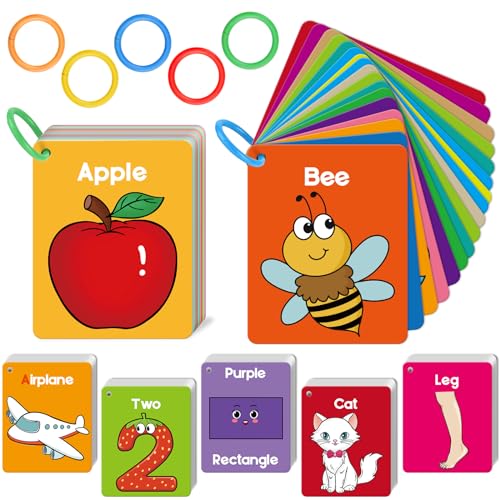
Torlam’s toddler set is a broad first-step toolkit for foundational skills, including the alphabet, counting 1–10, basic shapes and colors, animals, first words, and more. The cards are described as double-sided, which increases the surface area for practice and repetition. With vibrant illustrations and clear typography, these flash cards aim to spark curiosity and support kindergarten readiness. The inclusion of multiple topics within a single pack reduces the need for multiple purchases and helps caregivers create varied learning activities.
Why it stands out: The comprehensive scope makes it a versatile option for early learners who benefit from exposure to a wide range of concepts in a single, durable resource. The colorful, engaging design helps maintain attention, while the simple layout supports independent practice and guided teacher or parent-led sessions alike. It’s especially useful for households building a structured daily learning rhythm that emphasizes consistency across domains.
SpriteGru 50 PCS Kid First Cognitive Flashcards

SpriteGru’s cognitive flashcards focus on foundational knowledge with 50 double-sided cards that cover letters, numbers, animals, foods, shapes, colors, and first words. The set emphasizes cognitive development, memory, and early literacy through colorful visuals and simple prompts. The cards are printed on sturdy material with PET film coatings, designed to resist wear and tear from frequent handling. The packaging includes three reclosable rings, facilitating portable practice and organized activity setups.
Why it stands out: The dual-sided design packs a lot of content into a compact format, making it suitable for quick drill sessions or longer guided activities. The durable build and non-toxic inks give parents peace of mind about everyday use by children. This set is particularly appropriate for families seeking a broad, affordable starter kit that supports both recognition and vocabulary-building across multiple foundational domains.
Skillmatics Vocabulary Flash Cards

Skillmatics Vocabulary Flash Cards present 100 words through a handpicked combination of visuals, wordplay, and sound cues designed to improve retention and comprehension. Aimed at ages 8 and up, the set uses memory science to help kids remember new terms through associations and humorous context. The 50 double-sided cards provide ample opportunities for in-class games, family challenges, and independent practice. The product is positioned as a screen-free language-building tool, supporting reading development and expressive language skills.
Why it stands out: This kit emphasizes higher-level vocabulary and word usage, appealing to older children who can benefit from deliberate language expansion. The combination of visuals and spoken cues enhances both recognition and recall, making it a strong complement to reading programs, spelling activities, and literary discussion. It’s a solid addition for homeschoolers or classrooms focusing on advanced vocabulary in a structured, engaging format.
Buying Guide: Key Purchase Considerations
When choosing educational flashcards for kids, consider content alignment, age appropriateness, durability, and learning goals. Here are several perspectives to guide your decision:
- Learning domain: If you want to boost math fluency, prioritize sets like multiplication flashcards or cognitive letter-number packs. For early literacy, choose alphabet and vocabulary cards with clear visuals and examples.
- Age range and progression: Some sets target toddlers with broad topics, while others are better for 7–10-year-olds with more advanced language. Ensure age recommendations align with your child’s current level and goals.
- Durability and format: Double-sided cards with thick stock and lamination tend to last longer in active households. Consider whether you need rings or boxes for organization and portability.
- Engagement and motivation: Cards that include interactive features, audio playback, or reward codes can sustain interest and encourage consistent practice.
- Safe materials and non-toxicity: For younger children, mouth-safe inks and non-toxic coatings are important. Look for durable finishes that resist tearing and wear.
- Learning style fit: Visual learners benefit from bright imagery and large fonts, whereas auditory learners benefit from talking cards or sound cues. A mix of formats can cover multiple styles.
- Curriculum alignment: If you’re supplementing a specific curriculum, verify whether the content aligns with Common Core or your local standards to ensure cohesive instruction.
In practice, a well-rounded set combines diverse content (letters, numbers, basic words, and practical facts) with durable construction and age-appropriate difficulty. For families and classrooms, consider pairing flashcards with short, structured activities to reinforce learning outcomes—such as timed drills for quick recall, memory games, or language-building storytelling prompts.