Thrash metal guitarists rely on aggressive, high-gain distortion to push fast riffs and tight palm-muted sections into your mix. The right pedal can deliver searing leads, chunky rhythm tones, and defined articulation without sacrificing clarity. Below are five top distortion pedals chosen for thrash players, highlighting modes, EQ, and build quality to help you dial in brutal chugging and molten solos. Use the buying guide to compare features like boost options, true bypass, and control layouts to match your rig.
| Product | Brand | Key Tone Anchor | Notable Feature |
|---|---|---|---|
| EX Inferno Death Metal Distortion | EX | Ultra-high gain with 3-mode boost | Raw, Brutal, Inferno modes |
| JOYO High Gain Distortion (JF-04) | JOYO | Classic hard distortion with full EQ | Wide range from crunch to heavy metal |
| Sondery Metal Distortion Pedal | Sondery | Warm vintage distortion | 3 modes: Solo, Turbo, Normal |
| JOYO Metal Distortion (JF-17) | JOYO | 3-band EQ with boost | Independent EQ with six knobs |
| AFOT Heavy Metal Distortion | AFOT | Wide dynamic range | 6 knobs: Treble, Mid, Bass, Boost, Vol, Dist |
EX Inferno Death Metal Distortion Pedal
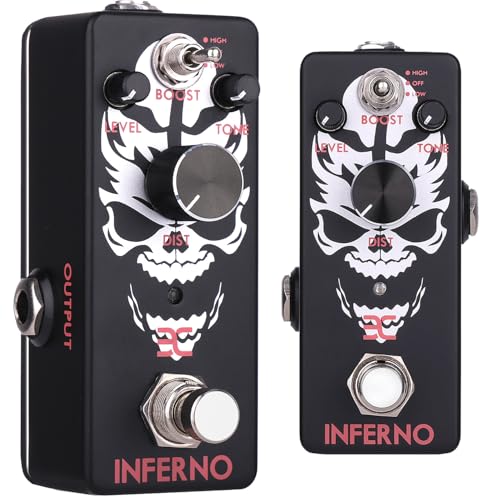
The EX Inferno Death Metal Distortion Pedal is designed for extreme metal tones with a three-mode boost switch. Tone, Level, and Distortion controls let players sculpt everything from tight rhythm to screaming lead textures. The 3-mode toggle enables Raw, Brutal, and Inferno settings to adapt to fast thrash riffs or heavy chugging sections, making it a versatile choice for a high-gain rig and stage use.
JOYO High Gain Distortion (JF-04)

JOYO’s JF-04 delivers classic high-gain distortion with a full-range EQ and tone control. It covers crunch to all-out metal tones, enabling aggressive thrash rhythms and saturated solos. The aluminum housing, finish, and LED indicator help it stand up to live performance while maintaining a clear signal with single-coil or humbucker-equipped guitars.
Sondery Metal Distortion Pedal
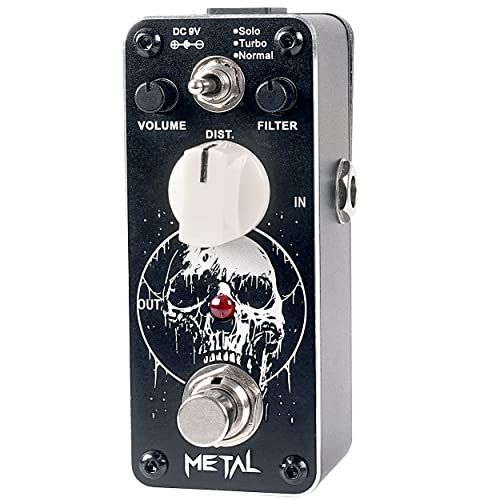
The Sondery pedal emphasizes a warm, wide-range vintage distortion with three modes: Solo, Turbo, and Normal. Volume, Filter, and Distortion provide precise shaping, while true bypass minimizes tone loss when the pedal is disengaged. The aluminum chassis and artful top design add durability and a stage-ready aesthetic, suitable for thrash tones that require articulation and grit.
JOYO Metal Distortion Pedal (JF-17)
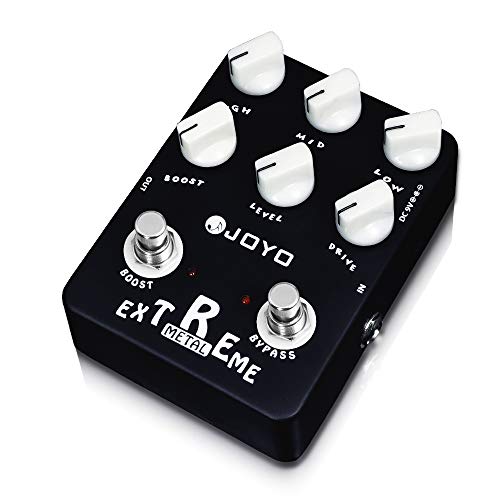
This JOYO model adds a 3-band EQ plus a dedicated boost and drive control, enabling dramatic shaping of low-end authority and high-end bite. It’s especially effective for thrash tones when paired with humbuckers, delivering solid mids and controlled gain. The independent EQ controls help carve space for rhythm guitars or lead lines without muddiness.
AFOT Heavy Metal Distortion Pedal

AFOT’s Heavy Metal Distortion pedal emphasizes clarity at high gain with a wide tone range. Six rotary knobs—Treble, Mid, Bass, Boost, Volume, and Distortion—allow detailed shaping, making it suitable for thrash players seeking defined highs for fast riffs and tight low end for chugs. The design aims for reliable performance and a distinct metal voice across pedal settings.
Buying Guide
- Gain structure and headroom: For thrash, seek pedals with high-gain potential but retain note definition when pushed.
- Three-mode boosts or multiple channels: These features help you switch between rhythm-heavy chug and explosive lead tones onstage.
- EQ flexibility: Pedals with 3-band or more EQ controls enable shaping low-end punch without masking mids and highs critical for cutting through a mix.
- True bypass and build quality: True bypass preserves your guitar’s tone when the pedal is off, and a sturdy chassis is essential for touring.
- Footprint and form factor: Mini pedals save pedalboard space, but ensure control spacing is comfortable for live use with gloves.
- Power options: Check if the pedal ships with a power supply or requires one; 9V or 9V-18V adaptability can affect headroom and tone.
- Humbucker vs. single-coil compatibility: High-gain pedals can react differently depending on pickups; read user notes on tone retention with your pickup configuration.
- Noise floor and sustain: Look for pedals that maintain clarity during fast picking, sustaining notes without flubbing into mud.
When selecting a distortion pedal for thrash metal, consider how you will integrate it with your amp, whether you use a boost pedal for solos, and how the pedal’s EQ shape can sit beside your other effects. If you perform in a band with loud stage dynamics, prioritize pedals that deliver tight attack, preserved pick-attack, and defined mids for punchy rhythm sections and razor-sharp leads.