Choosing the right color changing clock can help toddlers develop healthy sleep habits and reduce early morning wake-ups. The following devices use colored lights, friendly icons, and gentle sounds to teach kids when to sleep and when to wake. This guide highlights five reliable options, noting key features like ok-to-wake signals, night lights, and dual alarms to fit busy family routines.
Product quick reference
| Product | Brand | Key Feature | Color Signals | Night Light / Sound |
|---|---|---|---|---|
| ANNNGUL Kids Alarm Clock | ANNNGUL | OK TO WAKE with color cues | Green / Red | Dimmer night light |
| Stay-in-Bed Clock for Kids | Learn & Climb | 4-color wake system; sturdy DC port | Red → Yellow → Green | Soft LED night light |
| H-chin Kids Alarm Clock | H-chin | Color + Dino theme; sleep training | Multi-color options | 9 colored lights; 17 sounds |
| iHoo Toddlers Sleep Training Clock | iHoo | Sun & Moon cues; nap timer | Sun (green) / Moon (red) | 6 soothing sounds |
| OQIMAX Kids Alarm Clock | OQIMAX | 11 colors; dual alarms | 11 color options | Dreamy night light |
Note: All products listed are designed for ages 2–9 and emphasize non-intrusive wake times, adjustable brightness, and kid-friendly interfaces. Features are summarized from product descriptions to help compare at a glance.
ANNNGUL Kids Alarm Clock

The ANNNGUL clock offers a straightforward ok-to wake system using green and red lights to indicate when it’s appropriate to leave bed. A primary appeal is its dimmable night light with 10 vivid color options and five levels of brightness, letting parents tailor lighting for daytime visibility or nighttime comfort. The device features an intuitive layout with clearly labeled buttons, reducing complexity for busy mornings. This model focuses on reliable sleep training with simple, kid-friendly cues rather than excessive features.
Stay-in-Bed Clock for Kids
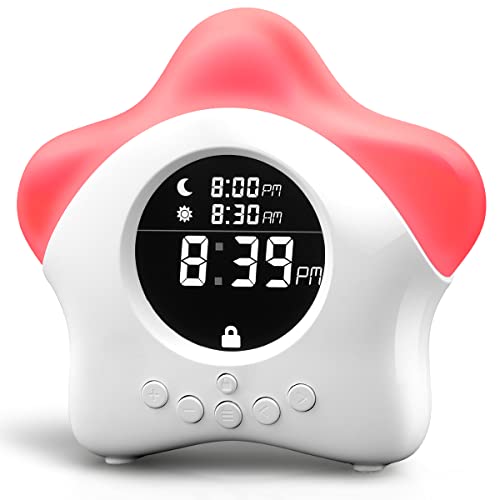
Learn & Climb’s Stay-in-Bed Clock uses a four-color system to signal times for waking, guiding kids from red (“don’t get up yet”) to yellow (“almost time”) and green (“time to start the day”). The model emphasizes reliability with a sturdy DC power port and a battery backup to preserve settings during outages. The user experience centers on a friendly, non-threatening approach to sleep routines, aiming to reduce early morning interruptions for parents and improve children’s consistency.
H-chin Kids Alarm Clock
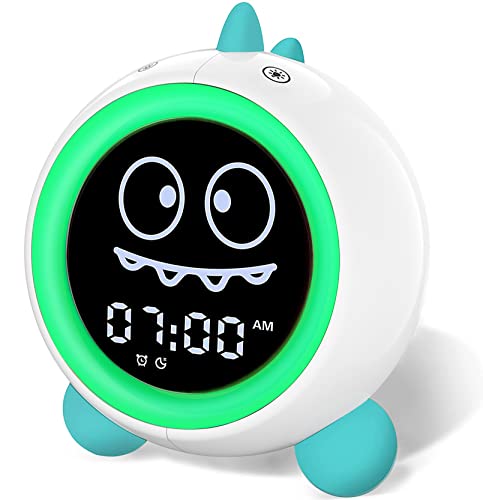
The H-chin clock blends a Dino theme with a color-driven wake system and a built-in night light. It uses color signals and facial expressions to teach children when to stay in bed and when to start their day, promoting independent time-telling habits. A diverse audio option includes 17 sounds, with 9 music options and a variety of nature sounds to mask household noises. The dimmable night light helps maintain a soothing bedtime environment while the clock supports easy manual operation for kids and parents alike.
iHoo Toddlers Sleep Training Clock

The iHoo Toddlers Sleep Training Clock uses sun and moon visuals to tell children when to wake and when to sleep. It includes a nap timer with multiple durations (15–120 minutes) to help kids manage activities and quiet time. A dual-alarm setup supports separate wake and bed times, with a snooze option and multiple sound choices. The approach emphasizes routine consistency while offering adjustable brightness and a clear, kid-friendly interface for family use.
OQIMAX Kids Alarm Clock

The OQIMAX model features 11 color options and dual alarms, offering customization for different weekday and weekend schedules. Its sleep training function centers on a red night light that gradually transitions to a green wake signal, aligning with typical daylight patterns. The device pairs bright, engaging lighting with comforting audio options to facilitate a smooth transition from night to morning, while remaining adaptable to various bedtime routines and room setups.
Buying Guide
- Sleep training method: Decide whether you prefer a simple two-color cue (green/red) or a multi-color system with neutral icons and animations. More colors can offer nuanced cues but may add complexity for very young children.
- Night light and brightness: Look for adjustable brightness and color options to support a calm bedtime environment. Dim daytime lighting can help kids adjust to sleep schedules without overly bright nights.
- Sound options: Consider whether you want a built-in sound machine with white noise or nature sounds. For sensitive sleepers, a wide range of soundscapes can improve comfort and reduce disturbances.
- Power and portability: A model with a stable DC power option and battery backup can prevent losing settings during outages. For travel or shared rooms, consider size and cord management.
- Ease of use: Parents should value simple interfaces and intuitively labeled controls. A clock that is easy to program reduces morning friction and supports consistent routines.
- Learning cues: Some clocks incorporate sun/moon icons, or smiley/sad faces. Decide which visuals best align with your child’s understanding and your family’s routines.
- Durability and warranty: Since these clocks are used daily, prioritize sturdy builds and reliable customer support or warranties in case of malfunctions.
In selecting a color changing clock for toddlers, consider your child’s age, sensitivity to light, and your family’s wake-and-sleep schedule. The five options reviewed here emphasize clear signals, gentle lighting, and straightforward operation to support consistent bedtimes and calmer mornings.