Discover engaging, screen-free and app-assisted coding toys that help tweens learn programming concepts while building critical thinking and problem-solving skills. Below are five highly-rated options that blend robotics, logic puzzles, and hands-on engineering to keep pre-teens curious and motivated to learn.
| Product | Brand | Type |
|---|---|---|
| Botley the Coding Robot | Learning Resources | Screen-free Coding Robot |
| mBot Robot Kit | Makeblock | Scratch & Arduino Coding Robot |
| Thames & Kosmos Smart Machines Junior | Thames & Kosmos | Build & Code Robot |
| Think Fun Hacker | ThinkFun | Cybersecurity Coding Game |
| PIVONAX STEM Robotics Kit | PIVONAX | 5-in-1 Remote/App Control Robot |
Botley The Coding Robot — Screen-Free Coding

Botley the Coding Robot offers a screen-free introduction to programming fundamentals, making it ideal for tweens who benefit from tangible, button-based coding. Its remote and coding cards introduce loops, conditional logic, and basic computational thinking without a tablet or smartphone. The kit grows with the child, featuring an 80-step programming capability and obstacle detection that provides escalating challenges as skills improve. Requires batteries to power remote operation, ensuring a straightforward start to independent experimentation.
Makeblock mBot Robot Kit — Scratch & Arduino

mBot provides a bridge from beginner Scratch-based programming to more advanced Arduino-compatible projects. The kit is designed for easy assembly in about 15 minutes and supports diverse modes, including line-following and obstacle avoidance. It pairs with free Makeblock apps and mBlock software for progressive learning—perfect for tweens ready to expand from drag-and-drop to text-based coding. Note that batteries are required for full operation, and a small learning curve accompanies transition to more complex projects.
Thames & Kosmos Smart Machines Junior

Smart Machines Junior introduces beginners to robotics with a 9-inch tall programmable robot and a block-based coding app. It offers two play modes: screen-free control via built-in buttons for quick, tactile interaction and a downloadable app for more elaborate movements and sounds. The kit emphasizes simple setup and approachable coding experiences while supporting up to 200 actions in the app—an accessible path to more advanced robotics topics for tweens.
Think Fun Hacker — Cybersecurity Coding Game

Hacker transforms cybersecurity concepts into engaging gameplay, teaching core programming principles through strategy and problem solving. This multi-faceted game includes a grid, control panel, and various tiles that simulate coding logic and data transactions. It’s suitable for tweens ages 10 and up and offers a brain-boosting mix of planning, sequencing, and critical thinking—without requiring a computer screen, while still reinforcing practical coding ideas.
PIVONAX 5-in-1 STEM Robotics Kit
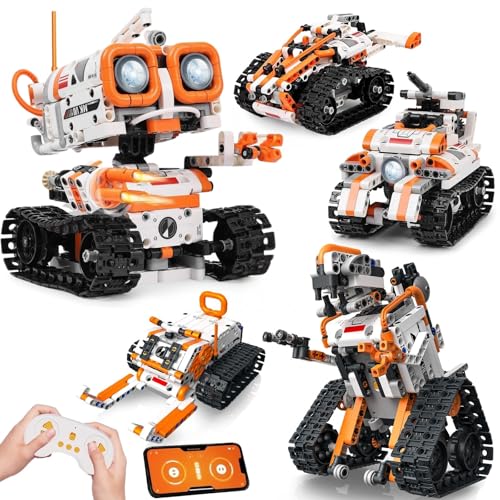
PIVONAX combines five transformable designs with remote and app controls, creating a robust STEM experience that covers mechanical design, basic coding logic, and engineering exploration. The kit’s multiple configurations—Machine Gun Robot, Armored Vehicle, Cannon Tank, Snowmobile, and Mechanical Dinosaur—offer varied challenges that help tweens develop problem-solving and engineering adaptability. The included remote or app-based control introduces programming concepts in an accessible, hands-on context and supports broad STEM learning goals.
Buying Guide for Tween Coders
When selecting coding toys for tweens, consider the child’s current skill level, interest in screens, and long-term learning goals. Screen-free options (like Botley) help build foundational logic and sequencing, while kits with Scratch/Arduino or app-based coding (like mBot or PIVONAX) introduce more advanced programming concepts and hardware interaction. Look for these key purchase considerations:
- Learning progression: Choose toys that start simple and scale up in complexity to keep tweens challenged over time.
- Programming environment: Block-based (Scratch) vs. text-based (Arduino) learning paths, and whether apps are included or required.
- Hardware and durability: Durable components, clear assembly instructions, and safe materials for younger tweens.
- Expandability: Add-on kits or future projects that extend STEM exploration beyond a single product.
- Screen use: Balance screen-free play with moderate digital tooling to develop both tactile and digital coding skills.
- Support resources: Availability of tutorials, lesson guides, and community examples to maximize learning outcomes.
Selecting a mix of options—some that emphasize hands-on mechanical play and others that introduce programming concepts with software—can provide a well-rounded coding education for tweens. Each option listed above offers distinct pedagogical angles, from early algorithmic thinking to practical robotics and cybersecurity concepts, ensuring a broad spectrum of coding interests is addressed.