Introducing preschoolers to coding builds early problem-solving, sequencing, and critical thinking skills using hands-on play. This guide highlights screen-free, kid-friendly coding toys that encourage curiosity, creativity, and perseverance. The selections below feature simple controls, age-appropriate challenges, and engaging storylines to keep young learners motivated while they master foundational concepts in logic and engineering.
Summary of chosen products:
| Product | Brand | Audience | Key Benefit |
|---|---|---|---|
| Botley The Coding Robot Activity Set | Learning Resources | 5+ | Screen-free coding with a remote programmer |
| Code & Go Robot Mouse Activity Set | Learning Resources | 4-8 | Hands-on maze solving and sequence building |
| Botley The Coding Robot 2.0 Activity Set | Learning Resources | 5+ | Expanded coding styles and play modes |
| Coding Critters Ranger & Zip | Learning Resources | 4+ | Interactive pets with story-based coding play |
| Switcheroo Coding Crew | Learning Resources | 4+ | Three-in-one vehicle coding adventures |
Botley The Coding Robot Activity Set (77 Pieces)

Early STEM skills are built through screen-free play. Botley teaches kids to code using an active remote programmer, promoting critical thinking and problem solving. The set comes fully ready for use, with additional activities that expand as skills grow. Requires 5 AAA batteries (not included).
Typical activities emphasize sequencing, pattern recognition, and basic loops. Children learn through hands-on challenges such as coding Botley to navigate mazes, avoid obstacles, and perform simple actions. The design prioritizes intuitive controls, making it accessible for five-year-olds and up while offering room for progressive difficulty.
Code & Go Robot Mouse Activity Set
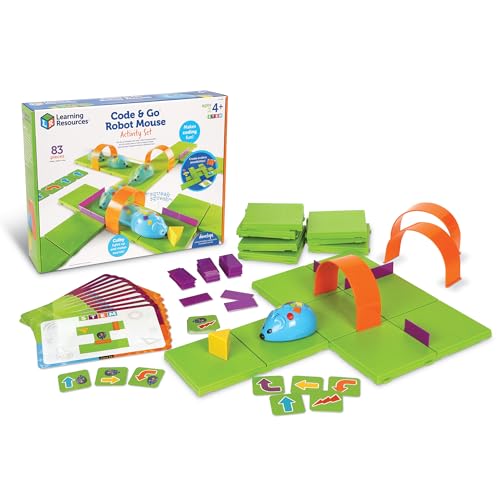
Screen-free coding introduction designed for ages 4-8. Children build fundamentals by programming a robot mouse to navigate mazes and reach goals, fostering planning and debugging skills. The set includes 10 double-sided cards that gradually increase in difficulty, allowing kids to progress at their own pace. Batteries are required.
Activities emphasize problem-solving and logical thinking as kids plan sequences, test outcomes, and adjust strategies. The hands-on format supports tactile learning and independent exploration, while the story-like challenges keep sessions engaging and age-appropriate.
Botley The Coding Robot Activity Set (77 Pieces) — 5+
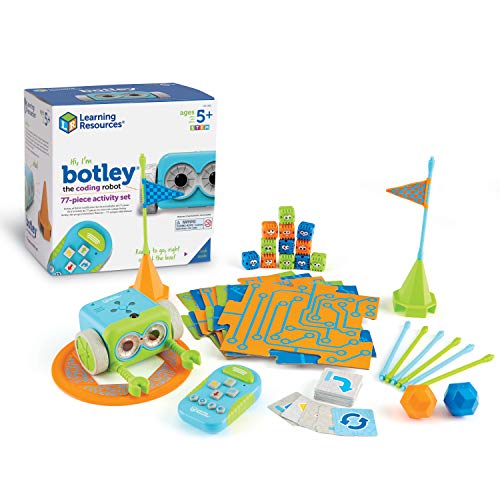
Botley 2.0 extends screen-free coding with 16 interactive modes and expanded coding styles, including music, lights, and motion. The 77-piece set enables exploration through multiple scenarios, such as trains, police cars, or ghost themes. Kids code via a remote and learn by doing, which reinforces sequencing, prediction, and problem solving.
Educational value lies in hands-on experimentation with cause-and-effect relationships. The kit supports collaborative play, helping children communicate ideas and work with teammates to design and test programs in a playful context.
Coding Critters Ranger & Zip
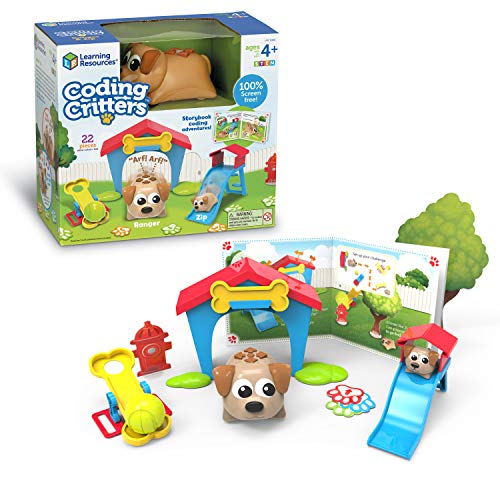
This 22-piece set introduces early coding via interactive pet play. Ranger and Zip offer a screen-free narrative that motivates kids to solve simple coding challenges. The playset blends storytelling with hands-on tasks, such as guiding pets along paths, feeding, and administering care as part of the coding journey.
Kid-friendly features include a tangible, story-driven approach that aligns with preschool cognitive development. The pets encourage collaborative play and imaginative exploration while introducing basic directional logic and sequence planning.
Switcheroo Coding Crew

Switcheroo Coding Crew combines a three-in-one rescue robot with a puzzle town map for nine fun missions. Preschoolers learn basic coding concepts through interactive play, transforming the robot into police car, fire truck, or construction vehicle to complete tasks. The design emphasizes problem solving and hands-on exploration without screens.
The set encourages children to experiment with different commands and observe outcomes, which supports logical thinking and adaptability. It also provides a tactile way to understand directional control and sequencing as kids navigate the map and complete missions.
Teach Tech Mech 5 Mechanical Coding Robot
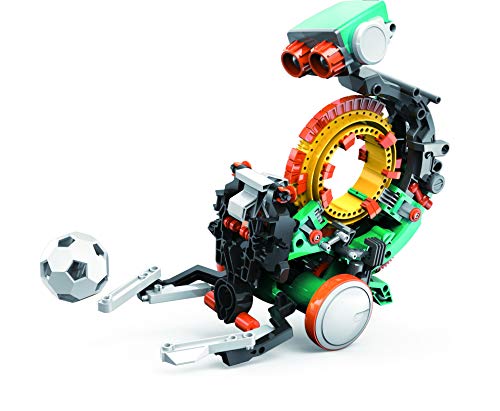
Mech 5 introduces mechanical coding through snap-on coding buttons and a coding wheel. This entry-level robot focuses on engineering principles alongside coding basics, offering actions like throwing, lifting, kicking, and drawing. The mission-based design aims to spark curiosity about how machines work and how programs translate to physical actions.
The toy emphasizes hands-on assembly and experimentation, encouraging kids to test ideas, observe results, and iterate. It’s suitable for budding engineers who enjoy building and exploring cause-and-effect relationships in a tactile format.
Coding Critters Go Pets Dipper The Narwhal

Meet Dipper, a twisting coding friend with a 12-page storybook adventure. Kids code Dipper to follow paths and reach goals, combining story-driven motivation with interactive challenges. This screen-free toy supports early coding concepts like sequencing, prediction, and conditional thinking through engaging narratives.
Educational value includes reinforcing reading comprehension and following multi-step directions while maintaining a focus on problem solving. The modular storytelling aspect makes it adaptable for individual or small-group play, promoting collaboration and shared learning.
Botley The Coding Robot 2.0 Activity Set

Botley 2.0 expands on the original with more coding interactions and new modes, including music, lights, and movement. At 78 pieces, it supports a broader range of activities and role-playing games that reinforce logical thinking and sequencing. The robot is designed for quick setup and easy entry into coding play, suitable for newcomers and advancing learners alike.
Buying Guide
Key purchase considerations:
- Age and development stage: Choose products aligned with a child’s cognitive and motor skills, typically 4-6 for preschoolers. Look for adjustable difficulty to grow with the child.
- Screen-free focus: Screen-free options support hands-on learning and reduce screen time while teaching sequencing, algorithms, and debugging.
- Interface and controls: Prefer simple remotes, buttons, or story-driven prompts. Clear feedback helps kids understand cause-and-effect relationships.
- Physical robustness: Durable construction and easy-to-handle pieces are important for early learners who frequently manipulate parts.
- Expandability: Some sets include additional cards, missions, or modes, offering extended practice as skills advance.
- Educational balance: Look for a mix of problem-solving challenges, storytelling, and imaginative play to sustain engagement.
Comparison highlights:
- Screen-free robotics (Botley line) emphasizes accessible entry points with remote programming and expansion options for older preschoolers.
- Code-based mazes and puzzle maps (Robot Mouse, Switcheroo Crew) support planning, sequencing, and debugging in a tangible format.
- Interactive pets and stories (Coding Critters) blend narrative motivation with coding tasks, reinforcing memory and comprehension.
- Mechanical coding (Mech 5) introduces basic engineering concepts alongside sequencing and control, appealing to curious tinkerers.
In selecting a set, consider whether your child benefits most from structured challenges (puzzles and mazes), story-driven play (pets and Narwhal adventures), or open-ended building experiences (robotic kits with adaptable modes). All options provide a foundation for future STEM learning while keeping play centered on exploration and discovery.