Parents and educators increasingly seek engaging, educational activities that build early coding skills while keeping kids engaged. The following five coding board games are standout options that blend artificial intelligence concepts, problem solving, and teamwork into approachable play. Each title below includes a quick snapshot and key features to help you compare at a glance.
| Product | Brand | Key Benefit |
|---|---|---|
| CoderMindz Game for AI Learners | CoderMindz | Introduces AI and coding through a robot-neural adventure |
| Coder Bunnyz | Coder Bunnyz | Comprehensive STEM coding through maze puzzles |
| Think Fun Hacker | ThinkFun | Cybersecurity coding concepts and core programming principles |
| CoderMarz | CODERMARZ | Mars facts, AI, and coding in an astronaut quest |
| GOTHINK Code Breaker | GOTHINK | Code maker vs. code breaker in a wooden strategy duel |
CoderMindz: AI And Coding Adventure

CoderMindz is positioned as a bridge between play and foundational AI concepts. The game presents an accessible introduction to coding and artificial intelligence through interactive challenges, featuring a storyline about robots and neural networks. The design emphasizes quality and usability, aiming to be suitable for family play, classroom activities, and after school clubs. The core mechanic invites players to plan steps that align with simple AI ideas, encouraging logical thinking, pattern recognition, and collaborative problem solving. The game has earned media attention and is described as a pioneering tool for young learners.
Coder Bunnyz: Comprehensive STEM Coding

Coder Bunnyz combines a friendly animal-themed adventure with hands-on programming concepts. Players use code cards to guide Bunnyz through a maze, collecting a carrot and reaching a destination. The game targets a broad age range, from preschool to early teens, and is widely used in schools and libraries as a classroom coding tool. It emphasizes step-by-step coding logic, sequencing, and strategic planning, all delivered in a colorful, approachable format that supports teamwork and communication among players.
Hacker: Cybersecurity Coding Challenge

Think Fun’s Hacker is designed to introduce cybersecurity and programming thinking through engaging challenges. Players navigate a game grid, manipulate a control panel, and solve puzzles that mirror real-world coding strategies. The set includes various components such as a challenge booklet, movement and platform tiles, and a range of tokens. The experience emphasizes critical reasoning, planning, and problem-solving, while delivering practical insights into data handling and cyber concepts in a kid-friendly package.
CoderMarz: Mars, AI, And Code
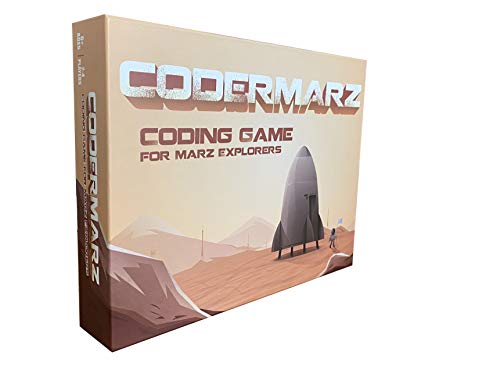
CoderMarz combines space exploration with basic programming and AI concepts. The game follows a young inventor on a mission to Mars, weaving in lessons about robotics, planet science, and algorithmic thinking. It is designed to be accessible for both home and classroom use, with a focus on curiosity, experimentation, and collaborative learning. Like other Samaira titles, it emphasizes storytelling as a vehicle for comprehension, helping players translate abstract ideas into concrete, stepwise actions.
GOTHINK Code Breaker: Wooden Strategy Duel

GOTHINK Code Breaker offers a classic strategy duel where two players attempt to crack or protect a secret color code. The wooden construction adds a tactile, durable feel, and the set includes a generous supply of pegs and a detailed board. The game targets older or more strategic players, encouraging careful planning, hypothesis testing, and pattern recognition. It provides a hands-on contrast to digital coding by highlighting logical deduction, sequence optimization, and collaborative problem solving in a playful, family-friendly format.
Buying Guide
When choosing coding board games for kids, consider the following factors to ensure a beneficial and engaging experience:
- Age appropriateness: Look for games that match your child’s cognitive development and reading level. Some titles are ideal for ages 4-7, while others target 8-12 and beyond.
- Learning goals: Decide whether you want a game that focuses on basic programming logic, problem solving, AI concepts, or cyber security thinking. Some titles blend several themes effectively.
- Gameplay length: Short sessions work well for younger children, while longer campaigns or multi-session play can foster deeper learning and collaboration.
- Physical quality: Wooden games tend to be durable and tactile, whereas card-based sets offer portability. Check for safe materials and kid-friendly design.
- Group dynamics: If you’re planning classroom or club use, choose games that support multiple players or cooperative play to maximize participation.
- Ease of setup: Look for clear instructions and minimal prep time to keep sessions flowing without frustration.
- Expansion potential: Some games offer additional content or companion activities, enabling extended learning as skills grow.
- Assessment alignment: Consider whether the game includes a way to track progress, goals, or outcomes that align with educational standards or curricula.
- Cost and availability: Compare price points and library or classroom availability. Some titles are widely adopted by schools and libraries, which can signal value and durability.
In practice, the best choice depends on the child’s interests and the setting. For hands-on exploration of AI and coding concepts, CoderMindz and CodersMarz stand out for their narrative-driven approach. For foundational programming logic and teamwork, Coder Bunnyz provides a strong, classroom-friendly option. For themed problem solving and strategy, Think Fun Hacker and GOTHINK Code Breaker offer robust challenges that develop planning and deductive reasoning. A well-rounded selection can blend these experiences to maintain motivation and curiosity over time.