Planetary viewing can be enhanced with the right binoculars, balancing magnification, light gathering, and ease of use. This guide highlights five highly capable options that help you spot planets and broad celestial features without needing a telescope. Each pick emphasizes bright, sharp views and sturdy handling for nights under the stars. Whether you’re a beginner or an enthusiast, these binoculars provide accessible, portable ways to enjoy the planets with friends and family.
Summary Of Chosen Products
| Product | Magnification / Objective | Key Benefit | Brand |
|---|---|---|---|
| Celestron Cometron 7×50 | 7×50 | Wide field, easy stargazing for beginners | Celestron |
| Celestron SkyMaster 15×70 | 15×70 | Brighter views for dusk and planets with tripod use | Celestron |
| Celestron SkyMaster 25×70 | 25×70 | Detailed long-distance planetary views with tripod | Celestron |
| Celestron SkyMaster 20×80 | 20×80 | High light gathering for deep-sky and planetary detail | Celestron |
| SVBONY SV407 2.1×42 | 2.1×42 | Wide-angle view with bright, comet- and planet-friendly perspectives | SVBONY |
Celestron Cometron 7×50 Astronomy Binoculars

EASY-TO-USE ASTRONOMY BINOCULARS FOR BEGINNERS: The Cometron 7×50 binoculars offer an approachable entry point for learning the night sky and starting comet watching. The 7x magnification provides a broad field that helps locate planets and luminous objects without fuss.
7X MAGNIFICATION: The wide field of view supports panning across the Milky Way and spotting large celestial features, making it suitable for observing planetary alignments and comets as they appear in the sky.
50MM OBJECTIVES WITH MULTI-COATED OPTICS: Large lenses collect more light, while anti-reflective coatings improve transmission for brighter, more contrast-rich views.
Celestron SkyMaster 15×70 Astronomy Binoculars

POWERFUL 15X MAGNIFICATION: These large 70mm objective binoculars provide substantial reach for observing planets at a distance and exploring the night sky with detail. They pair well with a tripod for stable long-distance viewing.
WORKS WITH YOUR TRIPOD: The built-in ¼”-20 adapter allows quick tripod mounting, essential for steady, long-exposure planetary viewing and astro-imaging sessions.
BRIGHT, SHARP VIEWS WITH BaK-4 PRISMS: BaK-4 prisms maximize light throughput, delivering brighter and more detailed images in darker conditions.
Celestron SkyMaster 25×70 Binoculars

POWERFUL 25X MAGNIFICATION: Extra reach for long-distance planetary viewing and terrestrial observation with 70mm objectives. Ideal when paired with a sturdy tripod.
WORKS WITH YOUR TRIPOD: Given their size and weight, a traditional tripod is recommended for stable, detailed views of planets at high magnification.
BRIGHT, SHARP VIEWS WITH BaK-4 PRISMS: Enhanced light throughput provides crisp contrasts for planetary features during twilight or night observing.
Celestron SkyMaster 20×80 Binoculars

POWERFUL 20X MAGNIFICATION: Large 80mm objective lenses deliver substantial light gathering, supporting clearer planetary views and long-distance terrestrial observation.
WORKS WITH YOUR TRIPOD: A tripod adapter allows secure mounting, crucial for minimizing shake at higher magnifications during night sky viewing.
BRIGHT, SHARP VIEWS WITH BaK-4 PRISMS: BaK-4 prisms improve light transmission and image brightness for detailed planetary features.
SVBONY SV407 2.1x42mm Astronomy Binoculars
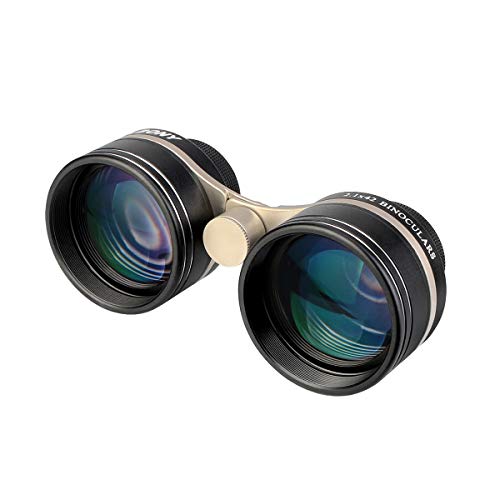
FMC COATING AND WIDE ANGLE: The SV407 offers a wide 26° field of view with multi-coated optics for bright, expansive views of star fields and constellations, useful for quick planet spotting in the field.
COMFORT AND PORTABILITY: The design emphasizes a balance between wide coverage and portability, making them suitable for casual sky watching and travel.
LONG DEPTH OF FIELD: A design that minimizes frequent refocusing, helping you track moving celestial features with ease during early evening sessions.
Buying Guide: Key Purchase Considerations When Choosing Binoculars For Planets
- Magnification and field of view: Higher magnification reveals more planet detail but reduces brightness and stability. A broad field of view aids quick locating of planets, while a mid-range magnification (7x to 20x) is often a practical balance for beginners and casual stargazers.
- Objective lens size: Larger objectives gather more light, improving planet visibility in low light. However, bigger lenses mean heavier, less portable binoculars. Consider your typical observing conditions and transport needs.
- Optical coatings and prisms: Multi-coated optics and BaK-4 prisms enhance brightness and contrast. This is especially helpful for viewing planets near twilight when light is limited.
- Tripod compatibility: High magnification models benefit from a stable mount. Look for models with built-in tripod adapters or easy mounting options to reduce shake during long observations.
- Durability and weather sealing: For outdoor astronomy, choose water- and fog-resistant designs to maintain performance across humidity and dew conditions.
- Ergonomics and comfort: A comfortable eye relief, strap system, and weight distribution improve long sessions of planet watching, particularly for new users.
- Accessories: Tripod adapters, carrying cases, and smartphone adapters can expand versatility, enabling steady imaging or quick sharing of celestial views.
- Budget and intended use: Entry-level models are great for learning, while higher-end designs with larger objectives are better for serious planetary viewing, particularly in dark skies.
- Portability vs. performance: If you plan to travel or hike to dark-sky sites, lighter, compact binoculars may be preferable even if they sacrifice some brightness.
These options provide a range of capabilities—from accessible entry-level binoculars ideal for beginners to high-magnification models suitable for detailed planetary viewing with tripod support. When evaluating, align magnification, objective size, optical quality, and mountability with your observing goals and location.