For aspiring pilots, choosing the right electric RC plane can make all the difference between a frustrating experience and hours of enjoyable flights. This guide highlights five beginner-friendly options that emphasize stability, ease of use, and durable construction. Each model offers distinct advantages—whether you want a realistic trainer, a twin-motor experience, or dependable self-stabilization—so you can find a great fit for learning or casual flying with family and friends.
| Product | Brand | Key Benefit |
|---|---|---|
| VEVOR RC Plane | VEVOR | 4-channel control with gyro stabilization and dual batteries for longer sessions |
| FANXMF RC Airbus A380 A380 | FANXMF | Crash-resistant EPP design with auto-stabilization and twin-motor setup |
| Volantex RC Plane | volantexrc | Xpilot stabilization with three-level beginner-to-expert flight control |
| 4DRC G8 Foam Plane | 4DRC | 6-axis gyro, dual takeoff modes, bright LEDs for night flights |
| AIGIMU RC Airplane | AIGIMU | 3-channel P51 replica with 6-axis gyro and two takeoff modes |
VEVOR RC Plane: 4-Channel Beginner Trainer

The VEVOR RC Plane delivers a complete 4-channel experience, closely mirroring full-size aircraft controls with rudder, elevator, aileron, and propeller operations. The aircraft employs a 6-axis gyro stabilization system and a robust 1020 motor to provide steady flights and smooth handling. A notable feature is the included 6G/3D mode capability, allowing pilots to transition from stable, beginner-friendly flights to more dynamic stunts as skills improve. With two included batteries, users can extend flight sessions and practice without frequent recharging.
Construction relies on lightweight EPP foam, which balances durability with responsiveness—resistant to minor crashes while keeping the plane easy to maneuver. The wireless 2.4 GHz control system minimizes signal interference, enabling simultaneous operation of multiple aircraft without cross-talk. This model suits beginners seeking reliable stability, ground-trinding confidence, and the opportunity to perform basic aerial maneuvers such as rolls and loops as skill levels rise.
FANXMF RC Airbus A380 A380: Beginner-Friendly Twin-Motor RC Plane

This model emphasizes crash resistance with a durable EPP shell and auto-stabilization via a 6-axis gyroscope. The twin-motor configuration helps compensate for torque and offers smoother straight-line flight, a key advantage for beginners still mastering directional control. With a 200-meter control range and a 3-channel control scheme, pilots can explore longer flights and basic aerobatics while building confidence. LED lighting adds visibility and excitement for dusk or indoor flights, making it appealing for family-friendly flying sessions.
The design focuses on ease of learning—two-takeoff modes and straightforward rudder settings enable pilots to advance to advanced maneuvers gradually. Beginners can practice controlled climbs, gentle banks, and simple circles in a forgiving airframe that reduces the impact of early mistakes while promoting consistent performance outdoors.
Volantex RC Plane: Xpilot Stabilization for Beginners
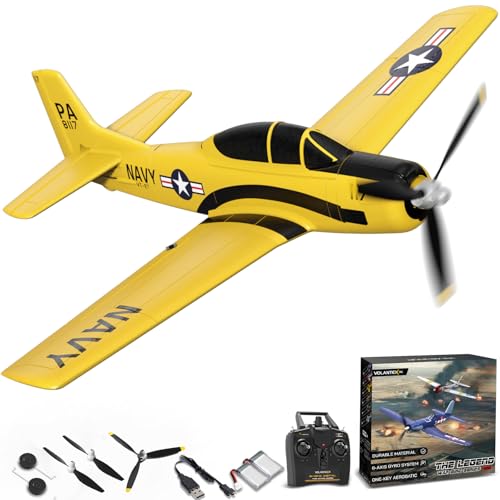
The Volantex RC Plane incorporates the Xpilot stabilization system, delivering ultra-stable aerial performance that helps new pilots gain confidence quickly. The aircraft supports three flight levels—beginner, intermediate, and expert—allowing progress to match skill development. A 2.4 GHz radio system delivers a robust connection with a practical distance of up to 656 feet, reducing the likelihood of control loss during beginner flights. The kit is designed for outdoor use and encourages group flights, making it suitable for hobby clubs or casual meetups with friends and family.
With a reliable self-righting feature and powerful motor configuration, the plane is arranged to recover easily from minor stalls and tip-overs, keeping sessions enjoyable rather than frustrating. The accompanying stable design helps learners focus on steering and coordination rather than compensating for poor stability, which supports rapid skill growth over multiple sessions.
4DRC G8 Foam RC Plane: Entry-Level Sturdy Flyer

The 4DRC G8 is built around a sturdy yet lightweight EPP foam chassis and a 6-axis gyro for stable flight dynamics. It features two take-off modes that cater to different skill levels—manual or taxi-based—and a beginner-friendly altitude hold, making it easier for new pilots to maintain steady flight. The model includes bright LED lighting for low-light visibility and added excitement during dusk flights. The plane supports a wide range of maneuvers—from gentle hovering to more animated aerobatics—without requiring extensive piloting experience.
This plane is well-suited for classrooms, family yards, and beginner clubs thanks to its forgiving behavior, easy-to-understand controls, and durable construction that tolerates occasional crashes during learning phases.
AIGIMU RC Airplane: Beginner-Friendly P51-Style Flight
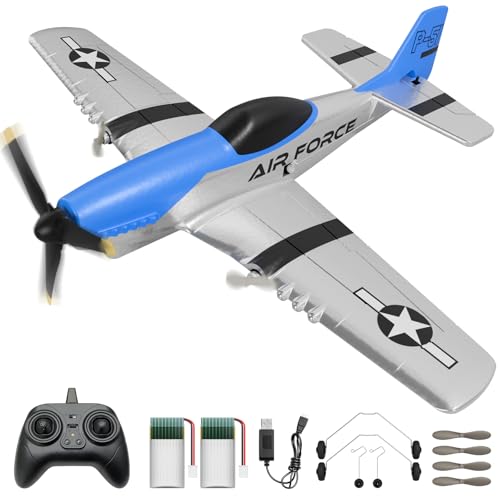
The AIGIMU RC Airplane mirrors a P51 Mustang profile, delivering an eye-catching appearance alongside practical ease of use. It offers a 3-channel control scheme and dual take-off modes (ground and hand launch), catering to beginners who want flexible launch options. The plane is equipped with a 6-axis gyro stabilization system to promote smooth, stable flights, reducing the learning curve for first-time flyers. With its approachable power and stable handling, this model is suitable for indoor gymnasiums and outdoor parks as a primary training aircraft or a visually striking introductory option.
Buying Guide: Key Purchase Considerations
- Stability and Stabilization: Look for gyro stabilization (6-axis or more) and, if possible, a self-righting feature. These attributes help new pilots maintain stable flight and recover quickly from minor stalls or wind gusts.
- Airframe Durability: Beginners benefit from foam-based airframes (EPP or similar) because they absorb impact well during learning. Check for reinforced landing gear and crash resistance in the design.
- Control System and Range: A 2.4 GHz radio control is standard and reduces interference. A longer control range offers more freedom to practice away from obstacles, but ensure it remains manageable for beginners.
- Flight Modes and Progression: Look for models that offer multiple flight levels (beginner, intermediate, expert) or readily switchable modes. This supports gradual skill development without buying a new plane.
- Power and Propulsion: Twin-motor configurations can provide smoother flight and easier handling, but single-motor designs with strong stabilizers are often sufficient for beginners and lighter controls.
- Launch and Landing Options: Planes with auto takeoff/landing assistance or altitude hold help relievers during early sessions. Ground take-off versus hand launch options offer flexible practice environments.
- Lighting for Visibility: LEDs improve visibility for low-light sessions and add aesthetic appeal, which can enhance motivation and engagement for younger pilots.
- Maintenance and Spare Parts: Consider ease of sourcing spare parts and batteries. Durable airframes with readily available parts reduce downtime and total cost of ownership.
- Skill Progression: A model that scales from beginner to more advanced maneuvers helps extend the product’s life as the user gains experience, delivering more value over time.
These considerations help compare options across the five featured models, ensuring a balanced view that addresses different learning styles, budgets, and environments. Whether you prioritize durability, advanced stabilization, or simple, immediate flight fun, a suitable beginner RC plane can provide a reliable gateway into the hobby and a foundation for more sophisticated aircraft in the future.