Starting a guitar journey can be exciting but overwhelming. A well-structured beginner DVD course can provide visual lessons, step-by-step routines, and on-screen notation to accelerate learning. This article highlights five beginner-friendly DVDs that cover acoustic, electric, and even bass fundamentals. Each product offers practical guidance, clear demonstrations, and essential techniques tailored for new players. Read on to compare what each option offers and how they fit common beginner goals such as learning chords, strumming patterns, and basic music theory.
Quick reference summary of selected products:
| Product | Brand | Format | |
|---|---|---|---|
| Beginning Guitar | Learn to Play Guitar with DVD & Lesson Book | Hal Leonard | Chords, riffs, techniques | On-screen music notation |
| Fender Presents: Getting Started on Electric Guitar | Hal Leonard | Electric guitar fundamentals | Includes bonus footage and factory tour |
| Fender Presents: Getting Started on Acoustic Guitar | Hal Leonard | Acoustic guitar basics | Looping, web resources for beginners |
| Hal Leonard Guitar Method DVD | Hal Leonard | Both acoustic/electric basics | Great camera angles and on-screen music |
| Bass Guitar Lessons: Beginning Bass | MVD Entertainment | Intro to bass lines and technique | Software bundle details in listed features |
Beginning Guitar: Learn to Play with DVD & Lesson Book

This Hal Leonard title provides a combined approach of video instruction and a corresponding lesson book. It focuses on essential guitar chords, riffs, and core techniques suitable for true beginners. The accompanying on-screen music notation helps learners follow along, supporting reading skills while practicing. The course structure is designed to guide new players from basic chord shapes to simple rhythm patterns, making it an accessible entry point for both acoustic and electric guitar styles. The set is described as a practical at-home program with clear demonstrations and a scalable learning path.
Getting Started on Electric Guitar

This beginner-focused guide dives into the electric guitar world with broad coverage of fundamentals. It is positioned to help aspiring players understand proper posture, tone concepts, and essential playing techniques. The content includes an overview of musical styles and practical exercises designed to build finger strength and dexterity. Bonus footage, including a factory tour, can provide context for instrument construction and maintenance. The approach is to translate basic theory into actionable practice for new electric players.
Getting Started on Acoustic Guitar

This acoustic-focused program includes bonus footage and a Fender Factory Tour, offering learners practical insights into strings, finger placement, and strumming patterns. The course emphasizes acoustic-specific techniques like using a pick, achieving clean chord transitions, and understanding looping concepts. Web resources designed for beginning guitarists are highlighted, giving learners a platform to reinforce what they practice offline. The material is aimed at building a solid acoustic foundation with accessible demonstrations and practical tips.
Hal Leonard Guitar Method DVD
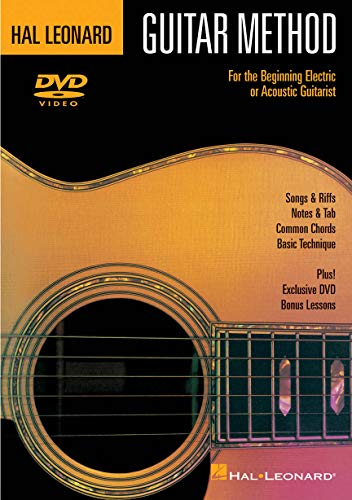
Designed for beginning players of either acoustic or electric styles, this Hal Leonard DVD covers the basics with clear camera angles and on-screen music that helps learners follow along visually. The program takes a structured approach to essential topics such as chords, rhythms, and note reading, while encouraging consistent practice routines. It is suitable for users who prefer a comprehensive, classroom-style lesson experience at home, with practical demonstrations that aid retention and technique development.
Bass Guitar Lessons: Beginning Bass

This title focuses on the fundamentals of bass playing, introducing basic fretboard knowledge, essential bass lines, and foundational techniques. While it centers on bass, beginners can apply rhythmic concepts and technique practices to a wide range of guitar contexts. Since the feature list mentions a software bundle and hardware components, the product provides a broader learning ecosystem that complements hands-on practice with formalized digital tools. It serves as an option for players who want to diversify their instrument studies early in the learning journey.
Buying Guide
Key considerations when selecting a beginner guitar lessons DVD include format, instructional style, and progression. First, assess format alignment with your learning preferences. DVDs with on-screen notation and camera angles can simplify reading music and watching finger placement, while those with accompanying books or online resources may provide added practice material and reference sheets. Second, consider instrument focus. If you plan to play electric guitar, prioritize products that address gain, tone, and technique specific to electric playing; for acoustic players, look for strumming patterns, chord transitions, and rhythm exercise emphasis. Third, evaluate the progression and depth. Some titles target quick wins with basic chords and riffs, while others offer a broader curriculum covering music theory basics, tuning, and maintenance. Fourth, verify compatibility with your setup. Box contents or bundled software may require compatible players or PCs; ensure any included tools align with your current hardware. Fifth, look for supplemental resources such as factory tours or web links that provide additional learning pathways or community support. Finally, check for learning aids like printable chord charts, practice schedules, and reviewable video segments to sustain motivation and track improvement. Comparing these elements helps bidders select a course that best matches skill level, goals, and preferred learning pace.
In summary, the best beginner DVDs balance clear demonstrations with actionable practice tasks. They should facilitate steady progression—from mastering simple chords to exploring fuller rhythm patterns—while offering resources that reinforce daily practice. For learners undecided between acoustic, electric, or bass paths, a program with flexible coverage or a well-rounded method can serve as a solid foundation for ongoing development.