Discover engaging, age-appropriate anatomy toys that help young learners explore the human body through hands-on play. This guide highlights five top picks that blend STEM learning with safe, durable design, making it easier for parents and teachers to introduce anatomy concepts to curious five-year-olds. Each option includes interactive elements, from removable organs to layered puzzles, that support cognitive development, fine motor skills, and coordination.
| Product | Brand | What It Teaches | Key Feature |
|---|---|---|---|
| Be Amazing! Interactive Human Body | Be Amazing! Toys | Anatomy basics, movement, organ placement | Fully poseable 14″ figure with 60 pieces |
| Melissa & Doug Magnetic Human Body | Melissa & Doug | Body systems visualization, magnets | 24 magnet pieces with stand and guide |
| Kidzlane Body Puzzle | Kidzlane | Skeletal, muscular, respiratory, digestive systems | 29-piece 5-layer wooden puzzle |
| QUOKKA Busy Book | QUOKKA | Interactive anatomy themes, early science concepts | Nearly 200 attached elements, 15 themes |
| NUHICO Felt Body Model | NUHICO | Detachable organs and bones, classroom or homeschool use | 35.4 inches tall felt anatomy model |
Below are five carefully chosen products that align with the keyword and offer reliable, educational value for five-year-olds and older learners. Each section provides a concise overview, key features, and links to the official product pages for quick reference.
Be Amazing! Interactive Human Body — 14″ Poseable Model
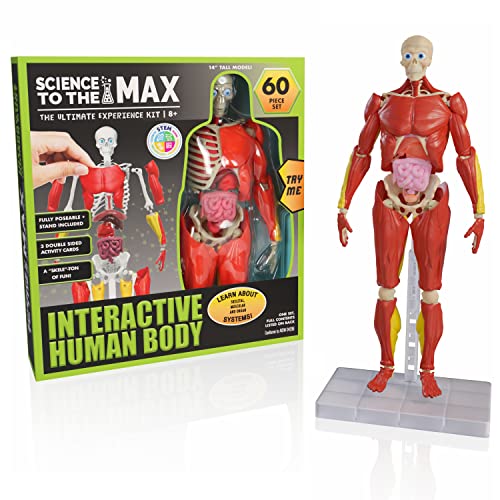
The Be Amazing! Interactive Human Body is a 14-inch tall, fully articulated model designed for hands-on exploration. It features removable bones, muscles, and organs, with a stand to support endless pose ideas. The kit helps children visualize body parts in a realistic context and encourages STEAM-oriented curiosity about how their bodies move.
Melissa & Doug Magnetic Human Body Anatomy Play Set

This magnetic play set includes a wooden figure, a stand, and 24 magnets representing key organs and systems. An accompanying guide helps kids identify parts and understand how the body functions. The magnetic pieces enable easy rearrangement, supporting repeated exploration and retention of anatomical concepts in a playful format.
Kidzlane Body Puzzle — 5-Layer Anatomy Puzzle

The Kidzlane five-layer wooden puzzle teaches essential body systems: skeletal, muscular, respiratory, and digestive. With 29 thick pieces, the puzzle promotes fine motor skills, spatial reasoning, and problem-solving. Its durable wooden construction makes it suitable for daily play in classrooms or homes, offering a tactile way to study anatomy.
QUOKKA Busy Book — Fully Assembled Anatomy Activities

QUOKKA’s busy book arrives fully assembled, with nearly 200 pre-attached elements across 15 themes. It’s designed to spark curiosity about the human body, brain, organs, senses, skin, bones, and more. The self-contained pages support independent exploration, making it ideal for quiet time, travel, or homeschooling sessions that emphasize hands-on learning without setup friction.
NUHICO This Is Me! Felt Body Model

This extra-large felt anatomy set measures 35.4 inches tall and includes 30 detachable organs and bones. Velcro attachments allow easy removal and reattachment for interactive demonstrations of organ placement and body systems. The soft, fabric design provides a safe, tactile approach to anatomy suitable for home use or classroom activities.
Buying Guide: Key Purchase Considerations
- Age appropriateness: Look for products designed for ages 4–9 to align with early anatomy concepts while staying engaging for five-year-olds.
- Hands-on learning style: Choose items with removable parts, puzzles, or magnets to encourage tactile exploration and fine motor skill development.
- Durability and safety: Prioritize sturdy materials (wood or reinforced fabric) with smooth edges and child-safe attachments for long-lasting use.
- Adjustability and complexity: Some sets offer layered complexity or expandable themes, enabling continued learning as children grow.
- Storage and portability: Consider products with storage solutions or compact designs for easy travel and classroom use.
- Educational scope: Differentiate between basic anatomy concepts (organs, systems) and more detailed physiology (blood flow, digestion) to match your learning goals.
- Reusability: Toys that encourage repeated play and experimentation tend to reinforce concepts more effectively than single-use items.
When selecting, balance realism with play value to ensure children stay engaged without feeling overwhelmed. Visual aids, such as color-coded organs or labeled diagrams, can boost comprehension. If possible, pair a hands-on toy with simple, age-appropriate explanations to deepen understanding and encourage natural curiosity about how the human body works.