The following selection highlights engaging anatomy-themed dolls and models that help kids explore the human body through hands-on play. Each option emphasizes removable organs, soft materials, and clear labeling to reinforce basic biology concepts while developing fine motor skills. Read on to compare features and find the best fit for curious learners ages 3 and up.
| Product | Brand | Key Feature | Amazon Link |
|---|---|---|---|
| Little Patient Lucas Plush Anatomy Doll | June Garden | Removable labeled organs with Velcro; soft plush | Link |
| Human Body Model Apron Toy | KAKIBLIN | Removable organs; plush with Velcro; educational visuals | Link |
| National Geographic Glow-in-the-Dark Model | Blue Marble | Glow-in-the-dark bones; interactive 32-piece kit | Link |
| KAKIBLIN Plush Anatomy Doll | KAKIBLIN | Removable organs; soft plush; educational visuals | Link |
| Science Can Interactive Anatomy Kit | Science Can | 15+ removable parts; talking and quiz modes | Link |
June Garden Little Patient Lucas Plush Anatomy Doll
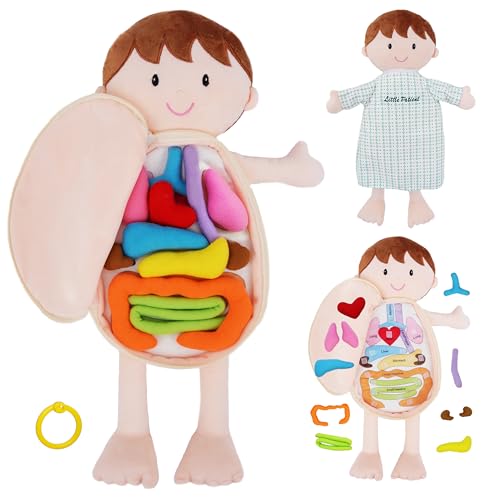
The June Garden Lucas plush doll introduces basic human anatomy through hands-on play. Each organ is labeled and removable with Velcro, enabling kids to explore body parts in a safe, interactive way. The doll’s soft design makes it suitable for younger children learning through touch and storytelling.
Organs included are nine soft pieces—heart, lungs, liver, stomach, kidneys, trachea, esophagus, small intestine, and large intestine—each colorfully sized for small hands. This set supports early science literacy by connecting visual cues with simple organ functions in a non-threatening format.
In addition to anatomy exploration, Lucas supports fine motor skill development. Zipping and unzipping the doll’s belly, dressing the gown, and placing organs back into position can help improve dexterity and hand-eye coordination while reinforcing sequencing and memory skills.
KAKIBLIN Human Body Model Apron
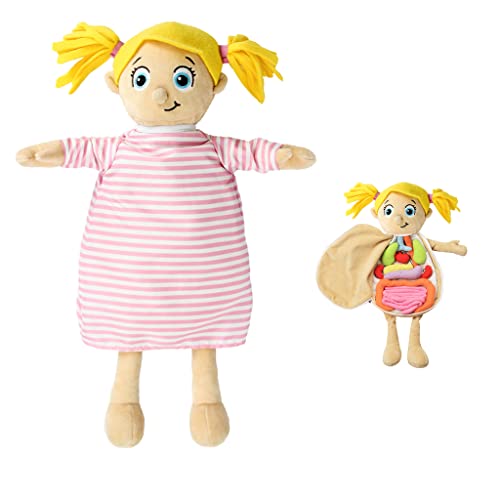
This KAKIBLIN anatomy apron features a visual, kid-friendly anatomy rollout with nine removable organs. The plush organs are attached with Velcro, making it easy for children to identify, locate, and reposition each part as they learn about body systems and organ placement.
Designed to foster body awareness and empathy, the apron helps children understand where major organs sit within the torso. While focusing on visual identification, the soft materials and safe design minimize choking hazards. It’s a practical companion for classroom learning or home science play.
National Geographic Glow-in-the-Dark Human Body Model
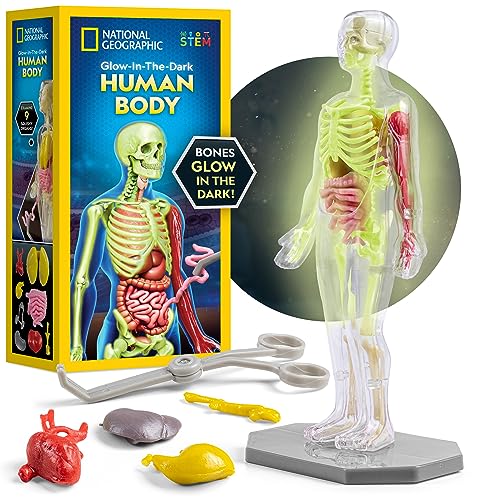
This National Geographic model takes learning further with a glow-in-the-dark twist. The 32-piece kit includes nine removable organs, 18 bones, arm muscles, a 9″ body shell, a display stand, forceps, and a detailed learning guide. The glow feature can pique curiosity during dim lighting or after-school STEM sessions.
Young learners can remove and examine each organ and bone piece, which aids in understanding internal organization and spatial relationships. The included guide and chart provide context for a broad range of anatomy topics, supporting both independent study and guided lessons.
KAKIBLIN Plush Anatomy Doll With Removable Organs

This plush anatomy doll from KAKIBLIN emphasizes safe, hands-on learning with soft interiors and Velcro-backed removable organs. The nine organs cover major body systems and provide clear visuals for kids to study the body from the outside in. It’s designed to support early science literacy and body awareness through interactive play.
As a versatile teaching aid, this doll can be used for classroom activities, homeschooling, or individual play. The plush design prioritizes comfort while maintaining educational value, helping children build familiarity with the internal layout of the human body.
Science Can Interactive Anatomy Kit

The Science Can kit combines tactile exploration with digital interactivity. It offers 15+ removable parts, including organs, muscles, and bones, plus two modes: Explanation and Quiz. The quiz mode turns anatomy into a game, reinforcing memory and curiosity while encouraging independent exploration and critical thinking.
Beyond play, the kit includes a 26-page illustrated anatomy book and four double-sided knowledge cards. This bundle provides a broader educational resource for school projects, homework support, or homeschool lessons, enabling structured learning alongside hands-on discovery.
Buying Guide
- Age-appropriateness: Choose models with soft materials and clearly labeled organs for younger children; more detailed kits suit older kids and early teens seeking depth.
- Learning goals: If the aim is basic recognition and fine motor practice, plush dolls with Velcro organs work well. For deeper understanding, consider interactive or glow-in-the-dark kits that include guides and extra materials.
- Durability and safety: Look for stitched or Velcro-secured organs, hypoallergenic fabrics, and no small parts that could pose choking risks for toddlers.
- Engagement factors: Glow-in-the-dark bones, talking modes, and quizzes can boost engagement and retention, especially for STEM-curious learners.
- Educational scope: Some sets emphasize anatomy only, while others include physiology, organ functions, and body systems through accompanying books or charts.
- Maintenance and cleaning: Plush options are typically easy to spot-clean; ensure materials can be wiped down after use.
- Expansion potential: Consider sets that allow adding more organs or kits, enabling progressive learning as children grow.
- Supplemental resources: Many products come with guides or cards—evaluate how well these align with your curriculum or learning style.
Across these options, parents and educators can compare tactile learning, visual labeling, and interactive features to choose the best fit. While plush dolls support early science literacy and motor skills, more advanced kits offer comprehensive context with guides that encourage independent investigation and collaboration on projects. The right pick balances safety, engagement, and educational depth to sustain curiosity about the human body.