Parents and educators seeking effective early literacy tools can explore a range of alphabet charts designed for toddlers. The right chart combines clear visuals, durable materials, and interactive features that support letter recognition, sounds, and early writing habits. The following selections offer varied formats—from laminated posters to pocket charts and talking posters—so caregivers can choose the approach that fits home or classroom routines. Each option emphasizes hands-on practice, colorful imagery, and durable construction to withstand daily use by curious toddlers.
| Product | Brand | Key Features | Format |
|---|---|---|---|
| Palace Learning 4 Pack – ABC Alphabet + Numbers 1-10 + Shapes + Colors | Palace Learning | 4 posters; 18″ x 24″; laminated; tear-resistant | Poster Set |
| Just Smarty Alphabet Wall Chart for Toddlers | Just Smarty | Alphabet sounds, numbers, speech therapy friendly; includes songs | Wall Chart |
| Alphabet Learning Pocket Chart (XL 35×27) | Joyreal | Hands-on letter practice; multiple activities; built-in card storage | Pocket Chart |
| Torlam Alphabet Learning Pocket Chart | Torlam | Letters A–Z; multiple activity cards; classroom and homeschool friendly | Pocket Chart |
| Electronic Alphabet Wall Chart, Talking ABC | GaHoo | Talking poster; numbers and shapes; adjustable volume; portable | Talking Poster |
Note: The above table summarizes five strong options for teaching toddlers the alphabet, with emphasis on durability, interactive features, and age-appropriate design. Each product below provides details on how it can fit into a home or classroom routine and the specific learning benefits it offers for early literacy development.
Palace Learning 4 Pack Poster Set
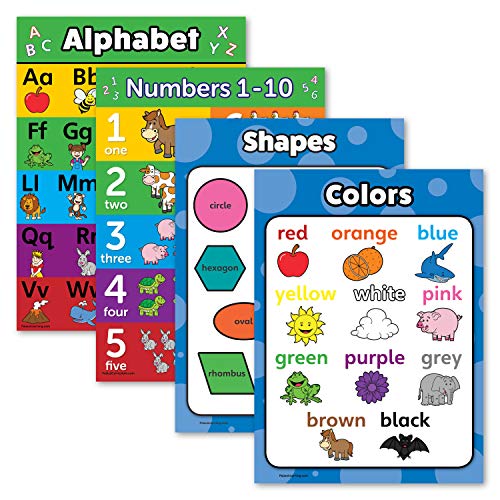
The Palace Learning four-poster collection features kid-friendly subjects with a focus on foundational literacy and early numeracy. Each poster is 18″ x 24″ and comes with high-quality lamination (3 mil) for added durability and tear resistance. This trio of design choices supports frequent handling by toddlers, making it suitable for wall displays in playrooms or classrooms. The set provides a visually cohesive display that can help children associate letters with shapes, colors, and numbers, reinforcing cross-domain learning while maintaining a simple, uncluttered layout that reduces cognitive overload.
Just Smarty Alphabet Wall Chart for Toddlers

This alphabet wall chart combines letter instruction with song-based learning and movement. It emphasizes alphabet sounds, basic word-building, and early spelling, supporting speech and language development. The inclusion of musical elements makes it suitable for toddlers who respond to rhythm and tunes, potentially aiding memory retention of letter sounds. The product also positions itself as a versatile learning tool for therapy settings and home use, where parents or therapists can leverage songs to reinforce daily practice. While entertaining, the chart remains focused on core literacy outcomes rather than distraction-heavy activities.
Alphabet Learning Pocket Chart (XL 35×27″)

The Joyreal pocket chart emphasizes hands-on letter recognition through a modular setup. It includes multiple activities that cover uppercase and lowercase letters, tracing, and early sound identification. The built-in card storage helps keep alphabet cards, tracing sheets, and chants organized for daily or center-based activities. This format is particularly useful for small-group instruction, circle time, and independent practice, as it combines visual cues with tactile engagement, supporting diverse learning styles and pace.
Torlam Alphabet Learning Pocket Chart

Torlam offers another pocket chart option designed for comprehensive alphabet practice. The product highlights focused practice for letters with vibrant visuals to support recognition and recall. It includes seven different activity themes to cover a wide range of literacy activities, from tracing to sound identification, making it suitable for both homeschool and classroom use. This versatility supports small groups and independent tasks while enabling teachers to rotate activities efficiently in a busy learning environment.
Electronic Alphabet Wall Chart, Talking ABC

The GaHoo talking alphabet wall chart adds an interactive dimension to early literacy. The device offers verbal cues for letter names and sounds, along with a back-side design that introduces shapes and colors for broader cognitive development. Portability is a key feature, suitable for car trips or travel-based learning sessions. The speaker-based engagement encourages active participation without requiring screen time, which can be advantageous for toddlers who benefit from hands-on, audible prompts in a low-distraction learning setup.
Just Smarty Interactive Alphabet Wall Chart

This Just Smarty model features interactive lighting that responds to user actions. The poster changes colors with music and provides feedback by turning green for correct answers and red for incorrect ones. It supports letter recognition, word association, and early spelling, and it is designed for younger learners with an emphasis on interactive, multi-sensory engagement. The light-based feedback can motivate toddlers during practice sessions, though it may require supervision to ensure appropriate use and prevent overstimulation.
Just Smarty Interactive Alphabet Wall Chart (Another Model)

This additional Just Smarty option mirrors the interactive approach with a focus on early literacy development. It emphasizes memory skills, spelling, and logic through interactive features, while also providing musical elements to engage learners. Such tools can be particularly effective for preschoolers and kindergarteners who benefit from combining auditory and visual learning cues with movement and song in a classroom or home setting.
Buying Guide
- Learning goals: Decide whether you want emphasis on letter recognition, sounds, handwriting practice, or a mix. Pocket charts are great for hands-on activities and center work, while laminated posters work well for wall displays and visual references.
- Durability and age: For toddlers who handle objects roughly, choose laminated posters or sturdy pocket charts with reinforced seams. Consider whether the product is designed for home use or classroom environments.
- Interactivity level: Talking posters and interactive lights can boost engagement but may require batteries and supervision. If you value screen-free play, opt for non-electronic options with tactile activities and chants.
- Ease of organization: Pocket charts with built-in card storage help keep activities organized and scalable. Look for products that allow expansion with additional cards or activity sets.
- Size and placement: Larger posters are ideal for wall displays in common areas, while pocket charts fit desks, shelves, or small group corners. Consider your space and the number of learners who will use the materials.
- Compatibility with routines: Choose formats that align with daily routines—circle time, center activities, or independent work. Laminated posters support quick wipe-clean usage, while interactive products can be integrated into play-based sessions.
- Maintenance: Laminated materials are easy to wipe down and reuse. For younger toddlers, consider products with simple graphics and bold contrasts to aid visual tracking during practice.
- Cost and value: Compare sets that cover multiple skills (letters, numbers, shapes) to maximize learning opportunities within a single purchase. If you need flexibility, pocket charts offer modularity without committing to a fixed set of posters.