Artists turning ideas into tangible sculptures often reach for a 3D pen to sketch in three dimensions. The following handpicked options blend user-friendly design with precise control, helping illustrators, designers, and makers realize concepts in real time. This guide highlights five top 3D pens suitable for artists, comparing features, usability, and versatility to support informed decisions for creative projects.
| Product | Brand | Notable Feature |
|---|---|---|
| SCRIB3D P1 | SCRIB3D | Stepless speed; beginner-friendly kit |
| MYNT3D Professional | MYNT3D | OLED display; precise temperature control |
| 3Doodler Start+ | 3Doodler | Child-safe; expanded accessories |
| SCRIB3D Advanced | SCRIB3D | LCD display; multiple speeds |
| 3Doodler Flow | 3Doodler | Filament flexibility; real-time temp |
SCRIB3D P1 3D Printing Pen Overview

The SCRIB3D P1 is designed for creative projects that blend drawing and building in three dimensions. It supports spatial thinking and artistic skills with a stepless speed function for precise control on both detailed designs and broader fills. The kit includes three PLA colors (about 30 feet), a power adapter, a step-by-step manual, and a free stencil guide, making it a ready-to-use option for classrooms, studios, and home workshops. PLA is user-friendly, offering smooth extrusion for beginners and more advanced users alike.
In practice, artists can sketch layered forms, create decorative accents, or repair small 3D components. The P1’s straightforward operation reduces setup friction, letting you focus on shaping ideas into tangible forms. Its beginner-friendly flow helps learners understand how speed and temperature affect resolution and surface texture, which is valuable for artists exploring texture and volume in 3D media.
MYNT3D Professional 3D Pen With OLED Display
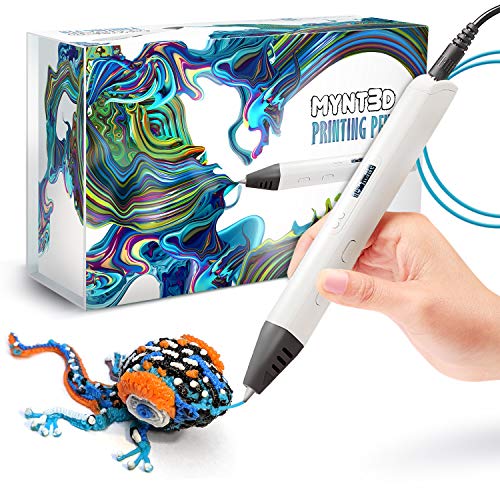
The MYNT3D Professional model delivers high-precision control through an adjustable feed and temperature. Artists can fine-tune the flow and speed to match their drawing style, enabling accurate lines, smooth curves, and intricate details. Temperature can be adjusted in 1-degree increments from 140 to 230 C, supporting a broader range of filaments and finishing techniques. The combination of adjustable speed, refined temperature control, and a robust build makes this pen suitable for professional artwork and detailed 3D sketches.
3Doodler Start+ Essentials 3D Pen for Kids
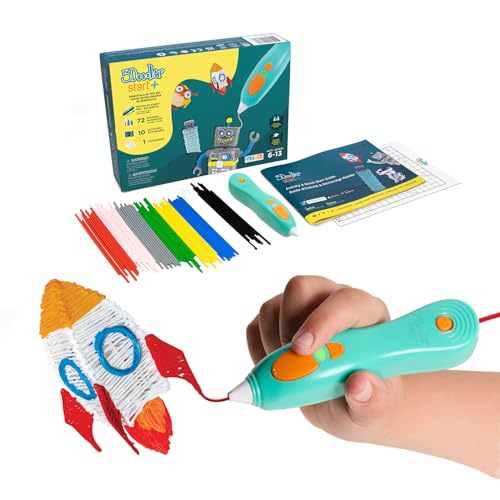
The 3Doodler Start+ is designed with safety as a priority, featuring no hot parts to reduce burn risks, which is ideal for younger artists and educators. It also includes upgrades like faster charging, more filament, additional stencils, and a safety standby mode. While intended for younger creators, the Start+ remains a capable tool for early-stage artists to learn the fundamentals of 3D drawing, connect shapes, and explore spatial relationships without the constraints of more powerful, higher-temperature pens.
SCRIB3D Advanced 3D Printing Pen
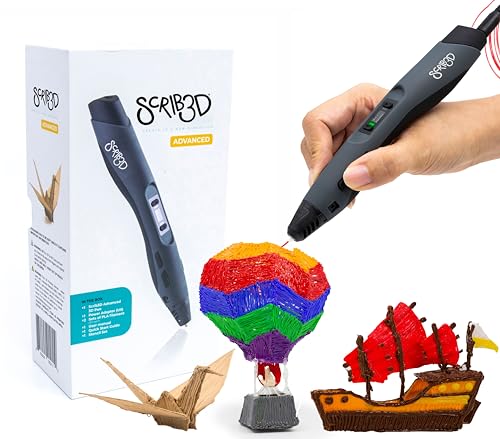
The SCRIB3D Advanced pen targets more serious artists with an LCD display, adjustable temperature, and a broad range of speed settings. This model is built for comfort with an ergonomic form factor and a soft-touch surface, reducing fatigue during long sessions. Included are two color PLA spools, a power adapter, a step-by-step manual, and a stencil guide to assist in planning complex structures. The design emphasizes precision to help users translate sketches into accurate, three-dimensional models.
3Doodler Flow 3D Printing Pen

The 3Doodler Flow offers robust compatibility with 1.75 mm filaments, enabling artists to work with PLA, ABS, and wood-based plastics. Its integrated LCD provides real-time temperature monitoring to help ensure smooth extrusion and stable performance during drawing sessions. The Flow is designed for ease of use, making it appropriate for both beginners and seasoned artists who want a reliable tool for freehand drawing, stenciling, or constructing on a tabletop scale. A library of refills and stencil resources supports ongoing exploration.
Buying Guide: Key Purchase Considerations
- Safety and age suitability: If the pen is for younger artists, prioritize models with no hot parts or enhanced safety features. For teens and adults, focus on heat control, filament compatibility, and ergonomic design.
- Temperature control: Precise temperature adjustment expands the range of filaments you can use and improves control over texture and finish. LCD or OLED displays help monitor heat in real time.
- Speed and flow: A wide speed range and adjustable flow let you tailor the extrusion to your drawing technique. Consider stepless or multi-speed options for nuanced control on intricate details.
- Filament compatibility: Most pens use 1.75 mm PLA or ABS. Ensure your chosen model supports the filaments you prefer, including specialty materials if needed (e.g., wood-infused PLA).
- Ergonomics and comfort: A comfortable grip and lightweight body reduce fatigue during longer sessions, which is important for artists working on larger projects.
- Included accessories: Starter kits with extra filaments, stencil guides, and manuals save time and support quick learning curves for new users.
- Learning resources: Stencil books, project guides, and tutorials add value, especially for artists integrating 3D drawing into sketches or mixed-media pieces.
- Durability and maintenance: Consider nozzle design, clog resistance, and how easy it is to clean and replace components, particularly for frequent use.
- Project applications: If you plan to sculpt figures, jewelry, or architectural models, assess the stability of layers, surface finish, and the ability to create both thin lines and voluminous shapes.
- Future expandability: Some pens offer upgrade paths (additional filaments, refill kits, and stencil sets) that extend their usefulness as skills grow.
Across these options, artists can select a pen that matches their experience level, preferred materials, and intended projects—from intricate sculpture details to bold, liberating freehand forms. When evaluating a pen, prioritize a balance of precise control, safety, comfort, and access to supportive resources that foster creative experimentation.