Discover kid-friendly 3D pens that encourage creativity, fine motor skills, and problem-solving without sacrificing safety. The selections below are geared toward younger creators, emphasizing simple controls, cooling and safety features, and engaging starter projects. Each option supports learning through hands-on play while avoiding complex setups.
| Product | Brand | Key Benefit |
|---|---|---|
| SCRIB3D | Beginner-friendly with starter colors and stencil guide | |
| 3Doodler | Child-safe with no hot parts and easy handling | |
| 3D Printing Drawing Book (SONGTIY) | SONGTIY | Fun templates to pair with a 3D pen for guided drawing |
| MYNT3D Super 3D Pen | MYNT3D | Simple controls with smooth flow and durable nozzle |
| 3Doodler Flow | 3Doodler | User-friendly with LCD temperature readout and versatile filaments |
Each product is selected for age-appropriate features, ease of use, and engaging activities that help children translate imagination into tangible 3D forms. The following sections provide concise details on five suitable options, followed by a practical buying guide.
SCRIB3D P1 3D Printing Pen with Display

This beginner-friendly pen emphasizes safety and ease of use, making it suitable for eight-year-olds. It includes three starter PLA colors (about 30 feet) and a stencil guide to jump-start creative projects. A visible display helps kids and caregivers monitor heat levels as they draw. The device uses a stepless speed control for precise line work or quicker infill, helping kids develop spatial thinking and fine motor skills. The kit also includes a power adapter and a simple manual, supporting independent or guided play.
3Doodler Start+ Essentials 3D Pen Set
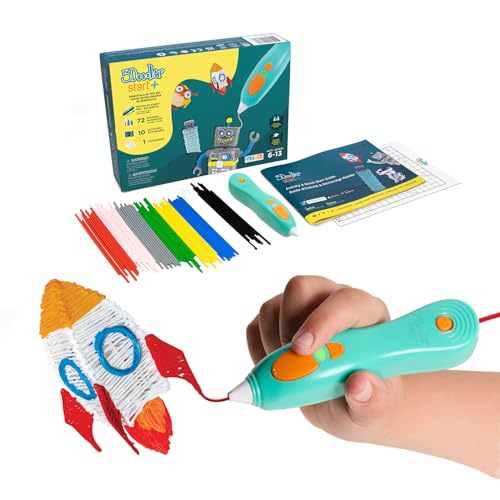
The Start+ is designed with child safety as a priority, featuring no hot parts and kid-friendly plastics. It’s slim, quick to charge, and includes extra filament and stencils. The device is specifically intended for safe use by children aged six and up, making it an ideal entry point for younger creators who want to learn about 3D drawing without burn risks. The kit emphasizes a screen-free learning experience and supports offline, hands-on exploration of STEM concepts through art.
3D Printing Drawing Book (SONGTIY)
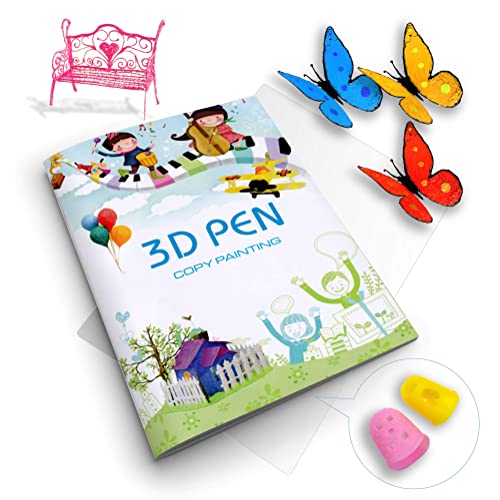
This accessory pairs well with a beginner 3D pen to guide youngsters through printable patterns. The book includes 40 patterns across 20 pages, accompanied by a plastic plate to help protect surfaces during tracing and creating. Its compact format makes it a practical classroom or home activity, encouraging kids to imitate and build while connecting art with spatial reasoning. The workbook helps reduce lost templates and supports durable, store-friendly supplies for ongoing projects.
MYNT3D Super 3D Pen

The MYNT3D Super 3D Pen provides a straightforward experience with a steady flow and a single-hand control approach, making it suitable for younger users with supervision. The 1.75 mm ABS and PLA compatibility allows varied material use for creative projects. The pen features a simple speed control, enabling kids to practice gradual line work and larger shapes before advancing to more complex structures. Its durable nozzle design helps minimize jams during playful learning sessions.
MYNT3D Professional 3D Pen with OLED Display
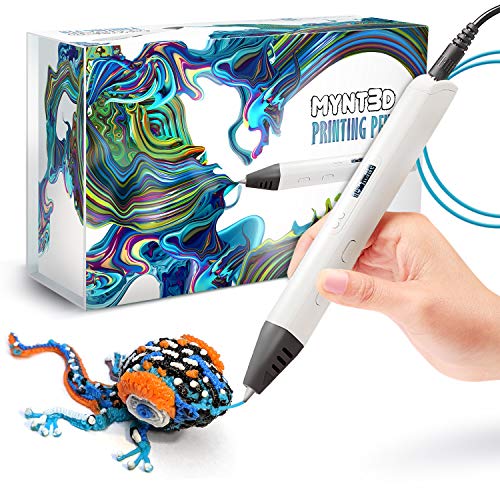
This option offers adjustable temperature and feed control, which can support gradual skill growth for older kids or careful beginners under supervision. The OLED display provides real-time feedback, helping learners understand how temperature affects material flow. While slightly more advanced, it remains suitable for an eight-year-old with parental guidance to manage settings and safety. The flexible range from 140 to 230 C allows experimenting with different filaments, expanding creative possibilities.
3Doodler Flow 3D Printing Pen

The Flow model provides a versatile approach with compatibility for multiple filaments and a real-time temperature readout. It’s designed for ease of use, enabling kids to draw 3D shapes by simplifying the process of heating and extruding plastic. The Flow pen emphasizes a kid-friendly workflow, stencil-based drawing, and immediate feedback on results, which helps younger users stay engaged and avoid frustration during early projects.
Buying Guide: Key Purchase Considerations
- Safety and age suitability: Look for pens with no hot parts or heat-insulated nozzles, simple on/off switches, and clear safety instructions for kids aged 8 and younger.
- Ease of use: Prioritize models with straightforward feeding mechanisms, simple speed or flow controls, and visual temperature indicators to help young users learn cause and effect.
- Filament compatibility: Many kits use PLA filaments, which are user-friendly and less prone to warping. For older or more advanced kids, consider a pen that supports ABS or specialty filaments as a future upgrade.
- Starter content: Stencil books, pattern templates, and project guides can significantly improve engagement and reduce setup time for kids who are new to 3D drawing.
- Size and ergonomics: Choose pens with comfortable grips and light weights to minimize fatigue during longer play sessions.
- Expandability: Some pens offer additional filament options, spare parts, and adjustable temperatures, which can accommodate growing skill levels.
- Supervision needs: Most 8-year-olds will benefit from parental oversight during first uses to ensure safe operation and proper handling of materials.
- Durability and reliability: Look for pens with durable nozzles and clog-resistant designs, especially for younger users who may’ feed filaments playfully or inconsistently.
- Educational value: Consider how projects align with STEM concepts such as geometry, spatial reasoning, and planning, which can enhance learning outcomes.